
Author

admin

Browsing

NOT FOR DISTRIBUTION TO UNITED STATES NEWS WIRE SERVICES OR FOR DISSEMINATION IN 
THE UNITED STATES

Quimbaya Gold Inc. (CSE: QIM,OTC:QIMGF) (OTCQB: QIMGF) (FSE: K05) (‘Quimbaya’ or the ‘Company’) announces that Denarius Metals Corp. has elected to terminate the binding Letter of Intent (the ‘LOI’) previously announced on May 7, 2025. The LOI contemplated the formation of a 50:50 joint venture to advance the formalization of artisanal mining at Quimbaya’s Tahami Project in the Segovia District of Colombia.

Quimbaya thanks Denarius for the time and consideration given to this opportunity. While the parties were unable to reach a definitive agreement, the Company appreciates the constructive dialogue and shared interest in advancing responsible development in one of Colombia’s most prolific gold regions.

Quimbaya retains 100% ownership of the Tahami Project, including the drill-ready Tahami South. The Company remains focused on executing its fully funded 2025-2026 exploration program, which includes a 4,000-meter drill campaign scheduled to commence at Tahami South soon.

In parallel, Quimbaya will continue to pursue alternative structures to support the formalization of artisanal mining in the region, aligning with its long-standing commitment to responsible mining, inclusive economic participation, and strong community engagement.

‘This is a strategically important district, and we remain confident in both the geological potential of Tahami and the strength of our position,’ said Alexandre P. Boivin, Chief Executive Officer. ‘Our exploration plans are on track, and we continue to evaluate opportunities that can responsibly advance the project and generate long-term value for all stakeholders.’

About Quimbaya
Quimbaya aims to discover gold resources through exploration and acquisition of mining properties in the prolific mining districts of Colombia. Managed by an experienced team in the mining sector, Quimbaya is focused on three projects in the regions of Segovia (Tahami Project), Puerto Berrio (Berrio Project), and Abejorral (Maitamac Project), all located in Antioquia Province, Colombia.

Contact Information

Alexandre P. Boivin, President and CEO apboivin@quimbayagold.com 

Sebastian Wahl, VP Corporate Development swahl@quimbayagold.com

Quimbaya Gold Inc.
Follow on X @quimbayagoldinc
Follow on LinkedIn @quimbayagold
Follow on Instagram @quimbayagoldinc
Follow on Facebook @quimbayagoldinc

Cautionary Statements

Certain statements contained in this press release constitute ‘forward-looking information’ as that term is defined in applicable Canadian securities legislation. All statements, other than statements of historical fact, included herein are forward-looking information. Generally, but not always, forward-looking statements and information can be identified by the use of forward-looking terminology such as ‘intends’, ‘expects’ or ‘anticipates’, or variations of such words and phrases or statements that certain actions, events or results ‘may’, ‘could’, ‘should’, ‘would’ or ‘occur’. Forward-looking statements herein include statements and information regarding the Offering’s intended use of proceeds, any exercise of Warrants, the future plans for the Company, including any expectations of growth or market momentum, future expectations for the gold sector generally, the Colombian gold sector more particularly, or how global or local market trends may affect the Company, intended exploration on any of the Company’s properties and any results thereof, the strength of the Company’s mineral property portfolio, the potential discover and potential size of the discovery of minerals on any property of the Company’s, including Tahami South, the aims and goals of the Company, and other forward-looking information. Forward-looking information by its nature is based on assumptions and involve known and unknown risks, uncertainties and other factors which may cause the actual results, performance or achievements of Quimbaya to be materially different from any future results, performance or achievements expressed or implied by such forward-looking statements or information. These assumptions include, but are not limited to, that the Company’s exploration and other activities will proceed as expected. The future outcomes that relate to forward-looking statements may be influenced by many factors, including but not limited to: future planned development and other activities on the Company’s mineral properties; an inability to finance the Company; obtaining required permitting on the Company’s mineral properties in a timely manner; any adverse changes to the planned operations of the Company’s mineral properties; failure by the Company for any reason to undertake expected exploration programs; achieving and maintaining favourable relationships with local communities; mineral exploration results that are poorer or better than expected; prices for gold remaining as expected; currency exchange rates remaining as expected; availability of funds for the Company’s projects; prices for energy inputs, labour, materials, supplies and services (including transportation); no labour-related disruptions; no unplanned delays or interruptions in scheduled construction and production; all necessary permits, licenses and regulatory approvals are received in a timely manner; the Offering proceeds being received as anticipated; all requisite regulatory and stock exchange approvals for the Offering are obtained in a timely fashion; investor participation in the Offering; and the Company’s ability to comply with environmental, health and safety laws. Although Quimbaya’s management believes that the assumptions made and the expectations represented by such information are reasonable, there can be no assurance that the forward-looking information will prove to be accurate. Furthermore, should one or more of the risks, uncertainties or other factors materialize, or should underlying assumptions prove incorrect, actual results may vary materially from those described in forward-looking statements or information. Readers are cautioned not to place undue reliance on forward-looking information as there can be no assurance that the plans, intentions or expectations upon which they are placed will occur. Forward-looking information contained in this news release is expressly qualified by this cautionary statement. The forward-looking information contained in this news release represents the expectations of Quimbaya as of the date of this news release and, accordingly, is subject to change after such date. Except as required by law, Quimbaya does not expect to update forward-looking statements and information continually as conditions change. 

To view the source version of this press release, please visit https://www.newsfilecorp.com/release/261086

News Provided by Newsfile via QuoteMedia

This post appeared first on investingnews.com


(TheNewswire)


Vancouver, BC TheNewswire – August 1, 2025 Element79 Gold Corp. (CSE: ELEM,OTC:ELMGF) (OTC: ELMGF) (FSE: 7YS0) (‘Element79 Gold’, the ‘Company’) is pleased to announce that it has executed a definitive Asset Purchase Agreement (the ‘Agreement’) dated July 31, 2025, with Donald James McDowell (the ‘Vendor’) for the acquisition of a 100% interest in the Gold Mountain Project located in Lander County, Nevada.


  The Gold Mountain Project consists of 34 unpatented mining claims covering highly prospective ground in the heart of Nevada’s Battle Mountain trend. Under the terms of the Agreement, Element79 Gold, through its wholly owned subsidiary ELEM Battle Mountain LLC, has agreed to acquire all rights, title, and interest in the Gold Mountain assets in exchange for the issuance of 100,000,000 common shares of the Company at a deemed price of C$0.02 per share, as well as a cash payment of US$137,485.85 payable following the closing of the Company’s next equity financing.  


  As part of the transaction, the Vendor will retain a 3% Net Smelter Return (NSR) royalty on all future mineral production from the project.   This arm’s length transaction is not considered a fundamental change for the Company.  No finder’s fees will be paid in conjunction with the transaction. The Company Will ensere that all required regulatory Filings are made in regards to this transaction.  


  Full details of the acquisition are available in the Asset Purchase Agreement filed on SEDAR+.  


  James Tworek, CEO of Element79 Gold, commented   :  


  ‘This acquisition marks a significant step in advancing our strategic focus in Nevada. The Gold Mountain Project provides a drill-ready opportunity with strong geological fundamentals in one of the most prolific gold regions in the world. Our technical team is preparing an exploration program for later this year to begin unlocking the value of this asset.’  


  About Element79 Gold Corp  


  Element79 Gold Corp is a mining company focused on gold and silver exploration, with a portfolio of assets in Nevada and Peru. The Company is actively advancing its Elephant project in the Battle Mountain trend of Nevada, as well as the drill-ready Gold Mountain project in Battle Mountain, Nevada. The Company also holds an option to purchase the high-grade Lucero mine in southern Peru.   Element79 Gold has completed the transfer of its Dale Property in Ontario to its wholly owned subsidiary, Synergy Metals Corp., and is progressing through the Plan of Arrangement spin-out process.   Element79 Gold is listed on the Canadian Securities Exchange (CSE: ELEM,OTC:ELMGF), the Frankfurt Stock Exchange (FSE: 7YS0), and the OTC Markets (OTC: ELMGF).  


  Investor Relations Contact:  


  Investor Relations Department  


  Email:     investors@element79.gold     
Phone: +1.604.319.6953


  Corporate Contact:  


  James C. Tworek, Chief Executive Officer and Director  


  Email:     jt@element79.gold    


  Cautionary Note Regarding Forward Looking Statements  


  This press release contains forward-looking statements within the meaning of applicable securities laws. The use of any of the words ‘anticipate,’ ‘plan,’ ‘continue,’ ‘expect,’ ‘estimate,’ ‘objective,’ ‘may,’ ‘will,’ ‘project,’ ‘should,’ ‘predict,’ ‘potential’ and similar expressions are intended to identify forward-looking statements. In particular, this press release contains forward-looking statements concerning the Company’s exploration plans, development plans and the Force Majeure Event. Although the Company believes that the expectations and   assumptions on which the forward-looking statements are based are reasonable, undue reliance should not be placed on these statements because the Company cannot provide assurance that they will prove correct. Forward-looking statements involve inherent risks and uncertainties, and actual results may differ materially from those anticipated. Factors that could cause actual results to differ include conditions in the duration of the Force Majeure Event, and receipt of regulatory and shareholder approvals. These forward-looking statements are made as of the date of this press release, and, except as required by law, the Company disclaims any intent or obligation to update publicly any forward-looking statements.  


  Neither the Canadian Securities Exchange nor the Market Regulator (as that term is defined in the policies of the Canadian Securities Exchange) accepts responsibility for the adequacy or accuracy of this release.  


Copyright (c) 2025 TheNewswire – All rights reserved.


News Provided by TheNewsWire via QuoteMedia

This post appeared first on investingnews.com

Here’s a quick recap of the crypto landscape for Wednesday (August 1) as of 9:00 a.m. UTC.

Get the latest insights on Bitcoin, Ethereum and altcoins, along with a round-up of key cryptocurrency market news.

Bitcoin and Ethereum price update

Bitcoin (BTC) was priced at US$114,797, down by 2.8 percent over the last 24 hours. Its highest valuation on Friday was US$118,696, while its lowest valuation was US$114,322.

Bitcoin price performance, August 1, 2025.

Chart via TradingView

Bitcoin’s price drop followed sweeping new US tariffs, including a 35 percent levy on Canadian imports, which rattled risk assets broadly. In parallel, the Federal Reserve’s decision to maintain interest rates at 4.25 percent –4.50 percent and stronger-than-expected inflation data dampened hopes of near-term rate cuts, adding downside pressure to Bitcoin’s price

Ethereum (ETH) was priced at US$3,595.75, down by 5.2 percent over the past 24 hours. Its lowest valuation on Friday was US$3,591.61, and its highest was US$3,809.48.

Altcoin price update

  • Solana (SOL) was priced at US$167.55, down by 5.4 percent over 24 hours. Its lowest valuation on Friday was US$165.43, and its highest was US$179.17.
  • XRP was trading for US$3.03, down by 2.2 percent in the past 24 hours. Its lowest valuation of the day was US$2.91, and its highest valuation was US$3.13.
  • Sui (SUI) is trading at US$3.52, down 6.7 percent over the past 24 hours. Its lowest valuation of the day was US$3.45, and its highest was US$3.81.
  • Cardano (ADA) was trading at US$0.7321, down by 4.1 percent over 24 hours. Its lowest valuation on Friday was US$0.7137, and its highest was US$0.7731.

Today’s crypto news to know

Coinbase revenue misses as trading volumes lag

Shares of Coinbase Global (NASDAQ:COIN) fell 12 percent in premarket trading Friday (August 1) after the crypto exchange missed Wall Street expectations for second-quarter revenue.

While revenue grew 3.3 percent year over year to US$1.5 billion, it fell short of the US$1.59 billion estimate and was down from US$2 billion in the previous quarter.

Spot trading volumes declined globally and in the US, with average market capitalization roughly flat during the period, according to the company’s shareholder letter.

Still, net income surged to US$1.43 billion, largely from unrealized gains on its crypto holdings and investments.

Coinbase continues to diversify, noting it is testing traditional stock, FX, and commodity trading. The company was recently added to the S&P 500 (INDEXSP:INX) in May.

Assetera expands access to tokenized securities with Plug-and-Play API

Austria-based trading platform Assetera has launched a MiFID-compliant API that lets crypto exchanges offer tokenized securities, which include US Treasuries and blue-chip stocks, without needing their own regulatory license.

The service provides over 60 financial instruments at launch and handles all compliance responsibilities, including KYC and anti-money laundering checks. Assetera is targeting crypto platforms in the European Union and European Economic Area, aiming to break the dominance of major players like Kraken and Gemini in tokenized assets.

The company says it’s in discussions with several top-20 global crypto exchanges and anticipates €1 billion in trading volume during its first year.

Strategy’s US$10 billion profit fails to impress investors, treasury model dominates

Despite posting a massive US$10 billion profit for Q2, Strategy’s (NASDAQ:MSTR) share price dropped 1.4 percent in after-hours trading, highlighting investor concern about the company’s future beyond Bitcoin.

Strategy, formerly focused on enterprise software, has increasingly transformed into a corporate Bitcoin treasury. The firm now holds over 628,000 BTC, comprising more than 3 percent of the total supply, valued at US$74 billion.

Michael Saylor’s pivot has inspired imitators like Japan’s Metaplanet, which converted hotel assets into crypto. Despite the dip, the firm’s next move includes raising US$4.2 billion through a new STRC offering to buy more Bitcoin.

Securities Disclosure: I, Giann Liguid, hold no direct investment interest in any company mentioned in this article.

Securities Disclosure: I, Meagen Seatter, hold no direct investment interest in any company mentioned in this article.

This post appeared first on investingnews.com

Exchanged for Securities of Silver47 Exploration Corp. Pursuant to the Plan of Arrangement

Eric Sprott announces that, on August 1, 2025, 2176423 Ontario Ltd. (a corporation beneficially owned by him) acquired 10,383,434 common shares of Silver47 Exploration Corp., (Silver47 Shares) and 1,525,000 Silver47 Share purchase warrants (Silver47 Warrants) upon the closing a statutory plan of arrangement (Arrangement), pursuant to which Silver47 Exploration acquired all the outstanding common shares of Summa Silver Corp (Summa Silver Shares). Pursuant to the Arrangement, among other things, holders of Summa Silver Shares received 0.452 of a Silver47 Share for every Summa Silver Share they held. Mr. Sprott now beneficially owns over 10% of the outstanding Silver47 Shares.

Summa Silver holdings: Prior to the Arrangement, Mr. Sprott beneficially owned 22,972,200 Summa Silver Shares and 3,375,000 Summa Silver Share purchase warrants, representing approximately 15.3% of the outstanding Summa Silver Shares on a non-diluted basis, and approximately 17.2% on a partially diluted basis assuming exercise of such warrants. As a result of the Arrangement, Mr. Sprott no longer holds any securities of Summa Silver, and Mr. Sprott (as well as 2176423 Ontario Ltd.) ceased to be insiders of Summa Silver.

Silver47 Exploration holdings: Prior to the Arrangement, Mr. Sprott beneficially owned 5,500,000 Silver47 Shares and 750,000 Silver47 Warrants, representing approximately 7.8% of the outstanding Silver47 Shares on a non-diluted basis, and approximately 8.8% on a partially diluted basis assuming exercise of such warrants. As a result of the Arrangement, Mr. Sprott now beneficially owns 15,883,424 Silver47 Shares and 2,275,000 Silver 47 Warrants representing approximately 11.5% of the outstanding Silver47 Shares on a non-diluted basis, and approximately 12.9% on a partially diluted basis assuming exercise of such warrants

Mr. Sprott has a long-term view of the investment in Silver47 Exploration securities and may acquire additional securities of Silver47 Exploration including on the open market or through private acquisitions or sell securities including on the open market or through private dispositions, in the future, depending on market conditions, reformulation of plans and/or other relevant factors.

Summa Silver is located at 918-1030 West Georgia St., Vancouver, British Columbia, V6E 2Y3. Silver47 Exploration is located at 551-409 Granville St., Vancouver, British Columbia, V6C 1T2 A copy of the relevant early warning report with respect to the foregoing will appear on Summa Silver’s or Silver47 Exploration’s profile, as applicable, on SEDAR+ at www.sedarplus.ca and may also be obtained by calling Mr. Sprott’s office at (416) 945-3294 (2176423 Ontario Ltd., 7 King Street East, Suite 1106, Toronto, Ontario, M5C 3C5).

To view the source version of this press release, please visit https://www.newsfilecorp.com/release/260984

News Provided by Newsfile via QuoteMedia

This post appeared first on investingnews.com

Zinc prices were in decline for much of the first half of 2025 as primary supply increased and demand from the construction sector slumped.

Primarily used to make galvanized steel destined for construction and manufacturing sectors, zinc has come under fire in recent years as inflation and interest rates took their toll.

The metal performed relatively well in 2024 as weak supply was offset by soft demand. However, as 2024 began, new threats to its performance emerged as the US began to look to tariffs to correct perceived trade imbalances.

Market performance by the numbers

The zinc price started the year with downward momentum, sliding from US$3,150 per metric ton on December 10 to US$2,750 on January 31.

Zinc price chart, January 1 to July 31, 2025

via TradingEconomics

The metal found some support in February and March, climbing to US$2,928 on February 24 and then reaching a year-to-date high of US$2,971 on March 14; however, it wasn’t to last. The bottom fell out from under Zinc and quickly plunged to its year-to-date low of US$2,562 on April 9.

Since then, the zinc market has been volatile, and although it has recovered somewhat, it is still far from its first-quarter highs, peaking at US$2,865 on July 23.

What’s behind the price?

According to a review from the Shanghai Metal Market (SMM) on June 29, ex-China zinc concentrate production increased by 6.47 percent in the first quarter to 1.3 million metric tons versus 1.22 million metric tons during the same period of 2024.

It attributed these increases to resumption in production at Boliden’s Tara mine in Ireland, and ramp-ups at Grupo Mexico’s Buenavista mine in Mexico and Ivanhoe’s Kipushi mine in the Democratic Republic of the Congo.

Additionally, SMM noted that Xinjiang’s Huoshaoyun lead-zinc mine started production in May, with output reaching 50,000 metric tons in its first two months and is expected to reach 150,000 metric tons in July. The company is targeting full-year production of 700,000 to 750,000 metric tons.

Although supply seems robust and Chinese imports of concentrates increased 52.46 percent over 2024, treatment charges for imported metal have also increased from US$20 per metric ton at the start of the year to US$65 in May. The sharp increase in fees indicates an oversupply in the market, allowing smelters to charge more.

The SMM findings are further supported by data released from the International Lead and Zinc Study Group (ILZSG), which reported on June 18 that mining supply had increased during the first four months of the year to 3.94 million metric tons from 3.75 million metric tons in 2024.

It also showed flat demand for the metal with 4.28 million metric tons consumed during that period versus 4.3 million metric tons last year.

Changing US policy

A steep decline in commodity prices in April demonstrates just how fragile the global markets can be.

Zinc prices fell 13.77 percent at the start of April to US$2,562 per ton alongside President Trump’s “Liberation Day” tariff announcement and subsequent sell-off in the equity and US Treasury markets.

The prediction from analysts at the time was that if reciprocal tariffs were put in place, it would trigger a recession before the end of the year, impacting consumer spending on homes and cars, which have significant zinc inputs.

Demand for the metal has already been weak over the past several years due to high inflation and interest rates following the pandemic. Although inflation has eased, and interest rates have begun to normalize, the new tariff threat provides a new layer of uncertainty.

So far, auto makers have yet to raise their prices, but demand for new cars increased 2.5 percent in March, double the 1.1 percent typical for the same period in recent years. The gain is attributed to consumers looking to get ahead of more significant price increases down the line.

The impetus behind the tariffs is to stimulate domestic production, but the willingness from producers to follow through on new US projects remains uncertain.

For its part, the Trump administration has signalled its willingness to back large infrastructure and critical mineral projects by continuing the FAST-41 program that started under President Joe Biden.

The program aims to streamline the permitting process and speed development timelines to get the projects to production faster.

So far, the only zinc project to be included on the list is South32’s Hermosa, near Tucson, Arizona.

Progress at the site has continued with the company reporting in its update for the June quarter that it had made US$517 million in investments in FY25. It also stated that work on the main and ventilation shafts began during the second quarter, and construction work at the processing plant had begun.

In addition to development activities, the company also reported that it met a key milestone with the US Forest Service releasing a draft environmental impact statement.

The project is expected to see its first production from the Taylor deposit during the second half of 2027.

As a campaign promise, Trump proposed freeing up federal lands for housing projects, which could drive demand for galvanized steel products. The plan would invite developers to bid on land with the promise that a percentage of units would be set aside for affordable housing, and close the 4 million home shortfall.

However, a report from Realtor.com on July 22 poured cold water on the idea, stating that while it could offer incremental gains, it noted that there wasn’t enough land in places that need housing most.

Instead, the report suggested there are better methods available, including land use and zoning reforms, and increasing construction capacity in high-demand regions.

So where does that leave zinc?

With supply surpluses expected from the ILZSG, a significant turnaround may not be in the cards for zinc prices in the short term, especially when met by weak demand due to tariff uncertainty.

Although there was some recovery at the end of the second quarter, the oversupply situation doesn’t lend much support for the market to turn bullish.

The market has largely seen a dearth of investment as the market fundamentals haven’t provided support.

A June 11 report from analysts with German investment bank, IKB, noted the oversupply situation developing in the Zinc market and forecast that by the end of the third quarter, zinc prices will be trading in the US$2,600 per ton range.

Securities Disclosure: I, Dean Belder, hold no direct investment interest in any company mentioned in this article.

This post appeared first on investingnews.com

Anglo American (LSE:AAL,OTC Pink:AAUKF) reported a sharp US$1.9 billion net loss for the first half of 2025, deepening from US$672 million a year earlier, as the global miner pushed forward with a sweeping corporate overhaul aimed at focusing on copper and iron ore.

The London-based group’s latest results saw revenue dropping by 7 percent year-on-year to US$8.95 billion, falling short of analyst expectations, while underlying EBITDA fell 20 percent to US$3 billion.

“By focusing on our exceptional copper, premium iron ore and crop nutrients resource endowments, each with significant value-accretive growth options, we are unlocking material value for our shareholders,” Chief Executive Duncan Wanblad assured in the company’s recent performance report.

Anglo American’s portfolio shakeup continued at pace in the first half.

Following the May demerger of its platinum unit, now listed as Valterra on the Johannesburg Stock Exchange, the company has now designated its steelmaking coal and nickel operations as discontinued. Sales for both are agreed but not yet finalized.

A major piece of the puzzle remains De Beers, the iconic diamond brand in which Anglo holds an 85 percent stake. The miner confirmed it is pursuing both a trade sale and an IPO option, depending on market conditions and buyer appetite.

Wanblad said that while the company is prioritizing a trade sale for De Beers, it is also preparing the business for a potential IPO should market conditions warrant it.

The diamond market has been a major drag on performance. De Beers posted a US$189 million loss in the half-year period in the midst of a prolonged downturn in global rough-diamond demand and competition from synthetic stones.

Anglo American said it has already recorded US$3.5 billion in impairments related to De Beers over the past two years, valuing the unit at US$4.9 billion.

Despite the gloom, Wanblad maintained that De Beers has long-term potential. “With some of the best diamond mine resources and best marketing capabilities in the world, De Beers, I believe, is well positioned to emerge and thrive as the market recovers.”

Trade frictions causing market volatility

The company’s revenue decline was partly attributed to global trade disruptions, particularly from the US government’s shifting tariff strategy.

A recent announcement from President Donald Trump spared refined copper imports from sweeping new tariffs but left semi-processed products exposed, which triggered a sharp 18 percent drop in copper prices and dislocating demand patterns.

Anglo American noted that while it benefited from a 127 percent year-on-year increase in U.S. refined copper imports in the first five months of 2025, this redirected metal away from traditional markets in Asia and Europe.

Copper remains at the center of Anglo’s growth strategy. Post-restructuring, the metal is expected to account for over 60 percent of group EBITDA, according to internal forecasts.

In line with its weaker performance, Anglo American slashed its interim dividend to US$0.07 per share, down from US$0.42 last year. The company cited negative earnings contributions from its platinum and coal divisions and no contribution from De Beers.

De Beers exit timeline and options

The divestment of De Beers is progressing, with Anglo confirming it is now in the second round of its formal sale process, involving what it described as “a credible set of interested parties.”

The company is also in discussions with the government of Botswana, which holds a 15 percent stake and may seek to increase its ownership.

If a trade sale fails to materialize, Anglo is preparing for a public listing. Wanblad said exchanges in London, Johannesburg, and New York are all under consideration.

A trade sale could be finalized within six to nine months, he added, while an IPO would likely be delayed until early or mid-2026 depending on a recovery in diamond prices.

De Beers’ Venetia mine in South Africa, one of the country’s largest diamond operations, is undergoing a costly underground expansion aimed at extending its life beyond 2040.

Wanblad said Anglo remains engaged with stakeholders on the mine’s future, regardless of the group’s eventual exit from the diamond sector.

Securities Disclosure: I, Giann Liguid, hold no direct investment interest in any company mentioned in this article.

This post appeared first on investingnews.com

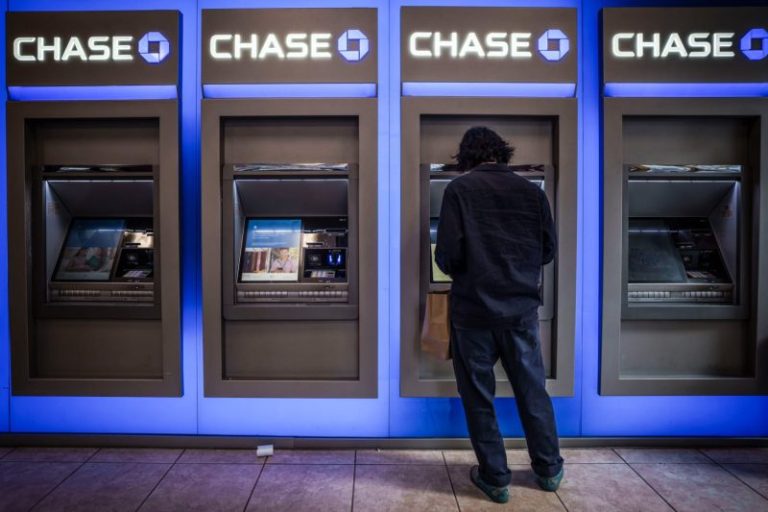
JPMorgan Chase has built 1,000 new branches in seven years. That’s more locations than most of its competitors operate in total.

The bank is marking the milestone opening in Charlotte, North Carolina, on Thursday where Chairman and CEO Jamie Dimon is attending a ribbon-cutting ceremony. The firm has roughly 5,000 branches, the most of any American bank, according to Federal Reserve data from March.

“It’s a great marker for us to be able to say, you can see our commitment over time and we’re on a marathon with regard to this expansion,” said Jennifer Roberts, the CEO of Chase Consumer Banking, in an interview. “A thousand [branches] is significant — a thousand is bigger than many regional competitors have at all.”

In 2018, JPMorgan operated bank branches in 23 states and said it would expand into as many as 20 new markets over the following five years with about 400 new locations. By 2021, the firm said it had branches in all 48 lower states. And last February, JPMorgan announced a new, multibillion-dollar investment to open another 500 new locations by 2027.

JPMorgan said over the past seven years, Chase has opened more bank branches than all of its large bank peers combined. However, many of JPMorgan’s competitors have recently announced plans to expand their own footprints as the quest for deposits heats up.

Bank of America recently announced a branch expansion, with plans to open 150 new centers by 2027. And Wells Fargo plans to add branches, especially now that it’s fulfilled a regulatory consent order that had been constraining its growth.

The industry-wide growth plans could help reverse a trend dating back to the 2008 financial crisis in which the U.S. has seen the net number of bank branches plummet. The combination of fewer overall banks and the advent of online banking has broadly made brick-and-mortar locations lower priority. However, in recent years, especially amid the population migration during and after the pandemic, banks have been reorienting their footprints to capture more deposits.

Expanding in Charlotte puts JPMorgan head-to-head with rival Bank of America, which is headquartered there and has 71% market share in the city, according to KBW and S&P Global Market Intelligence data.

Roberts said after this latest opening, Chase will have about 75 branches in North Carolina. She said that the bank is expanding there due to its “young, fast-growing population” and that there’s a “lot of wealth coming into that area” as well.

JPMorgan said at its investor day in May that its newer branches are expected to ultimately contribute more than $160 billion in incremental deposits. The firm said each new branch breaks even within four years.

JPMorgan said when its expansion is complete, Chase will have added more than 1,100 branches, renovated 4,300 locations and entered 80 new markets. It also expects that 75% of the U.S. population will be able to reach one of its branches within an “accessible drive.”

This post appeared first on NBC NEWS

SAN FRANCISCO — Apple on Thursday reported sales and profit that far surpassed expectations, showing that its efforts to re-route its sprawling global supply chain away from U.S. President Donald Trump’s trade war have so far succeeded.

Apple said it earned $94.04 billion in revenue for its fiscal third quarter ended June 28, up nearly 10% from a year earlier and beating analyst expectations of $89.54 billion, according to LSEG data. Its earnings per share of $1.57 per share topped expectations of $1.43 per share.

Sales of iPhones, the Cupertino, California, company’s best-selling product, were up 13.5% to $44.58 billion, beating analyst expectations of $40.22 billion.

Apple has been shifting production of products bound for the U.S., sourcing iPhones from India and other products such as Macs and Apple Watches from Vietnam. Still, the company had warned investors that U.S. tariffs could cost it $900 million in the fiscal third quarter, and it trimmed its annual share buyback program by $10 billion, a move analysts viewed as helping to free up cash to remain nimble in uncertain times.

The ultimate tariffs many Apple products could face remain in flux, and many of its products are currently exempt. Sales in its Americas segment, which includes the U.S. and could face tariff impacts, rose 9.3% to $41.2 billion.

In an interview with Reuters, Apple CEO Tim Cook said the company set seasonal records for upgrades of iPhones, Macs, and Apple Watches. He said Apple estimates about 1 percentage point of its 9.6% of sales growth in the quarter was attributable to customers making purchases ahead of potential tariffs.

“We saw evidence in the early part of the quarter, specifically, of some pull-ahead related to the tariff announcements,” Cook told Reuters, though he also said the active user base for iPhones hit a record high in all geographies.

The U.S. is still negotiating with both China and India, with Trump saying India could face 25% tariffs as early as Friday. However, analysts said India could still retain cost advantages for Apple in the longer term.

Tariffs are only one of Apple’s challenges. The company faces competition from rivals such as Samsung in a tough market for premium-priced mobile phones. On the software front, Apple faces challenges from Alphabet, which is quickly weaving AI features into its competing Android operating system.

Apple has delayed the release of an AI-enriched version of Siri, its virtual assistant, but Cook said the company is “making good progress on a personalized Siri.” He also said Apple, which has thus far not engaged in the massive capital expenditures of its Big Tech rivals to pursue AI, is “significantly growing” its investments in artificial intelligence.

“Apple has always been about taking the most advanced technologies and making them easy to use and accessible for everyone, and that’s at the heart of our AI strategy,” Cook said.

Apple faces regulatory rulings in Europe that threaten to undermine its lucrative App Store business. Apple said sales from its services business, which includes the App Store as well as music and cloud storage, were $27.42 billion, topping analyst expectations of $26.8 billion.

Sales of wearables such as AirPods and Apple Watches were $7.4 billion, missing estimates of $7.82 billion. Mac sales of $8.05 billion beat expectations of $7.26 billion, while iPads hit $6.58 billion in sales, missing expectations of $7.24 billion.

In Greater China, where Apple has faced long delays in approval to introduce AI features on its devices, sales were $15.37 billion, up from a year ago and above expectations of $15.12 billion, according to a survey of five analysts from data firm Visible Alpha.

Apple said gross margins were 46.5%, beating analyst expectations of 45.9%, according to LSEG estimates.

This post appeared first on NBC NEWS

The US Federal Reserve held its fifth meeting of 2025 from Tuesday (July 29) to Wednesday (July 30) against a backdrop of trade tensions, spurred on by the Trump administration’s tariffs.

The central bank met analysts’ expectations by holding its benchmark rate in the 4.25 to 4.5 percent range.

Chair Jerome Powell stated that although there were differences of opinion among the Federal Open Markets Committee members, they were clear on why they made their decisions, noting that inflation was tracking higher, but the job market remained stable.

“The labor market looks solid, inflation is above target, and even if you look through the tariff effects, we think it’s still a bit above target, and that’s why our stance is where it is,” Powell said.

The Fed chair also noted a slowing in gross domestic product, which he pointed out was up 2.5 percent in 2024, but initial data from 2025 points to a slowing in growth to 1.1 percent.

The vote to hold the rate was 9-2, with Governors Michelle Bowman and Christopher Waller being the dissenters who advocated for cuts. It marks the first time since December 1993 that two board members have broken with consensus.

Both Bowman and Waller were appointed by Donald Trump during his first term in office, with Waller being one of the front-runners to replace Powell when his term as board chairman ends in May 2026.

Trump has been critical of Powell in recent months, with the latest statements coming just minutes before the Fed meeting. The president has said Powell has not moved quickly enough to make rate cuts, despite data suggesting inflation has been starting to increase.

North of the Border, the Bank of Canada (BoC) also held its June meeting on Wednesday.

It also met expectations by holding its benchmark rate at 2.75 percent, with Bank Governor Tiff Macklem citing resilience in the economy despite trade disputes brought on by the Trump administration in the United States.

The BoC last changed its rate with a 0.25 percent cut in March to the current 2.75 percent from 3 percent.

Gold was down in the day’s trading, losing 1.6 percent to US$3,272.75 per ounce. Silver declined more sharply, losing 3.37 percent to US$36.93 per ounce at 3:30 p.m. EST.

The S&P 500 (INDEXSP:INX) was down, recording a 0.4 percent decline to reach 6,344.17. The Nasdaq-100 (INDEXNASDAQ:NDX) slipped 0.17 percent to come in at 23,265 , and the Dow Jones Industrial Average (INDEXDJX:DJI) lost 0.74 percent, coming to 44,297.

Securities Disclosure: I, Dean Belder, hold no direct investment interest in any company mentioned in this article.

This post appeared first on investingnews.com

The psychedelic drugs market is emerging as a strategic investment opportunity in healthcare, with forecasts generally placing its value around US$6.4 billion in 2025.

This burgeoning sector is set for robust, double-digit compound annual growth, significantly driven by North America, which is anticipated to account for approximately 45–50 percent of this market.

The first half of 2025 was characterized by clinical advancements and softening policy stances, furthering momentum and contributing to growing market interest.

Clinical progress and policy shifts drive market interest

Interest in the space continued in H1 as drug candidates advanced into pivotal trials, particularly in the treatment of depression, anxiety and PTSD. Cybin (NYSEAMERICAN:CYBN) reported meaningful progress, citing investor and regulatory confidence in the therapeutic potential of psilocybin, LSD analogs and DMT derivatives.

Cybin’s 2025 financial results, released on June 30, highlighted significant progress in its lead programs, as well as its strong financial position, with C$135 million in cash reported.

CEO Doug Drysdale emphasized the company’s progress in building a strong foundation for anticipated clinical and regulatory milestones.

Key highlights include strengthened intellectual property with new patents for CYB003 and CYB004, strategic partnerships with Osmind and Thermo Fisher Scientific, and promising Phase 2 efficacy data for CYB003 in MDD, showing 100 percent responder rates and 71 percent remission with two 16 mg doses. The Phase 2 study for CYB004 in GAD is underway and expected to be completed around mid-2025.

Likewise, COMPASS Pathways (NASDAQ:CMPS) announced that its COMP360 psilocybin treatment successfully met its primary goal in a Phase 3 trial for treatment-resistant depression on June 23.

A single 25mg dose of COMP360 significantly reduced depression symptoms compared to a placebo at six weeks, showing a clinically meaningful difference and strong statistical significance. This marks the first Phase 3 efficacy data reported for a classic psychedelic, and Compass Pathways said it plans to discuss these positive results with the FDA.

Policy signals were equally consequential. Notably, the Texas House and Senate passed SB 2308 in May, which will provide up to US$100 million in state funds for ibogaine trials.

The results of the trials will be presented to the US Food and Drug Administration (FDA) for potential approval of ibogaine for opioid use disorder, co-occurring substance use disorder and other neurological or mental health conditions. Governor Abbott signed the bill into law on June 11, representing a notable and progressive shift in the Republicans’ approach to drug policy.

However, the sector continues to face real challenges, such as costly clinical access and inconsistent regulatory frameworks that have resulted in a patchwork of state-level regulations. Despite these challenges, there are ongoing efforts towards federal reform and standardized guidelines.

Health Secretary Robert F. Kennedy Jr. recently told members of Congress that new therapeutics using psychedelic substances could revolutionize treatment for mental health challenges.

‘This line of therapeutics has tremendous advantage if given in a clinical setting and we are working very hard to make sure that happens within 12 months,” he said during a House subcommittee meeting regarding the Trump administration’s proposed budget for the US Department of Health and Human Services (HHS).

FDA head Marty Makary has likewise labeled the assessment of MDMA and other psychedelics as a “top priority,” announcing initiatives aimed at potentially expediting their approval.

One new program in particular aims to accelerate drug approval, potentially cutting review times from six months to one month.

This initiative might relax requirements for some drugs, possibly waiving placebo-controlled studies, which have been a hurdle for psychedelic research because patients often know if they’ve received the drug.

Looking ahead

The National Psychedelic Landscape Assessment (NPLA) identifies 11 states with a high likelihood of future movement based on legislative viability, advocacy strength, public support, legislative momentum and strategic impact: New Mexico, Nevada, Texas, Illinois, Missouri, California, Massachusetts, Connecticut, Indiana, New York and Arizona.

The report also points to several key trends and persistent challenges in the current psychedelic market.

Decriminalization at the state level has seen an enactment rate of just two percent, despite being a frequently introduced legislative concept, with 67 bills introduced since 2020. Movements have been hampered by public health and safety concerns, although local efforts are gaining momentum.

However, adult-use access has seen no legislative enactments through state legislatures, with existing programs in Oregon and Colorado being implemented predominantly via citizen-led ballot initiatives.

When it comes to medical access programs, New Mexico stands out as the sole state to successfully enact a licensed and regulated psilocybin therapy program through SB 219, battling hurdles such as regulatory complexity, affordability and securing sufficient provider participation.

The report also found that clinical trials have been gaining traction, particularly when state-funded and focused on vulnerable populations like veterans and first responders, with Indiana emerging as a leader in this area.

The state established a therapeutic psilocybin research fund in 2024 that compares psilocybin against existing treatments, and ensures transparent fund administration and research application processing.

A more moderate approach is seen in pilot programs, which offer a controlled environment for access and data collection. The crucial step of implementing legislation, necessary to operationalize enacted policies, shows a 50 percent success rate, according to the report’s findings.

The report also points to corporate influence and the strategic efforts by corporate entities to gain commercial advantage through state trigger laws and compound-specific legislation favoring patented compounds like COMP360.

Securities Disclosure: I, Meagen Seatter, hold no direct investment interest in any company mentioned in this article.

This post appeared first on investingnews.com