Author

admin

Browsing

We also break down next week’s catalysts to watch to help you prepare for the week ahead.

In this article:

    This week’s tech sector performance

    Tech stocks extended their selloff into their second week, with the Nasdaq Composite (INDEXNASDAQ:.IXIC) posting its steepest two‑day decline since last April.

    Monday (February 2) saw an early rotation out of tech ahead of Palantir Technologies (NASDAQ:PLTR) earnings report. NVIDIA (NASDAQ:NVDA) slipped on news that its proposed OpenAI‑backed investment hit a snag, dragging AI‑chip names like Advanced Micro Devices (NASDAQ:AMD), Broadcom (NASDAQ:AVGO) and other semiconductor leaders.

    Palantir’s earnings, which beat expectations and included an aggressive revenue growth guide, lifted shares in an early surge on Tuesday (February 3); however, Nvidia’s OpenAI‑investment‑snag news, plus general AI‑disruption worries and positioning, weighed on the broader tech stack, sparking a tech‑growth selloff that impacted NVIDIA, Microsoft (NASDAQ:MSFT) and other software‑heavy names.

    The Nasdaq fell deeper on Wednesday (February 4) as influential tech names such as AMD and other chip and software stocks reversed post‑earnings gains. AMD saw a sharp intraday plunge following its after‑hours earnings print on Tuesday. Its losses dragged the broader index lower.

    Tech selloffs extended into Thursday (February 5), with the Nasdaq closing down 1.6 percent as major tech stocks saw profit‑taking and forward‑looking capex‑related concerns, later crystallized by Alphabet (NASDAQ:GOOGL) and Amazon (NASDAQ:AMZN) aggressive 2026 spending plans.

    The Nasdaq made an impressive recovery on Friday (February 6) as a rally in chip stocks helped pare earlier week losses, despite ongoing volatility in the mega‑caps.

    3 tech stocks moving markets this week

    1.Teradyne (NASDAQ:TER)

    After reporting Q4 2025 earnings results and strong AI-driven guidance on Monday, the stock rose sharply. The semiconductor‑test and robotics‑automation company makes equipment used to test chips, including AI‑related compute and memory and industrial robots.

    2. Skyworks (NASDAQ:SWKS)

    The analog and RF‑semiconductor company, which designs and manufactures components used in smartphones, 5G infrastructure, automotive and IoT devices, reported Q1 fiscal 2026 results on Tuesday, beating expectations and guiding up, which helped it outperform the broader tech selloff.

    3. Apple (NASDAQ:AAPL)

    Apple’s strong performance this week was driven by a wave of analyst upgrades and bullish notes that reinforced the positive narrative from last week’s record‑breaking Q1 print, especially around iPhone demand and China‑market strength.

    Skyworks Solutions, Teradyne and Apple performance, February 2 to 6, 2025.

    Chart via Google Finance.

    Top tech news of the week

      • Canada led an AI delegation to the 2026 World Governments Summit (WGS) in Dubai this week, led by SCALE AI.
        • Alphabet Q4 numbers were driven by search revenue growth, which accelerated by nearly 17 percent, and Google Cloud revenue that jumped 48 percent YoY, helping ease fears that AI chatbots would eat into search. Despite the strong print, the stock dipped as the company said it plans to increase capital expenditures to between US$175 billion and US$185 billion, more than its 2025 cash generation.
        • Palantir’s earnings triggered a pop on Tuesday as it beat revenue expectations and laid out an aggressive 2026 growth guide. The company reported Q4 2025 revenue of US$1.41 billion, up 70 percentYoY, with US commercial revenue surging 137 percent and government revenue rising 66 percent, while guiding full‑year 2026 revenue to about US$7.2 billion
        • Amazon also posted a solid quarter, but said it will spend roughly US$200 billion this year on capital expenditures, a 56 percent jump from 2025, to fund AI‑related infrastructure, data centers and custom chips for AWS. Revenue rose approximately 14 percent to US$213.4 billion, driven by AWS reaccelerating to 24 percent growth and advertising increasing by 22 percent, despite free cash flow collapsing due to a capex surge.

          Tech ETF performance

          Tech exchange-traded funds (ETFs) track baskets of major tech stocks, meaning their performance helps investors gauge the overall performance of the niches they cover.

          This week, the iShares Semiconductor ETF (NASDAQ:SOXX) advanced by 1.89 percent, while the Invesco PHLX Semiconductor ETF (NASDAQ:SOXQ) advanced by 1.66 percent.

          The VanEck Semiconductor ETF (NASDAQ:SMH) also increased by 0.75 percent.

          Tech news to watch next week

          Next week is another earnings‑heavy, tech‑adjacent stretch, with a mix of big‑name reports and key macro data that will like keep markets sensitive to AI capex and earnings.

          Coinbase (NASDAQ:COIN) and Robinhood Markets (NASDAQ:HOOD) will be among the most‑watched names tied to crypto and retail trading. Cisco (NASDAQ:CSCO) also reports midweek.

          In addition to US wholesale inventories, Employment Cost Index and CPI reports, the FOMC minutes will be released on February 11, so rate policy and inflation will stay front‑of‑mind.

          Securities Disclosure: I, Meagen Seatter, hold no direct investment interest in any company mentioned in this article.

          This post appeared first on investingnews.com

          For years, blockchain had promise in the finance industry, but lacked the liquidity and connectivity to scale.

          Yuval Rooz, CEO and co-founder of Canton Network, believes that era is now ending.

          The problem: Legacy friction

          Traditional banking still depends on millions of costly, slow and error-prone messages as institutions attempt to reconcile fragmented records across systems.

          Repurchase agreement (repo) trades highlight the problem. Moving cash and collateral typically requires multiple intermediaries, manual checks and settlement delays that can stretch for days.

          Public blockchains such as Ethereum offer speed, but their full transparency creates a different obstacle, exposing sensitive transaction data that banks cannot legally or competitively disclose.

          At the heart of the issue is a structural trade off. Banks need shared networks to scale efficiency, yet legacy infrastructure and open ledgers force a choice between operating in isolation or revealing too much information. The result has been a patchwork of private systems that protect data sovereignty, but sacrifice interoperability and efficiency.

          Explaining how Canton’s technology removes that trade off, Rooz said:

          “Banks built walled gardens because there was no way to share infrastructure without giving up control or privacy. What we’re seeing now is a gradual shift away from isolated systems toward shared rails where institutions retain sovereignty over their data, while still achieving interoperability.

          ‘That doesn’t mean internal systems disappear overnight, but it does mean the center of gravity shifts toward networks where counterparties can transact in real time.”

          Canton’s solution: Privacy-enabled synchronization

          Canton has created a shared ledger where institutions maintain private blockchains, yet synchronize seamlessly.

          “I think critics misunderstand what financial institutions actually need,” Rooz explained. “Banks don’t want a system where everything is hidden, and they don’t want one where everything is public. They need a way to work together on shared processes, while keeping sensitive details private. That’s what Canton was designed for.”

          In practice, JPMorgan keeps its ledger sovereign, while plugging into LSEG for atomic delivery-versus-payment (DvP) settlements, all without revealing private data. Sub-transaction privacy ensures only trade participants see details; to others, it’s invisible. This network of networks lets banks achieve interoperability without sacrificing control.

          “(This) gives institutions a shared record they can trust, with configurable privacy at the protocol level to divulge transactional information only with involved parties. And because it’s built to connect different applications, firms can link markets and workflows together without sacrificing confidentiality,’ said Rooz.

          “This combination is something traditional systems cannot offer and is why you’re seeing institutions move from pilots into production onchain,’ the expert added.

          Live momentum: JPM Coin and tokenized repos

          JPM Coin’s native integration is a strong signal that the market is maturing.

          JPMorgan’s blockchain rail, with over US$1 trillion in processed volume, has fueled settlements across Canton’s ecosystem. Paired with LSEG’s tokenized deposits, which power live repo activity, there are now synchronized markets where DvP happens in seconds, not days.

          Rooz highlighted the deeper impact, commenting, “Everyone notices the speed, but the collateral mobility is the substance beyond the headline. In legacy markets, collateral spends most of its life idle because moving it safely across systems requires messaging, reconciliation and time. Atomic settlement collapses those steps into a single transaction.’

          He added, ‘When repos settle in seconds, collateral stops being static and becomes reusable. That improves liquidity, balance sheet efficiency and risk management.”

          2026 outlook

          JPM Coin and LSEG repos demonstrate Canton’s shift from pilots to production.

          “We measure success by utilization,” said Rooz, adding, “Having Canton be the network where real transactions are taking place, and regulated assets are moving.’

          He envisions steady expansion powering this transformation. Indeed, similar efforts are already live elsewhere, such as BlackRock’s BUIDL fund, which has tokenized US$1.7 billion in treasuries for 24/7 yields, and DRW Cumberland’s weekend repos, which use tokenized collateral with instant DvP settlements.

          “I’d like to see more asset classes brought on to Canton, and the corresponding transaction volume we’re already seeing will continue to grow in the year ahead,’ said Rooz.

          He sees this convergence accelerating across markets.

          “Our ‘North Star’ is to drive the convergence of TradFi and DeFi onchain to create a new AllFi reality,’ he said.

          Securities Disclosure: I, Meagen Seatter, hold no direct investment interest in any company mentioned in this article.

          This post appeared first on investingnews.com

          Investor Insight

          Fortune Bay is a Canadian gold development company focused on advancing the Goldfields Gold Project in Saskatchewan, a development-ready asset with a defined resource base, existing infrastructure, and a clear regulatory pathway.

          The company is working to advance Goldfields toward a construction decision while continuing to drill to expand the resource. This approach combines development progress with exploration potential, providing investors with direct exposure to a technically advanced Canadian gold project. Fortune Bay maintains a lean share structure, with a management team experienced in technical execution and capital markets, aligned with advancing Goldfields efficiently.

          Overview

          Fortune Bay (TSXV: FOR,FWB:5QN,OTCQB:FTBYF) is a technically focused gold development company advancing the Goldfields Gold Project, an asset in Saskatchewan. The Company’s strategy is to advance permitting, engineering, and resource expansion while maintaining a lean structure and strong per-share leverage.

          The 2025 bought-deal financing with Cormark Securities provided C$8.0 million to support project advancement. Goldfields combines a high-confidence resource, existing infrastructure, and exploration upside, providing measurable development potential in a stable mining jurisdiction.

          Company Highlights

          • Single-asset focus: 100 percent ownership of the Goldfields Gold Project in Saskatchewan, Canada’s top mining jurisdiction according to The Fraser Institute.
          • Post-PEA, development-ready:
            • 13.9-year open-pit mine life
            • 896,000 ounces of payable gold
            • 97% of ounces classified as Indicated
            • Initial capex: C$301 million
            • Cash costs: US$1,207/oz
            • AISC: US$1,330/oz
          • Economics:
            • After-tax NPV 5 percent: C$610 million at US$2,600/oz gold
            • After-tax NPV 5 percent: C$1,253 million at spot (~US$3,650/oz)
            • After-tax IRR: 44 percent at US$2,600/oz; 74 percent at spot
          • Infrastructure and jurisdiction: Road access, nearby hydropower, historical mining infrastructure, and a well-understood regulatory framework support efficient project advancement.
          • Resource confidence: Updated mineral resource estimate reconciles within 1 percent of historical production.
          • Exploration potential: Drilling focuses on expanding ounces near existing deposits and infrastructure to increase scale and improve project economics.
          • Fully funded: C$8.0 million raised in a bought-deal financing with Cormark Securities to advance permitting, pre-feasibility, and exploration work.
          • Experienced team: Leadership combines geological expertise, project development experience, and capital markets knowledge to execute the next phase of development.

          Key Project

          Goldfields Gold Project

          The Goldfields Gold Project is located in Saskatchewan, Canada. The project benefits from road access, nearby hydropower, historical mining infrastructure, and a regulatory framework that supports efficient development. Goldfields is a development-ready gold project with defined resources and ongoing exploration potential.

          Project Highlights:

            • Resource Estimate:
              • Updated mineral resource estimate effective September 11, 2025, constrained within a conceptual open-pit shell
              • 97% of mine plan ounces classified as Indicated
              • Reconciles within 1 percent of historical production at the Box Mine (96 percent recovery)
              • Total resource: ~1.2 million ounces (Indicated: ~1.0 Moz at ~1.28 g/t gold; Inferred: ~0.2 Moz at ~0.90 g/t gold)
            • Exploration and Growth Potential:
              • Drilling focuses on expanding resources near existing deposits and infrastructure
              • Targets supported by historical mining, technical studies, and structural analysis
              • Potential to increase mine life, improve economics, and expand project scale

            Fortune Bay provides direct exposure to an advanced, development‑ready Canadian gold project. Goldfields combines robust economics, high‑confidence resources, existing infrastructure, and exploration upside. The project is advancing toward prefeasibility‑level studies and permitting work in 2026 while drilling continues to grow the resource. The company enters 2026 fully funded with a clear focus on expedited advancement of Goldfields, including concurrent project development and exploration drilling programs designed to enhance the project’s development profile and leverage its economics as the gold market strengthens.

            Management Team

            Wade Dawe – Executive Chairman

            Wade Dawe is an accomplished entrepreneur, financier and investor. He has founded or co-founded a number of successful companies, including Keeper Resources, which was sold for $51.6 million in 2008, and Brigus Gold, which was acquired by Primero Mining in 2014 in an all-share deal valued at $351 million. Dawe is currently a director of TSX-listed Pivot Technology Solutions and of TSXV-listed kneat.com. He holds a Bachelor of Commerce degree from Memorial University (MUN), where he serves on the Advisory Board to the Faculty of Business Administration.

            Dale Verran – Chief Executive Officer

            Dale Verran is an exploration geologist and mining executive with over 25 years of international experience. He has a track-record of successful project generation, discovery and project advancement, in both Africa and Canada. Prior to joining Fortune Bay, Verran served as vice-president, exploration for Denison Mines, where he was involved in the discovery of over 70 million pounds of U3O8. He is a former executive technical director for a large independent exploration group operating in Africa, Remote Exploration Services, and former exploration manager for Manica Minerals, a private prospect generator company with an extensive multi-commodity portfolio of projects in Africa.

            Patrick McGrath – Chief Financial Officer

            Patrick McGrath is a seasoned finance executive with over 25 years of experience in the resource sector, including leadership roles in multiple public companies. Most recently, he served as CEO of Blue Moon Metals until November 2024 and previously held CFO and CEO positions at Hemlo Mining (formerly Carcetti Capital Corp.), a former oil and gas producer in Eastern Europe, until May 2023.

            McGrath holds a Bachelor of Commerce from Memorial University and is a Chartered Professional Accountant (CPA) in Canada. He brings deep expertise in corporate finance, capital markets, and financial strategy, with a proven track record of supporting resource companies through exploration, development, and growth stages.

            Gareth Garlick – VP Technical Services

            Gareth Garlick has approximately 25 years of international experience in the mining and mineral exploration industry. He is experienced in all aspects of the mining cycle, ranging from grassroots exploration to resource estimation and resource reconciliation on producing mines, and has been overseeing all of Fortune Bay’s operational and development-related work. Garlick is a registered P.Geo (EGBC) and holds a Bachelor of Science (Honours) in Geology from the University of Cape Town.

            Ronald (Ron) Halas – Senior Mining Advisor, Goldfields Gold Project

            Ron Halas provides consulting support to Fortune Bay on project development planning and permitting for the Goldfields Gold Project as it advances toward a pre-feasibility study (PFS). He brings over 35 years of global mining experience across open-pit and underground gold projects, feasibility studies, mine construction, permitting, and operations. Previously, he was COO of Lumina Gold Corp., leading technical and operational work on the Cangrejos gold-copper project in Ecuador, which was acquired by CMOC Group in 2025.

            This post appeared first on investingnews.com

            (TheNewswire)


            Vancouver, Canada TheNewswire – February 05, 2026 Spartan Metals Corp. (‘Spartan’ or the ‘Company’) (TSX-V: W OTCQB: SPRMF | FSE: J03) is pleased to announce that within its recently staked land expansion of the Tungstonia Claim block at its 100% owned Eagle Project in eastern Nevada, included the acquisition of the past producing(1) Yellow Jacket Tungsten Mine on the historic Yellow Jacket Claims. The Yellow Jacket Tungsten Mine is located approximately 2 kilometers (km) E-NE of the legacy Tungstonia Mine (Figure 1).


            Rebecca Ball, Spartan’s VP of Exploration, states, ‘Acquiring an additional, past producing tungsten mine in the district is an exciting development for Spartan as it allows the team to evaluate and explore both the vein system at Tungstonia and skarn type mineralization potential at Yellow Jacket. Our geologic work continues to expand the footprint of tungsten mineralization at the Eagle Project that commonly exceeds 1.0% WO3. The higher-grade material that was historically produced from the Yellow Jacket Tungsten Mine combined with the known production from our Tungstonia and Rees tungsten mines indicates a significant tungsten endowment in the district, and we are focused on expanding this district-scale exploration project.’


            The Yellow Jacket Claims were historically mined as a skarn style deposit with scheelite mineralization hosted within the favorable Guilmette Formation carbonates along the contact with the Tungstonia Pluton. The Guilmette is also in contact with the Tungstonia Pluton at the Rees Mine with known scheelite mineralization and along the southern edge of the Tungstonia Pluton where Spartan recently identified a large tungsten soil anomaly (Figures 1 and 2). The presence of this large tungsten soil anomaly at this favorable contact and its similarity to the Yellow Jacket and Rees mines suggests the potential for strong, skarn type mineralization at the newly identified tungsten target in the southeast portion of the Tungstonia Claim block. Similar projects hosted in Guilmette formation are Kinross’s Alligator Ridge and Bald Mountain deposits and Ridgeline Minerals Selena project as a few among many others in Nevada.


            The Yellow Jacket Tungsten Mine operated between 1943-1944 producing material averaging 1.12% WO3 that was shipped directly from the Yellow Jacket Claims (2). Two mineralized zones are presently known; an eastern zone that extends for about 100 meters (m) along strike with an unknown thickness and a western zone that extends for at least 335m and opens into an approximate 1m x 10m deep shaft (Figure 3). Exploration activities ceased at Yellow Jacket as government purchase programs for tungsten were discontinued, although the War Minerals Report (2) noted ‘the property is a promising prospect’ and that additional development work is required.


            Planned activities for 2026 include:


            • Additional soil sampling over the newly staked ground at Tungstonia (including at Yellow Jacket), 

            • Geophysics over the entire Tungstonia Claim block and, 

            • Diamond core drilling of high potential targets. 


            Click Image To View Full Size

            Figure 1: Tungstonia surface geology with tungsten soil density map showing the Yellow Jacket Tungsten Mine hosted in the Guilmette Formation with cross section line progressing through the previously reported tungsten soil anomaly. The close relationship and consistent WO3 grades at or above 1.0% illustrate high potential district scale exploration.


            Click Image To View Full Size
            Figure 2: A-A’ Cross Section at Tungstonia claim block showing the relationship between the Yellow Jacket Tungsten Mine and previously reported tungsten soil anomaly.


            Click Image To View Full Size

            Figure 3: Yellow Jacket Shaft


            About The Eagle Project

            The Eagle Project presents a unique opportunity to delineate one of the largest and highest-grade Tungsten (‘W’) and Rubidium (‘Rb’) districts in the United States. The Project consists of the past-producing (1) high-grade Tungstonia, Yellow Jacket, and Rees/Antelope tungsten (W-Cu-Ag) mines. Operations at these mines were from 1915 to 1942 with intermittent small-scale production occurring until 1956. Tungsten production from these mines totaled 8,379 units at grades between 0.6%-0.9% WO3 (3).


            1. (1)A Qualified Person has not completed sufficient work to classify any historical estimates as current mineral resources or mineral reserves, and the Company is not treating any historical estimates as current mineral resources or reserves. Further work, including drilling and verification, will be required to evaluate the potential of the Eagle Project. 

            2. (2)Hobbs S.W., 1944 War Minerals Report #224, Wartime Studies by the US Bureau of Mines 

            3. (3)Nevada Bureau of Mines and Geology (1988), Bulletin 105 p213-217 


            The Project is ~36.5 km² in size and located approximately 120 kilometers northeast of the town of Ely, in the Kern Mountains of White Pine County, Nevada. The Project covers 9,033 acres consisting of 445 Bureau of Land Management (BLM) unpatented lode mining claims. 


            Three deposit types are present at Eagle; Porphyry, Skarn, and Carbonate Replacement (CRD) that contain significant or anomalous grades of Tungsten (W), Silver (Ag), and Rubidium (Rb) plus Cu-Sb±Au-Pb-Zn-Bi-As across three project focus areas that also includes the potential to recover W-Rb-Ag from the legacy Tungstonia Mill Tailings.


            The technical information contained in this news release has been prepared under the supervision of, and approved by Brett R. Marsh, CPG. Mr. Marsh is President and CEO of Spartan Metals Corp. and a ‘qualified person’ as defined under National Instrument 43-101 – Standards of Disclosure for Mineral Projects.


            About Spartan Metals Corp.

            Spartan Metals is focused on developing critical minerals projects in well-established and stable mining jurisdictions in the Western United States, with an emphasis on building a portfolio of diverse strategic defense minerals such as Tungsten, Rubidium, Antimony, Bismuth, and Arsenic.


            Spartan’s flagship project is the Eagle Project in eastern Nevada that consists of the highest-grade historic tungsten resource in the USA (the past-producing Tungstonia Mine) along with significant under-defined resources consisting of: high-grade silver; rubidium; antimony; bismuth; indium; as well as precious and base metals. More information about Spartan Metals can be found at www.SpartanMetals.com  


            On behalf of the Board of Spartan

            ‘Brett Marsh’

            President, CEO & Director


            Further Information:

            Brett Marsh, M.Sc., MBA, CPG

            President, CEO & Director

            1-888-535-0325

            info@spartanmetals.com


            Neither the TSX Venture Exchange nor its Regulation Service Provider (as that term is defined in the policies of the TSX Venture Exchange) accepts responsibility for the adequacy or accuracy of this press release


            Forward Looking Statements

            This news release contains statements that constitute ‘forward-looking statements.’ Such forward looking statements involve known and unknown risks, uncertainties and other factors that may cause the Company’s actual results, performance or achievements, or developments in the industry to differ materially from the anticipated results, performance or achievements expressed or implied by such forward-looking statements. Forward-looking statements are statements that are not historical facts and are generally, but not always, identified by the words ‘expects,’ ‘plans,’ ‘anticipates,’ ‘believes,’ ‘intends,’ ‘estimates,’ ‘projects,’ ‘potential’ and similar expressions, or that events or conditions ‘will,’ ‘would,’ ‘may,’ ‘could’ or ‘should’ occur. Forward-Looking Information in this news release, Spartan has applied several material assumptions, including, but not limited to, assumptions that: the current objectives concerning the Company’s projects can be achieved and that its other corporate activities will proceed as expected; that general business and economic conditions will not change in a materially adverse manner; and that all requisite information will be available in a timely manner.


            Although the Company believes the forward-looking information contained in this news release is reasonable based on information available on the date hereof, by their nature forward-looking statements involve known and unknown risks, uncertainties and other factors which may cause our actual results, performance or achievements, or other future events, to be materially different from any future results, performance or achievements expressed or implied by such forward-looking statements.  By their nature, these statements involve a variety of assumptions, known and unknown risks and uncertainties and other factors, which may cause actual results, levels of activity and achievements to differ materially from those expressed or implied by such statements.


            Examples of such assumptions, risks and uncertainties include, without limitation, assumptions, risks and uncertainties associated with general economic conditions; adverse industry events; future legislative and regulatory developments; the Company’s ability to access sufficient capital from internal and external sources, and/or inability to access sufficient capital on favorable terms; the ability of the Company to implement its business strategies; competition; the ability of the Company to obtain and retain all applicable regulatory and other approvals and other assumptions, risks and uncertainties.


            THE FORWARD-LOOKING INFORMATION CONTAINED IN THIS NEWS RELEASE REPRESENTS THE EXPECTATIONS OF THE COMPANY AS OF THE DATE OF THIS NEWS RELEASE AND, ACCORDINGLY, IS SUBJECT TO CHANGE AFTER SUCH DATE. READERS SHOULD NOT PLACE UNDUE IMPORTANCE ON FORWARD-LOOKING INFORMATION AND SHOULD NOT RELY UPON THIS INFORMATION AS OF ANY OTHER DATE. WHILE THE COMPANY MAY ELECT TO, IT DOES NOT UNDERTAKE TO UPDATE THIS INFORMATION AT ANY PARTICULAR TIME EXCEPT AS REQUIRED IN ACCORDANCE WITH APPLICABLE LAWS.

            Copyright (c) 2026 TheNewswire – All rights reserved.

            News Provided by TheNewsWire via QuoteMedia

            This post appeared first on investingnews.com

            // Not for distribution to the United States newswire services or for dissemination in the United States //

            Copper Quest Exploration Inc. (CSE: CQX,OTC:IMIMF; OTCQB: IMIMF; FRA: 3MX) (‘Copper Quest’ or the ‘Company’) is pleased to announce that further to its news release dated January 26, 2026, it has increased and closed its previously announced non-brokered private placement for total gross proceeds of $2,099,890 (the ‘Offering’) through the issuance of 16,513,000 units (each, a ‘Unit’) at a price of $0.13 per Unit.

            Each Unit consists of one (1) common share in the capital of the Company (a ‘Share‘) and one Share purchase warrant, whereby each Share purchase warrant (a ‘Warrant‘) shall be convertible into an additional Share (a ‘Warrant Share‘) at an exercise price of C$0.165 per Warrant Share. Each Warrant shall expire on the date that is two (2) years following the date of issuance (the ‘Expiry Date‘). The Expiry Date of the Warrants may be accelerated if the closing price of the Shares on any Canadian stock exchange equals or exceeds $0.50 for ten (10) consecutive trading days at any time following the date that is four months and one day after the date of issue of the Warrants, such that the Warrants shall expire on the date which is 30 calendar days following the date a news release is issued by the Company announcing the accelerated expiry date of the Warrants.

            Proceeds from the Private Placement are intended for exploration activities and general working capital purposes. Closing of the Private Placement is subject to the receipt of all necessary regulatory and other approvals. Fees of $113,405.28 are to be paid and 872,348 finder’s warrants issued (the ‘Finder’s Warrants‘) to certain finders in connection with the Offering. Each Finder’s Warrant is exercisable into one Share for a period of (2) two years after the date of issuance at an exercise price of $0.165 and includes the same accelerator provision.

            All securities issued in connection with the Offering will be subject to a statutory hold period expiring four months and one day after the date of issuance, as set out in National Instrument 45‐102 – Resale of Securities.

            The securities described herein have not been registered under the United States Securities Act of 1933, as amended (the ‘U.S. Securities Act’), or any state securities laws, and may not be offered or sold absent registration or compliance with an applicable exemption from the registration requirements of the U.S. Securities Act and applicable state securities laws. This news release shall not constitute an offer to sell or the solicitation of an offer to buy nor shall there be any sale of the securities in any State in which such offer, solicitation or sale would be unlawful.

            Stock Option Grant

            The Company also announces it has granted an aggregate of 3,250,000 stock options (collectively, the ‘Options‘) to a director, officer, and certain consultants of the Company, for the purchase of up to 3,250,000 common shares in the capital of the Company pursuant to the Company’s Stock Option Plan.

            The Options are exercisable for a period of 5 years at an exercise price of $0.15 per Share and vest immediately. The Options and underlying Shares will be subject to a four month hold period in accordance with the policies of the CSE.

            About Copper

            Copper is an essential industrial metal at the heart of the global energy transition and modern infrastructure. It plays a critical role in electrification, renewable energy systems, electric vehicles, data centers, and smart technologies. With global demand rising and new supply challenged by declining grades, complex permitting, and underinvestment, the copper market faces persistent deficits and growing geopolitical scrutiny. Recent U.S. policy announcements, including import tariffs and initiatives to secure domestic and allied supply chains, underscore copper’s strategic importance and the need for resilient, localized resource exploration, development, production and processing capacity.

            About Copper Quest

            The company’s land holdings comprise 7 projects that span over 45,000 hectares in great mining jurisdictions of Canada and the USA. Copper Quest is committed to building shareholder value through acquisitions, discovery-driven exploration, and responsible development of its North American critical mineral portfolio of assets. The Company’s common shares are principally listed on the Canadian Stock Exchange under the symbol ‘CQX’. For more information on Copper Quest, please visit the Company’s website at www.copper.quest.

            Copper Quest has a 100% interest in the past-producing Alpine Gold Mine located approximately 20 kilometers northeast of the City of Nelson British Columbia, spanning 4,611.49 hectares with a 2018 National Instrument 43-101 Standards of Disclosure for Mineral Projects historical inferred resource of 268,000 tonnes, estimated using a cut-off grade of 5.0 g/t Au and an average grade of 16.52 g/t Au, that represents an inferred resource of 142,000 oz of gold (McCuaig & Giroux, 2018)*. Apart from the Alpine Mine itself the property hosts 4 other less explored significant vein systems including the past-producing King Solomon vein workings, the Black Prince and the Cold Blow veins system, and the Gold Crown vein system. *The Company has not yet completed sufficient work to verify the 2018 historic inferred resource results.

            Copper Quest has a 100% interest in the road accessible Stars Porphyry Copper-Molybdenum Property, spanning 9,693 hectares in central British Columbia’s Bulkley Porphyry Belt with Tana Zone discovery drill intersection highlights of 0.466% Cu over 195.07m* in drill hole DD18SS004 from 23.47m, 0.200% Cu over 396.67m* in drill hole DD18SS010 from 29.37m, and 0.205% Cu over 207.27m* in drill hole DD18SS015 from 163.98m. This highly prospective, approximately 5 X 2.5 kilometer annular magnetic anomaly is interpreted to represent an altered monzonite intrusion and surrounding hornfels.

            Copper Quest has a 100% interest in the road accessible Kitimat Copper-Gold Property, spanning 2,954 hectares within the Skeena Mining Division of northwestern British Columbia located northwest of the deep-water port community of Kitimat, British Columbia. The property benefits from exceptional infrastructure, being within 10 km of tidewater, 1.5 km of rail, and 6 km of high-voltage hydroelectric transmission lines. Exploration on the Kitimat property dates to the late 1960s, with the most significant historical work conducted by Decade Resources Ltd. (2010), which completed 16 diamond drill holes totaling 4,437.5 meters in the Jeannette Cu-Au Zone, and drill intersection highlights of 1.03 g/t Au, 0.54% Cu over 117.07 m in Hole J-7 from 1.52 m, 1.00 g/t Au, 0.55% Cu over 103.65m in Hole J-1 from 9.15 m, 0.80 g/t Au, 0.45% Cu over 107.01m in Hole J-2 from 6.10 m, and 0.41 g/t Au, 0.33% Cu over 112.20m in Hole J-8 from 11.89 m.

            Copper Quest has a 100% interest in the Nekash Copper-Gold Project, a porphyry exploration opportunity located in Lemhi County, Idaho, USA, along the prolific Idaho-Montana porphyry copper belt that hosts world-class systems such as Butte and CUMO. The project is fully road-accessible via maintained U.S. highways and forest service roads and consists of 70 unpatented federal lode claims covering 585 hectares.

            Copper Quest has a 100% interest in the road accessible Stellar Property, spanning 5,389-hectares in British Columbia’s Bulkley Porphyry Belt contiguous to the Stars Property.

            Copper Quest has a 100% interest in the Thane Project located in the Quesnel Terrane of Northern British Columbia spanning over 20,658 hectares with 10 priority targets identified demonstrating significant copper and precious metal mineralization potential.

            Copper Quest has an earn-in option of up to 80% and joint-venture agreement on the road accessible Rip Porphyry Copper-Molybdenum Project, spanning 4,700-hectares located in the Bulkley Porphyry Belt in central British Columbia.

            On behalf of the Board of Copper Quest Exploration Inc.

            Brian Thurston, P.Geo.
            Chief Executive Officer and Director
            Tel: 778-949-1829

            For further information contact:
            Investor Relations
            info@copper.quest

            https://x.com/CSECQX
            https://ca.linkedin.com/company/copper-quest

            Forward Looking Information

            This news release contains certain ‘forward-looking information’ and ‘forward-looking statements’ (collectively, ‘forward-looking statements‘) within the meaning of applicable securities legislation. All statements, other than statements of historical fact included herein, including without limitation, the planned use of proceeds of the Private Placement, and future operations and activities of Copper Quest, are forward-looking statements. Forward-looking statements are frequently, but not always, identified by words such as ‘expects’, ‘anticipates’, ‘believes’, ‘intends’, ‘estimates’, ‘potential’, ‘possible’, and similar expressions, or statements that events, conditions, or results ‘will’, ‘may’, ‘could’, or ‘should’ occur or be achieved. Forward-looking statements reflect the beliefs, opinions and projections on the date the statements are made and are based upon a number of assumptions and estimates based on or related to many of these factors. Such factors include, without limitation, risks associated with possible accidents and other risks associated with mineral exploration operations, the risk that the Company will encounter unanticipated geological factors, risks associated with the interpretation of exploration results, the possibility that the Company may not be able to secure permitting and other governmental clearances necessary to carry out the Company’s exploration plans, the risk that the Company will not be able to raise sufficient funds to carry out its business plans, and the risk of political uncertainties and regulatory or legal changes that might interfere with the Company’s business and prospects. Readers should not place undue reliance on the forward-looking statements and information contained in this news release concerning these items. The Company does not assume any obligation to update the forward-looking statements of beliefs, opinions, projections, or other factors, should they change, except as required by applicable securities laws.

            The Canadian Securities Exchange has not reviewed, approved or disapproved the contents of this press release, and does not accept responsibility for the adequacy or accuracy of this release.

            News Provided by GlobeNewswire via QuoteMedia

            This post appeared first on investingnews.com

            USANewsGroup.com Market Intelligence Brief –

            The ‘Global Village’ is dead. What killed it wasn’t a virus or a war—it was trust collapse. In 2026, nations aren’t just closing physical borders; they’re slamming digital gates shut, locking down data pipelines, cutting dependency chains, and building walls around their most critical infrastructure.

            The ‘Everything Bubble’ has finally popped. Stock buybacks can’t save you. Debt can’t be papered over. What’s left standing are the Hard Assets and Sovereign Infrastructure—the companies that control the gateways to government security, defense supply chains, and medical reality.

            This isn’t about speculation anymore. It’s about survival positioning. The only safe money in 2026 is in the companies governments must buy from to stay operational.

            The firms that hold the keys to encrypted communications.

            The miners who control the metals that make missiles, EVs, and grid batteries possible.

            The biotech labs that can respond when the next pathogen crosses a border.

            Paper wealth is dying. Physical control is the new currency. And five companies are locking down the choke points right now.

            THE DIGITAL FORTRESS – CSE: QSE

            Quantum Secure Encryption Corp. (CSE: QSE) (OTCQB: QSEGF) (FSE: VN8)

            Governments are panic-buying Post-Quantum security because they know what’s coming: Q-Day—the moment quantum computers crack every encryption standard protecting state secrets, military communications, and financial infrastructure. When that day arrives, nations without quantum-resistant systems will be digitally naked.

            QSE just proved it’s not selling snake oil. On February 3, 2026, the company announced a 3-Year Security Deal with the Brazilian Government—a sovereign power entrusting QSE to lock down its internal communications. The contract covers 4,500 user licenses in Year 1 alone, with an initial value of US$150,000. But this isn’t a one-and-done transaction. It’s a ‘land and expand’ deal for QSE’s Single Sign-On (SSO) platform, meaning Brazil is opening the door for QSE to embed itself deeper into the country’s digital infrastructure over time.

            This is massive validation. Brazil isn’t a startup. It’s a BRICS nation with 215 million people and a government that’s increasingly wary of foreign digital surveillance. They’re not trusting Silicon Valley. They’re trusting QSE.
            The message is clear: Digital Sovereignty is the new battleground, and QSE is selling the locks, keys, and vault doors. Governments that wait will be the ones scrambling when quantum decryption goes live.

            Read this and more news for Quantum Secure Encryption Corp. at: https://usanewsgroup.com/2024/04/26/the-currency-of-tomorrow-why-investing-in-cutting-edge-ai-recognition-tech-could-mean-big-money/

            THE SPEED OF WAR – NASDAQ: VWAV

            VisionWave Holdings Inc. (NASDAQ: VWAV)

            In modern warfare, Latency is Death. The difference between a successful missile interception and a smoldering crater isn’t firepower—it’s reaction time. And right now, the US military has a critical bottleneck: semiconductor design cycles that take months when battlefield reality demands seconds.

            Every advanced weapons system, every drone swarm, every hypersonic defense platform runs on custom chips. But when those chips fail in the field—or when new threats emerge—the Pentagon can’t wait 90 days for a design revision. They need fixes now. That’s where VisionWave comes in.

            The company is nearing completion of AstraDRC, an automated semiconductor design tool that fixes chip errors automatically—no human engineers required, no months-long debugging cycles. This isn’t about incremental improvement. It’s about collapsing the kill chain from minutes to seconds.

            And on February 3, 2026, VisionWave made a move that signals they’re deadly serious: they acquired the QuantumSpeed computational engine, valued at $99.6 million. This isn’t vaporware. QuantumSpeed is the processing backbone that makes real-time chip design possible—turning VisionWave into the company that can redesign battlefield systems on the fly.

            Think about what that means. A Chinese hypersonic missile with a new electronic signature? VisionWave’s tech could design a countermeasure chip during the flight path. A compromised drone network? Patch the silicon before the enemy knows you’ve adapted.
            The Pentagon doesn’t buy ‘nice-to-haves.’ They buy mission-critical infrastructure. And VisionWave is now sitting at the chokepoint between defense readiness and obsolescence.

            Read this and more news for VisionWave at:
            https://usanewsgroup.com/2025/09/11/the-ai-defense-technology-developments-potentially-relevant-in-2025-26/

            THE BIOLOGICAL REALITY – TSXV: VPT

            Ventripoint Diagnostics (TSXV: VPT) (OTCPK: VPTDF)
            Healthcare systems are collapsing under their own weight. Hospitals can’t afford million-dollar MRI machines. Rural clinics can’t recruit cardiologists. Indigenous communities have zero access to advanced diagnostics. And governments are running out of money to paper over the gaps.

            The only way out is AI-driven efficiency that replaces expensive hardware with software intelligence. Ventripoint has cracked that code.

            Their technology turns standard 2D ultrasounds into MRI-grade 3D cardiac models—no radiation, no $2 million machines, no specialist required. It’s the medical equivalent of turning a flip phone into a supercomputer with a software update. And it works anywhere—from a Vancouver hospital to a remote clinic 500 miles from the nearest paved road.

            Proof? Their partnership with Nisga’a Valley Health Authority, announced January 29, 2026. This isn’t a pilot program in a wealthy metro area. This is remote Indigenous care—the ultimate stress test for ‘Hub-and-Spoke’ medicine. If Ventripoint’s tech works in the Nass Valley, it works everywhere.

            Investors clearly believe it. Demand for their recent private placement was so intense they doubled the raise to $1 Million. That’s not hype. That’s capital flowing toward the only healthcare model that survives the Medical Scarcity Crisis.

            Governments face a brutal choice: spend billions on hardware they can’t maintain, or invest in AI diagnostics that democratize advanced care at a fraction of the cost. Ventripoint isn’t competing for market share. They’re replacing the entire paradigm.

            When the next pandemic hits—or when aging populations overwhelm cardiac wards—systems running Ventripoint’s platform will keep functioning. Everyone else will be triaging in hallways.

            Read this and more news for Ventripoint Diagnostics at: https://usanewsgroup.com/2025/11/21/the-mri-grade-disruption-hiding-in-plain-sight-why-the-smart-money-is-watching-ventripoint

            THE MONETARY ANCHOR – TSXV: RUA,OTC:NZAUF

            Rua Gold Inc. (TSXV: RUA,OTC:NZAUF) (OTCQB: NZAUF)
            When digital currencies collapse—and they will—central banks don’t reach for Bitcoin. They reach for Gold. It’s the only asset that has survived every currency crisis, every regime change, every empire’s fall. But here’s what most investors miss: strategic defense needs more than monetary metals. It needs Antimony.

            Antimony is the unsung metal in flame retardants, military armor, and ammunition production. China controls over 60% of global supply. And just like rare earths, they’ve proven they’ll weaponize that control when geopolitics heat up.

            Rua Gold has both. Their Auld Creek Project in New Zealand isn’t just a gold deposit—it’s a dual-threat asset with significant antimony mineralization. And the smart money knows it. On January 28, 2026, RUA closed a massive C$33 Million Financing. That’s not retail speculation. That’s institutional capital flooding into a company that controls monetary insurance and defense-critical supply in one package.

            But here’s the kicker: RUA is targeting inclusion in New Zealand’s ‘FAST TRACK’ permitting process, announced January 19, 2026. This isn’t bureaucratic theater. Fast Track is reserved for projects the government considers economically essential. Translation: Wellington wants this mine built now.

            Gold backs currencies. Antimony builds missiles. RUA controls both pipelines. When the next monetary crisis hits—or when defense stockpiles run dry—governments won’t be negotiating. They’ll be panic-buying from whoever has the metals in the ground.
            RUA isn’t waiting for permission. They’re preparing to become the supplier governments can’t afford to ignore.

            Read this and more news for Rua Gold at: https://usanewsgroup.com/2025/04/02/others-found-1911-g-t-here-before-now-a-proven-11b-mining-team-is-back-to-finish-the-job/

            THE STRATEGIC CHOKE POINT – CSE: ARS

            Ares Strategic Mining (CSE: ARS) (OTCQX: ARSMF)

            The United States cannot build F-35 fighter jets without Fluorspar. It cannot produce advanced steel. It cannot manufacture the aluminum alloys that go into everything from tanks to telecommunications infrastructure. And right now, China controls the global supply.

            This isn’t a market inefficiency. It’s a national security crisis. The Pentagon knows it. Congress knows it. And on January 20, 2026, they did something about it: Ares Strategic Mining secured a multi-year Pentagon contract with an estimated initial value of ~$169 Million, potentially rising to $250 Million.

            Read that again. The US Department of Defense just handed Ares a nine-figure contract to supply domestically-produced fluorspar. This isn’t a ‘mining play’ anymore. It’s a National Security Mandate.

            Ares didn’t waste time. On January 27, 2026, they announced they are immediately accelerating flotation plant construction to meet Pentagon demand. No delays. No feasibility studies. The government needs fluorspar now, and Ares is the only US-based supplier capable of delivering at scale.

            This is the ultimate choke point. China can cut off exports tomorrow, and every US defense contractor would grind to a halt within months. Ares is the strategic bypass—the only pipeline that keeps American steel mills, aircraft manufacturers, and defense contractors operational when geopolitical tensions spike.

            The Pentagon doesn’t sign $250 million contracts with companies they think might succeed. They sign them with mission-critical suppliers they cannot afford to lose.

            Ares isn’t competing for market share. They’re replacing foreign dependency with sovereign supply. And in 2026, that’s the only investment thesis that matters.

            Read this and more news for Ares Strategic Mining at: https://usanewsgroup.com/2024/04/29/this-company-is-bringing-essential-mining-back-to-the-u-s-fueled-by-government-action/

            CONTACT:

            USA NEWS GROUP
            info@usanewsgroup.com
            (604) 265-2873

            DISCLAIMER: Nothing in this publication should be considered as personalized financial advice. We are not licensed under securities laws to address your particular financial situation. No communication by our employees to you should be deemed as personalized financial advice. Please consult a licensed financial advisor before making any investment decision. This is a paid advertisement and is neither an offer nor recommendation to buy or sell any security. We hold no investment licenses and are thus neither licensed nor qualified to provide investment advice. The content in this report or email is not provided to any individual with a view toward their individual circumstances. USA News Group is a wholly-owned subsidiary of Market IQ Media Group, Inc. (MIQ). This article is being distributed for Baystreet.ca Media Corp. (BAY), who has been paid a fee for an advertising contract with Rua Gold Inc. ($45,000 CAD for a three month contract subject to the terms and conditions of the agreement from the company direct) and Ventripoint Diagnostics Ltd. MIQ has been paid a fee for QSE – Quantum Secure Encryption Corp., VisionWave Holdings, Inc., and Ares Strategic Mining Inc. (fee since expired) advertising and digital media from the companies directly or through affiliates. There may be 3rd parties who may have shares of these companies and may liquidate their shares which could have a negative effect on the price of the stock. This compensation constitutes a conflict of interest as to our ability to remain objective in our communication regarding the profiled companies. Because of this conflict, individuals are strongly encouraged to not use this publication as the basis for any investment decision. The owner/operator of MIQ/BAY owns shares of QSE – Quantum Secure Encryption Corp. (purchased via private placement) , VisionWave Holdings Inc., Ventripoint Diagnostics Ltd. , and Ares Strategic Mining Inc. (purchased in the open market and/or private placements). They do not currently own shares of Rua Gold Inc. but reserve the right to buy and sell, and will buy and sell shares of all mentioned companies at any time without further notice. All material disseminated by MIQ has been approved by the mentioned companies. Technical information relating to Rua Gold Inc. has been reviewed and approved by Simon Henderson, CP, AUSIMM, a Qualified Person who is the COO of the company and therefore not independent. While all information is believed to be reliable, it is not guaranteed by us to be accurate. Individuals should assume that all information contained in our newsletter is not trustworthy unless verified by their own independent research. Because events and circumstances frequently do not occur as expected, there will likely be differences between any predictions and actual results. Always consult a licensed investment professional before making any investment decision. Be extremely careful: investing in securities carries a high degree of risk; you may likely lose some or all of the investment.


            News Provided by GlobeNewswire via QuoteMedia

            This post appeared first on investingnews.com

            (TheNewswire)


            GRANDE PRAIRIE, ALBERTA (February 5, 2026): Angkor Resources Corp. (TSXV: ANK,OTC:ANKOF) (‘ANGKOR’ OR ‘THE COMPANY’) is pleased to announce that nine Indigenous community land titles have been formally granted to Indigenous communities in Ratanakiri Province, Cambodia, following a three-year recognition process. Angkor has supported Indigenous community rights since first establishing operations in the province, which is home to approximately 45% of Cambodia’s Indigenous population.


            The Company’s Andong Meas mineral exploration license is situated within the traditional land of these Indigenous communities. Angkor recognizes the importance of these land titles and is committed to working collaboratively with the communities on whose land the Company operates. The formal recognition of these land titles is a significant milestone for the Indigenous peoples of Ratanakiri and reinforces Angkor’s long-standing commitment to respectful and cooperative engagement with local communities.


            Click Image To View Full Size

            Figure 1:  Community delegates from Tang Se Village receive their Indigenous Land Titles after working for over 5 years through a challenging procedure.  


            Delayne Weeks, CEO, commented ‘We are very pleased that these nine community land titles have been formally recognized. Angkor has supported Indigenous community rights since setting foot in the province, and this achievement reflects years of collaborative effort  between Angkor and the communities. Our Andong Meas license sits within these traditional lands, and we are committed to working alongside these communities as partners, ensuring mutual respect and shared benefit as we advance our exploration activities.’

            SOCIAL PROGRAMS AND COMMUNITY ENGAGEMENT

            In addition to its support for Indigenous land rights, Angkor continues to advance a range of social programs across its areas of operation in Cambodia. The Company works closely with local authorities, who are present at all sessions, and sponsors community training initiatives aimed at improving safety, health, and education outcomes for Cambodian families.

            The Company’s current social programs, stretching across the oil territory of Block VIII and the two mineral license areas include:

            • English Language Training: Angkor provides English language training for children in the communities surrounding its operations, giving young Cambodians valuable language skills to support future education and employment opportunities. 

            • Water Filters and Latrines: The Company is now implementing the installation of water filtration systems and latrines in communities across the Block VIII oil and gas license area, improving access to clean water and sanitation for families in rural Cambodia. 

            • Moto Vehicle Safety Training: Angkor sponsors moto vehicle safety training sessions focused on proper operation of motorcycles, which are the primary mode of transportation in rural Cambodia. Motorcycle-related injuries and fatalities, particularly among children, remain a serious concern in the region, and these sessions are designed to reduce harm and save lives. 

            • Financial Fraud Awareness: The Company sponsors training sessions of financial scam awareness, educating community members on how to identify and avoid fraud through mobile phones and messaging platforms such as Telegram. These sessions help protect vulnerable populations from increasingly common digital financial scams. 

             
            Click Image To View Full Size


            FIGURE 2 safety training for Moto operation and anti-fraud education is sponsored and delivered across provinces in the oil and mineral provinces where Angkor and EnerCam operate.  

            Angkor has reached over 1,500 students through its sponsored training sessions to date. All sessions are conducted in partnership with local authorities, who attend and participate in the delivery of program content to their communities.

            Weeks added, ‘Our commitment to social responsibility is a core part of who we are as a company. Working with Indigenous communities, local authorities, and families across Cambodia is not separate from our resource exploration activities – it is fundamental to how we operate. We believe that building trust and creating value for communities creates a stronger foundation for everything we do.’

            ABOUT Angkor Resources CORPORATION:

            Angkor Resources Corp. is a public company, listed on the TSX-Venture Exchange, and is a leading resource optimizer in Cambodia working towards mineral and energy solutions across Cambodia.  

            The company’s mineral subsidiary, Angkor Gold Corp. in Cambodia holds two mineral exploration licenses in Cambodia with multiple prospects in copper and gold.  Both licenses are in their first two-year renewal term.    

            Its Cambodian energy subsidiary, EnerCam Resources, was granted an onshore oil and gas license of 7300 square kilometres in the southwest quadrant of Cambodia called Block VIII.   The company then removed all parks and protected areas and added 220 square kilometres, making the license area just over 4095 square kilometres.  EnerCam is actively advancing oil and gas exploration activities onshore to meet its mission to prove Cambodia as an oil and gas producing Nation.  Having completed seismic in 2025, the Company looks to identify drill targets and advance to drilling Cambodia’s first onshore oil & gas exploratory wells shortly thereafter.

            CONTACT:   Delayne Weeks – CEO

            Email:-   info@angkorresources.com   Website: angkorresources.com  

            Telephone: +1 (780) 568-3801

            Please follow @AngkorResources on , , , Instagram and .


            Neither TSX Venture Exchange nor its Regulation Services Provider (as that term is defined in the policies of the TSX Venture Exchange) accepts responsibility for the adequacy or accuracy of this release.

            _____________________________________

            This release includes certain statements and information that may constitute forward-looking information within the meaning of applicable Canadian securities laws. Forward-looking statements relate to future events or future performance and reflect the expectations or beliefs of management of the Company regarding future events. Generally, forward-looking statements and information can be identified by the use of forward-looking terminology such as ‘intends’ or ‘anticipates’, or variations of such words and phrases or statements that certain actions, events or results ‘may’, ‘could’, ‘should’, ‘would’ or ‘occur’. This information and these statements, referred to herein as ‘forward‐looking statements’, are not historical facts, are made as of the date of this news release and include without limitation, statements regarding the anticipated benefits of new leadership expertise, and the Company’s plans to develop its resources and create shareholder value.

            In making the forward-looking statements in this news release, the Company has applied certain material assumptions, including without limitation, that the Company will successfully advance the development of its resources and that such efforts will result in creating shareholder value.

            These forward‐looking statements involve numerous risks and uncertainties, and actual results might differ materially from results suggested in any forward-looking statements. These risks and uncertainties include, among other things, that the Company will not advance the development of its resources and that the Company will not create shareholder value.

            Copyright (c) 2026 TheNewswire – All rights reserved.

            News Provided by TheNewsWire via QuoteMedia

            This post appeared first on investingnews.com

            For at least two decades, former Amazon executive Dave Clark ended his work week the same way: a standing Friday date night with his wife, Leigh Anne.

            Over dinner, the Clarks would talk through the “peak and pit” of their weeks. The ritual often revolved around Amazon, where Clark played a central role in building the logistics infrastructure that helped launch the e-commerce era.

            During those years, Leigh Anne was a sounding board for her husband. In the process, she had a front-row seat to Amazon’s growth from what she called “a baby to a behemoth.”

            By the time Clark left Amazon in 2022, he was CEO of the Worldwide Consumer division and one of billionaire founder Jeff Bezos’ top lieutenants.

            Dave Clark at Auger headquarters Monday.David Jaewon Oh for NBC News

            But these days, Fridays for the Clarks look very different.

            Their dinner date has morphed into afternoon cocktails — a bourbon with Diet Coke for her and a Manhattan for him. And the conversation isn’t focused on Amazon anymore. It’s about Auger, the supply-chain startup they run together.

            In their first joint interview from Auger’s Seattle office, the Clarks described how their marriage and complementary skill sets are shaping the company.

            “We’ve been together for so long that we kind of just read each other’s minds,” Leigh Anne said. Working together, she said, “felt like a natural fit.”

            This post appeared first on NBC NEWS

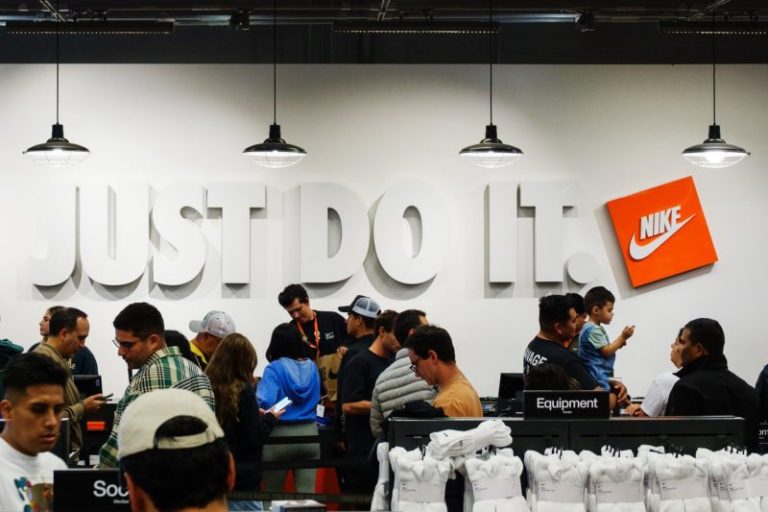
            The U.S. Equal Employment Opportunity Commission said Wednesday that it is investigating Nike for allegedly discriminating against white workers.

            The agency that polices discrimination in the workplace filed an action in federal court in Missouri to compel the publicly traded athletic shoe and apparel giant to produce information in response to a subpoena the agency served on the company last fall, according to court filings reviewed by NBC News.

            The EEOC said it was investigating allegations that the company’s mentorship and training programs and its personnel decisions gave nonwhite employees preferential treatment that amounts, according to the agency, to discrimination against white workers.

            Nike is the world’s largest sportswear and apparel company, with nearly 80,000 employees and revenues of around $51.4 billion in 2024.

            The allegations were not made by workers at Nike who believed they had been the targets of unfair treatment, however, as is typically the case in EEOC investigations.

            Instead, the court filings show that this case stems from a commissioner’s charge brought by then-commissioner Andrea Lucas herself in May 2024, and based on publicly available information such as Nike’s own annual “Impact Reports” and information on its public website.

            The EEOC’s request that a judge enforce the subpoena is the latest instance of the Trump administration using a federal agency that is typically charged with preventing and responding to discrimination against nonwhite Americans, and deploying it instead to protect what it says are the underrepresented interests of white people.

            Nike has objected in court to many of the EEOC’s demands to documents over the last several months, arguing that they are vague, overly broad, and seek information dating back to well before the period in question.

            “This feels like a surprising and unusual escalation,” a Nike spokesperson said. “We have had extensive, good-faith participation in an EEOC inquiry into our personnel practices, programs, and decisions and have had ongoing efforts to provide information and engage constructively with the agency.”

            The spokesperson added that Nike has shared “thousands of pages of information and detailed written responses” in connection with the agency’s inquiry and said the company is in the “process of providing additional information.” Nike will respond to the agency’s petition, the spokesperson said.

            Lucas was appointed chair of the EEOC by President Donald Trump in November 2025 after serving as a commissioner since 2020, when the president nominated Lucas to the agency.

            The agency said it filed the subpoena enforcement action after “first attempting to obtain voluntary compliance with its investigative requests.”

            This post appeared first on NBC NEWS

            Australia is taking part in a ministerial meeting aimed at exploring a strategic critical minerals alliance alongside the US, Europe, the UK, Japan and New Zealand.

            According to media reports, the talks were convened by US Secretary of State Marco Rubio and are scheduled for February 4. The gathering marks the second such summit in less than a month and is expected to bring together ministers from around 20 countries, including G7 members the US, UK, Japan, France, Germany, Italy and Canada.

            Discussions are set to focus on strengthening supply chain resilience, supporting clean energy transitions and deepening cooperation on strategic critical minerals. Early agenda items reportedly include potential US-backed price support mechanisms for critical minerals and rare earth elements.

            However, reports indicate that the Trump administration has since moved away from pursuing a minimum price guarantee framework.

            “The shift, which comes as a US Senate committee reviews a price floor extended to MP Materials (NYSE:MP) last year, marks a reversal from commitments made to industry and could set Washington apart from G7 partners discussing some form of joint price support or related measures to bolster production of critical minerals used in electric vehicles, semiconductors, defense systems and consumer electronics,” Reuters wrote in an exclusive.

            Shares in Australia reportedly went down following the shift in plans, as Australia has been working towards becoming a key player in reducing critical minerals reliance on China.

            Resources Minister Madeleine King was quoted by The Guardian as saying that the US decision to deflect from setting minimum pricing plans “won’t stop Australia” from pursuing its critical minerals reserve program.

            In January, Australia announced that it intends to make its Critical Minerals Strategic Reserve (CMSR) operational by the end of 2026.

            King detailed in a joint press release with Treasurer Jim Chalmers and Minister for Trade and Tourism Don Farrell that antimony, gallium and rare earths will be the first minerals of focus for the CMSR.

            On Tuesday (February 3), the US was reported to be building a domestic stockpile of critical minerals, marking the Trump administration’s latest effort to reduce the country’s reliance on China for key materials and components used in cellphones, military equipment and renewable energy technologies.

            This move also ties to the US and Australia deal signed last October, which outlined that both countries will each make more than US$1 billion in investments over the next six months for initial projects.

            “Within a year, we’ll have critical minerals and rare earths that you won’t know what to do with them,” Trump said at the time.

            More bilateral agreements on the supply chain are expected to be signed during the meeting.

            Securities Disclosure: I, Gabrielle de la Cruz, hold no direct investment interest in any company mentioned in this article.

            This post appeared first on investingnews.com