Author

admin

Browsing

Gold and silver are wrapping up yet another record-setting week that’s seen economic uncertainty and geopolitical tensions combine to push prices upward.

The yellow metal moved decisively through US$4,600 per ounce on Monday (January 12), trading above that level for a decent amount of the week.

For its part, silver reached what’s perhaps an even more impressive price milestone, surging past US$90 per ounce and breaking US$93 on Wednesday (January 14).

At this point, there’s a very long list of factors providing support for the precious metals, and we don’t have time to touch on all of them today. Instead let’s take a look at a few that have been making headlines over the past week or so and break them down.

First, there’s the latest news in the clash between US President Donald Trump and Federal Reserve Chair Jerome Powell. On Sunday (January 11), Powell said that two days earlier, the Department of Justice had served the Fed with grand jury subpoenas threatening a criminal indictment.

I had the chance to speak with Mario Innecco, who runs the @maneco64 channel on YouTube, not long after Powell’s statement — here’s how he summed it up:

‘They’ve subpoenaed documents, and it’s supposed to be related to the renovation of the Fed’s headquarters in Washington, DC. But Jay Powell came out and said it’s not, it’s basically because they want him to cut rates.

‘And he’s probably right. I think they’re using any kind of, let’s say tricks, to try to get rid of him, because I think the administration, even though they talk about how the economy is doing so great, they are desperate.’

Trump himself has said he had no knowledge of the investigation, and has also asserted that he’s not interested in firing Powell, whose term as Fed chair wraps up in May.

Nevertheless, the situation has reignited concerns about Fed independence, and has provided support for gold and silver, which tend to fare better when rates are lower. The next Fed chair, who has not yet been appointed, is widely expected to fall in line with Trump.

In addition to that, geopolitical tensions have remained high. Venezuela is still in the spotlight after its former president was removed by the US last week, and this week Trump warned that the US would intervene in Iran if its executions of anti-government protesters did not stop.

Iran responded by saying it would strike US bases if that happened.

Those events and others are boosting safe-haven demand for gold, as well as silver, but I want to hone in on a couple more points on the silver side that I think are worth looking at.

One of those is the news that the US plans to hold off on new critical minerals tariffs after receiving the results of a Section 232 investigation launched last year.

While a presidential proclamation states that imports of processed critical minerals and their derivative products do constitute a national security risk for the US, the country will first take steps such as negotiating supply agreements with other nations.

Silver was recently designated a critical mineral in the US, and some market watchers believe this news out of the US was responsible for a midweek price dip for the white metal. However, others continue to highlight silver’s deeper underlying drivers.

I heard recently from Andy Schectman of Miles Franklin, who emphasized that a key element supporting silver right now is the fact that more and more entities are standing for physical delivery.

Here’s how he explained what he’s seeing:

‘For years I’ve been saying … that the most well-informed, well-funded traders — and I’ll highlight well informed, that being the central banks — have been standing for delivery since 2020. Very unusual, because really no one ever stood for delivery. And this started to accelerate. But all along, the US was not part of this game. We were seeing it in the Global South with the BRICs. And now all of a sudden we are seeing the most well-informed traders in North America stand for delivery in massive amounts.’

Gold ended the week just below US$4,600, while silver was slightly above US$90.

Securities Disclosure: I, Charlotte McLeod, hold no direct investment interest in any company mentioned in this article.

This post appeared first on investingnews.com

Global sustainability strategies are entering a more politically complex phase in 2026 as governments and companies balance immediate economic pressures against long-term climate risks.

In a report published on Wednesday (January 14), S&P Global says that sustainability decision making in 2026 will be shaped by a growing tension between near-term priorities (energy security, affordability, geopolitical risk) and longer-term realities (climate adaptation, decarbonization, resource constraints).

The result is a move away from multilateral coordination toward a patchwork of national and regional responses.

Regulatory fatigue reshapes supply chains, critical minerals take center stage

Trade tensions, protectionist policies and political fatigue around sustainability regulation are pushing climate and human rights risks in supply chains out of the spotlight.

S&P Global notes that as regulatory momentum slows in some jurisdictions, companies may increasingly need to treat climate exposure as a core risk management issue rather than a compliance exercise.

The EU remains a key exception, though its policy direction is evolving. While the bloc has introduced far-reaching disclosure and due diligence rules, it is also simplifying parts of its regulatory framework.

Meanwhile, the EU’s carbon border adjustment mechanism, which took full effect on January 1, is expected to add at least US$15 billion in costs to imports from carbon-intensive producers, potentially reshaping global trade flows.

Furthermore, the firm said critical minerals will sit at the center of these dynamics in 2026.

Materials such as copper, lithium and rare earths underpin electrification, clean energy deployment and AI infrastructure, making access to them a central feature of trade diplomacy and investment.

China is expected to retain its lead in cleantech manufacturing, reinforcing its role as both a key supplier and a strategic risk for countries pursuing energy transitions.

Energy policy diverges as fossil fuels rebound, renewables expand

Another aspect of fragmentation is most visible in energy policy, where global fossil fuel demand rebounded faster than many policymakers expected after the pandemic and is projected to continue growing modestly.

In contrast, renewable energy remains the fastest-growing segment, though from a smaller base. S&P Global Energy estimates that fossil fuel demand will rise by less than 1 percent in 2026 compared with 2025, while solar and wind generation are expected to grow by more than 17 percent.

Similarly, the divergence between the world’s two largest economies is particularly stark.

The US has prioritized expanding fossil fuel exports, while China continues to invest heavily across clean energy supply chains such as solar manufacturing and electric vehicles.

The report said that this same divergence leaves many countries navigating trade offs between supply security and dependence. China continues to maintain a dominant position in clean energy technologies and has demonstrated its willingness to use export controls on strategic materials such as rare earths.

Despite continued growth in renewables, S&P Global expects 2026 to mark the first year-on-year decline in global solar capacity additions, driven largely by a slowdown in China.

While overall renewable capacity will still expand, analysts said the period of uninterrupted growth is ending.

At the same time, increasing renewable penetration is pushing wholesale power prices lower in some markets while accelerating demand for battery storage and more flexible power purchase agreements.

AI adds new strain to power systems

Artificial intelligence (AI) is adding further strain to energy systems.

The rapid expansion of AI-driven data centers is driving electricity demand sharply higher, complicating sustainability targets for both governments and corporations.

S&P Global estimates that data center power consumption could exceed 2,200 terawatt-hours by 2030, roughly equivalent to India’s current electricity use. Grid constraints, rising power prices in some regions and growing water stress are emerging as political and social flashpoints, particularly in parts of the US.

While major technology companies have made high-profile net-zero commitments, the report’s data shows that sustainability ambition across the data center sector remains uneven.

According to the firm’s 2024 Corporate Sustainability Assessment, 38 percent of assessed companies with data center operations do not have a net-zero target.

Analysts warned that rising AI-related energy demand may lead to increased fossil fuel use in the near term, with some regions delaying planned coal and gas plant retirements to maintain grid reliability.

Climate adaptation gains priority

The implications of rapid energy shifts also mean that climate adaptation and resilience are gaining prominence.

S&P Global said governments and investors increasingly recognize that the world is likely to overshoot the Paris Agreement’s 1.5 degree Celsius warming goal, making adaptation unavoidable.

Global economic losses from natural disasters reached US$320 billion in 2024, according to Munich Re, while UN data suggests the number of natural disasters could rise by 40 percent by 2030 without stronger mitigation.

Therefore, investment in adaptation is emerging as a major opportunity as well as a necessity. Singapore sovereign wealth fund GIC, for instance, estimates that adaptation and resilience investments could total US$9 trillion by 2050.

That theme featured prominently at Climate Week NYC in 2025 and at COP30, where governments agreed to triple public adaptation finance by 2035 from 2025 levels.

Taken altogether, S&P Global’s outlook points to a sustainability landscape that is less coordinated but no less consequential. While global consensus is weakening, pressures from various sectors are forcing governments and companies to make increasingly difficult trade offs as they chart their paths through 2026.

Securities Disclosure: I, Giann Liguid, hold no direct investment interest in any company mentioned in this article.

This post appeared first on investingnews.com

BlackRock (NYSE:BLK) has raised US$12.5 billion for its artificial intelligence–focused infrastructure venture backed by Microsoft (NASDAQ:MSFT), as the world’s largest asset manager deepens its push to support surging AI demand.

The capital raise advances a long-term fundraising target of US$30 billion set when the partnership was unveiled in 2024. This positions the venture as one of the largest private efforts aimed at financing AI-related infrastructure globally.

With the use of leverage, BlackRock has said the platform could ultimately support as much as US$100 billion in total investment.

The partnership also brings together BlackRock and its infrastructure unit Global Infrastructure Partners alongside Microsoft, Abu Dhabi–based investment vehicle MGX, NVIDIA (NASDAQ:NVDA), and xAI.

The group is focused on funding new and expanded data centers as well as the energy infrastructure required to power them, with the bulk of initial investments expected to be made in the US.

BlackRock’s recent assessment finds that energy and power infrastructure will become a primary beneficiary of AI-driven growth over the coming years.

In its latest Investment Directions report, which surveyed 732 Europe, Middle East, and Africa–based clients, BlackRock found that while AI remains central to investment thinking, enthusiasm for large US technology firms has cooled.

Only about one-fifth of respondents identified big tech as a compelling opportunity for 2026, signaling a shift after the strong rally in AI-related equities in 2025.

Instead, investors increasingly see power generation, grid upgrades, and related infrastructure as offering more durable returns as data center demand accelerates.

The AI infrastructure partnership was launched last year amid growing concern that constraints in electricity supply and grid capacity could slow the rollout of next-generation computing facilities.

By combining private equity capital with debt financing, the venture aims to scale investment quickly while spreading risk across a broad group of institutional backers.

Securities Disclosure: I, Giann Liguid, hold no direct investment interest in any company mentioned in this article.

This post appeared first on investingnews.com

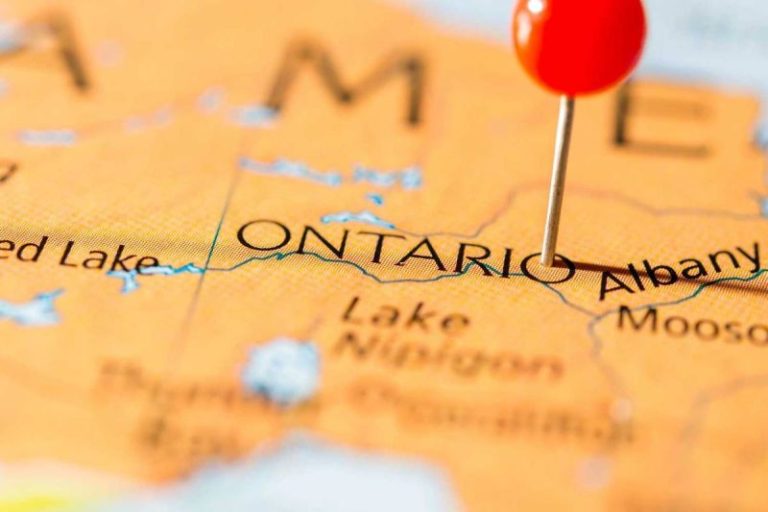
Ontario moved this week to fast track Canada Nickel Company’s (TSXV:CNC,OTCQX:CNIKF) Crawford nickel project, positioning what’s being billed as the western world’s largest nickel development as a cornerstone of the province’s push to secure domestic critical minerals supply chains.

Crawford is expected to attract roughly C$5 billion in investment and unlock what Ontario describes as the world’s second largest nickel reserves, located within the Timmins Nickel District.

The project includes plans for a large open-pit mine, two ore processing plants, associated mining infrastructure and downstream facilities to produce nickel for the stainless steel and electric vehicle markets.

“As President Trump takes aim at our economy, Ontario is moving at lightning speed to open this 100 per cent Canadian owned mine to create 4,000 jobs for Canadian workers,” said Stephen Lecce, Ontario’s minister of energy and mines.

“In 2026, our government is going full tilt to unlock one of the world’s largest nickel deposits that will supercharge our economy and help end China’s critical mineral dominance,’ he added.

Canada Nickel estimates the project will generate up to 2,000 jobs during construction and support about 1,300 direct jobs and 3,000 indirect jobs once in operation. The company also projects the development could contribute more than C$70 billion to Canada’s gross domestic product over its lifetime, with C$67 billion attributed to Ontario.

The Ontario government said Crawford will advance under its newly launched “One Project, One Process” framework, making it only the second mining development to receive the designation since the program was introduced in October.

The streamlined approach is designed to consolidate permitting, reduce regulatory timelines and provide greater certainty for large-scale projects deemed strategically important.

The provincial government said the new framework aims to cut mine permitting timelines by up to 50 percent, addressing a system that has historically taken more than a decade to approve major developments. Now the Ministry of Energy and Mines will serve as a single one-stop-shop for provincial approvals and Indigenous consultation.

Local officials have welcomed the move.

“Fast-tracking the Crawford Nickel Project through the ‘One Project, One Process’ framework sends a strong message that Northern Ontario is open for business,” said George Pirie, the member of provincial parliament for Timmins.

Securities Disclosure: I, Giann Liguid, hold no direct investment interest in any company mentioned in this article.

This post appeared first on investingnews.com

Here’s a quick recap of the crypto landscape for Friday (January 16) as of 9:00 a.m. UTC.

Get the latest insights on Bitcoin, Ether and altcoins, along with a round-up of key cryptocurrency market news.

Bitcoin and Ether price update

Bitcoin (BTC) was priced at US$95,649.68, down by 1.5 percent over 24 hours.

Bitcoin price performance, January 16, 2025.

Chart via TradingView

Ether (ETH) was priced at US$3,311.49, down by 2.0 percent over the last 24 hours.

Altcoin price update

  • XRP (XRP) was priced at US$2.07, down by 3.3 percent over 24 hours.
  • Solana (SOL) was trading at US$143.12, down by 1.5 percent over 24 hours.

Today’s crypto news to know

Trump pushes emergency power auction, shifts AI energy costs

US President Donald Trump and several state governors are pressing the operator of the largest US power grid to hold an emergency auction that would force major data center operators to finance new electricity generation needed for AI growth.

According to the Financial Times, the proposal would require tech companies to bid for long-term power contracts, potentially underwriting roughly US$15 billion in new power plants whether or not the electricity is ultimately used.

The push targets PJM Interconnection, which supplies power across the US Northeast and Midwest and sits at the center of the country’s fastest-growing data center corridor.

The administration is framing the move as a response to rising household electricity bills, which have climbed 13 percent since early 2025 amid surging demand from AI infrastructure.

Belgium’s KBC becomes first bank to offer Bitcoin, Ether trading under MiCA

Belgium’s KBC Bank is set to let retail customers buy and sell Bitcoin and Ether directly through its Bolero investment platform starting mid-February, marking a first for the country’s traditional banking sector.

The launch follows the full implementation of the EU’s Markets in Crypto-Assets Regulation (MiCA), which gives banks a clear legal pathway to offer crypto services.

Until now, Belgian investors largely relied on foreign exchanges or fintech apps to access digital assets.

The bank has completed the required Crypto-Asset Service Provider notification under MiCA, with oversight shared between Belgium’s market and central banking authorities. Under the framework, Bitcoin and Ether fall into a general category of crypto-assets rather than stablecoins.

ETH founder says blockchain is nearing its 2014 vision

Ethereum founder Vitalik Buterin says the network is finally delivering on its original 2014 vision, as a series of technical upgrades push the blockchain closer to scalable, decentralized application infrastructure.

Ethereum is now scaling, it is now cheap, and it is on track to get more scalable and cheaper thanks to the power of ZK-EVMs,’ Buterin posted on X.

His comments come as Ether climbed above US$3,300, reflecting renewed market confidence in the network’s long-term roadmap. Buterin also pointed to Ethereum’s shift to proof-of-stake, lower transaction fees, and advances in zero-knowledge scaling and sharding as foundational progress.

He acknowledged that competing narratives over the past several years distracted from the core mission, but argued the underlying technology has continued to strengthen. Improvements in decentralized messaging and privacy-focused tools were also cited as signs of ecosystem maturity.

Securities Disclosure: I, Meagen Seatter, hold no direct investment interest in any company mentioned in this article.

Securities Disclosure: I, Giann Liguid, hold no direct investment interest in any company mentioned in this article.

This post appeared first on investingnews.com

BHP (ASX:BHP,NYSE:BHP,LSE:BHP) and Rio Tinto (ASX:RIO,NYSE:RIO,LSE:RIO) are collaborating to extract up to 200 million tonnes of iron ore under two non-binding memorandums of understanding.

The companies said on Wednesday (January 14) that mining and extraction will be performed at BHP’s Yandi and Rio Tinto’s Yandicoogina operations, which sit approximately 80 kilometres away from each other.

“This is a clear example of productivity in action — unlocking new opportunities by making the most of our existing resources,” said Tim Day, BHP Western Australia’s iron ore asset president.

“Together we will extend the life of these operations, create additional value, and further support Western Australian jobs and local communities,” added Matthew Holcz, Rio Tinto’s iron ore chief executive.

Under the agreement, BHP will also supply its Yandi Lower Channel deposit wet iron ore to Rio Tinto for processing at existing wet plants under agreed-upon commercial terms.

BHP’s Yandi is a part of an 85/15 joint venture between BHP, Mitsui & Co. (TSE:8031,OTCPL:MITSF) and Itochu (TSE:8001,OTCPL:ITOCF). It produced 257 million tonnes of iron ore in 2023, which BHP says is “enough to make steel for approximately 2,980 Sydney Harbour Bridges.”

The companies will also collaborate on the development of Rio Tinto’s Wunbye deposit, located at the Yandicoogina operation. Yandicoogina is one of Rio Tinto’s highest-producing iron ore mines, and according to the company was among the first to operate a fleet of autonomous haul trucks and drills.

“The operation produces Hamersley Iron Yandi fines — a product with low impurities that delivers a high-iron sinter — used by customers across East Asia and Southern China in their steelmaking process,” Rio Tinto states on its website.

For this partnership, BHP and Rio Tinto will progress a conceptual study, then an order of magnitude study.

Regulatory and joint venture approvals, along with engagement with traditional owners, will be required for any implementation. Subject to a final investment decision, first ore from both deposits is anticipated early next decade.

Securities Disclosure: I, Gabrielle de la Cruz, hold no direct investment interest in any company mentioned in this article.

This post appeared first on investingnews.com

Highlights:  

  • New Zone at Tamarack 1.28 g/t Au over 49.3m400m to the east
  • Cleary Zone 0.91 g/t Au over 150.9m – zone broadening at depth

The width refers to drill hole intercepts; true width cannot be determined due to the uncertain geometry of mineralization

Freegold Ventures Limited (‘Freegold’) (TSX: FVL,OTC:FGOVF) (OTCQX: FGOVF) is pleased to announce the successful identification of a new mineralized area at its Golden Summit project, the Tamarack Zone.

The Tamarack Zone is situated approximately 400 metres east of the Cleary Zone, extending the mineralized footprint at Golden Summit. As part of Freegold’s ongoing efforts to identify additional mineralization adjacent to the primary resource area, four drill holes were completed in the Tamarack Zone. This initiative is designed to evaluate the project’s exploration potential further and delineate the extent of mineralization. The identification of the Tamarack Zone marks a significant advancement in expanding the eastern boundaries of Golden Summit’s mineralized area. This discovery highlights Freegold’s continued success in growing the mineralized footprint at Golden Summit. The new Tamarack Zone demonstrates both grade and width comparable to previous intercepts in the resource area, suggesting the potential for a significant new mineral resource area immediately to the east.

The first hole in the Tamarack Zone, GS2536, was collared nearly 400 metres east of one of the easternmost holes in the Cleary Zone (GS2532) and intersected 1.28 g/t gold over 49.2 metres. Freegold is highly encouraged by these initial results. Assays for the remaining three holes in this new zone are pending: GS2540, GS2545, and GS2551. Freegold has planned additional drilling for 2026, targeting the area between Cleary and Tamarack, which contains substantial infill potential in previously untested areas.

Hole

Depth (m)

Dip (°)

Azimuth
(°)

From (m)

To (m)

Interval
(m)

Au (g/t)

GS2536

483.3

-70

330

103.4

113.0

9.6

0.88

279.5

281.7

2.2

23.1

362.0

411.2

49.2

1.28

452.0

473.9

21.9

0.71

The width refers to drill hole intercepts; true width cannot be determined due to the uncertain geometry of mineralization

Cleary Zone – GS2532 ~ 400m west of GS2536

Hole

Depth (m)

Dip (°)

Azimuth (°)

From (m)

To (m)

Interval
(m)

Au (g/t)

GS2532

785.5

-75

360

389.2

395.3

6.1

24.9

529.4

680.3

150.9

0.91

width refers to drill hole intercepts; true width cannot be determined due to the uncertain geometry of mineralization

The easternmost drill hole in the Cleary Zone, GS2532, was directed north to assess the down-dip continuity of the Cleary Vein system along its eastern edge. Known for high-grade, narrow, and discontinuous veins at shallower depths, Freegold’s exploration is focusing on the potential for wider mineralized zones at depth. Drill hole GS2532 intersected a broad zone of 0.91 g/t gold over 150.9 meters, further validating the current exploration model and provided significant infill data for the upcoming resource update and pre-feasibility study (PFS).  (Section 479950E).

Drilling was completed in mid-December, with 62 holes drilled. Analytical work, cutting and sampling of the remaining drill holes, is ongoing, and further results will be reported once they have been received and validated.

Drilling is planned to re-commence in February, beginning with an initial 50,000-meter program. Comprehensive metallurgical studies and an extensive infill drilling campaign will continue to support ongoing resource modelling and the pre-feasibility study (‘PFS’). These efforts are underpinned by a highly successful equity financing round that attracted participation from over 20 institutions and secured capital for continued exploration beyond the main resource area and for completing the PFS.

About Golden Summit:
Since 2020, the Golden Summit Project has become one of North America’s largest undeveloped gold resources. The significant increase in resource ounces and grade is the result of targeted drilling campaigns from 2020 to 2024 (over 130,000 meters), ongoing improvements to geological models, and a better understanding of mineralization controls. Ongoing drilling has continued to delineate zones of higher-grade mineralization and to convert previously considered waste areas into potentially economically viable mineralized zones. Continued westward expansion has led to the discovery of new, higher-grade zones, increasing both indicated gold resources and grades. Positive metallurgical test results have also advanced the project, with recovery rates exceeding 90% achieved using sulphide-oxidizing techniques, including BIOX®, POX, and the Albion Process.  Recent test work has also included the GlassLock Process, which demonstrated that the gold grade of the concentrate can be increased with no measurable gold loss, and that a direct-to-smelter saleable concentrate can be produced while significantly lowering the arsenic content.  

As of July 2025, the current Golden Summit resource includes an Indicated Primary Mineral Resource of 17.2 million ounces at 1.24 g/t Au and an Inferred Primary Mineral Resource of 11.9 million ounces at 1.04 g/t Au, calculated using a 0.5 g/t cut-off grade and a gold price of $2,490.  Cutting, sampling, and analytical work remain ongoing. Drilling is expected to resume in February. Results from the drill programs are expected provide the basis for an updated mineral resource estimate, which will support the upcoming Pre-Feasibility Study (PFS).

Links to the Plan Map and Section 479950E
https://freegoldventures.com/site/assets/files/6287/section-479950e.pdf
https://freegoldventures.com/site/assets/files/6287/nr-2025-drilling-20260113.pdf

HQ Core is logged, photographed and cut in half using a diamond saw, and one-half is placed in sealed bags for preparation and subsequent geochemical analysis by MSA Laboratories in Fairbanks, Alaska or ALS’s facilities in Vancouver and Thunder Bay.  At MSALABS, the entire sample will be dried and crushed to 70% passing -2mm (CRU-CPA). A ~500g riffle split was analyzed for gold using CHRYSOS PhotonAssay (CPA-Au1). From this, 250g will be further riffle split from the original PhotonAssay sample, pulverized, and a 0.25g sub-sample analysed for multi-element geochemistry using MSA’s IMS230 package, which includes 4-acid digestion and ICP-MS finish. MSALABS operates under ISO/IEC 17025 and ISO 9001 certified quality systems.

Core samples were delivered to ALS’s facility in Vancouver, Canada, where each sample was crushed to 70% passing a 2 mm (Tyler 9 mesh, U.S. Std. No. 10) screen.  A representative ~500 g subsample was obtained by riffle splitting (SPL-32a) and analyzed for gold using ALS method Au-PA01, (Photon Assay) which provides a detection range of 0.03 to 350 ppm, in Thunder Bay. In addition, a subsample was analyzed for multi-element geochemistry using ALS method ME-ICP61 (34-element, four-acid ICP-AES).

A QA/QC program includes laboratory and field standards inserted every ten samples. Blanks are inserted at the start of the submittal, and at least one blank every 25 standards.

The Qualified Person for this release is Alvin Jackson, P.Geo., Vice President of Exploration and Development for Freegold, who has approved the scientific and technical disclosure in this news release.

About Freegold Ventures Limited
Freegold is a TSX-listed company focused on exploration in Alaska.

Some statements in this news release contain forward-looking information, including, without limitation, statements as to planned expenditures and exploration programs, potential mineralization and resources, exploration results, the completion of an updated NI 43-101 technical report, and any other future plans. These statements address future events and conditions and, as such, involve known and unknown risks, uncertainties, and other factors which may cause the actual results, performance, or achievements to be materially different from any future results, performance, or achievements expressed or implied by the statements. Such factors include, without limitation, the completion of planned expenditures, the ability to complete exploration programs on schedule, and the success of exploration programs. See Freegold’s Annual Information Form for the year ended December 31st, 2024, filed under Freegold’s profile at www.sedar.com, for a detailed discussion of the risk factors associated with Freegold’s operations.


SOURCE Freegold Ventures Limited

View original content to download multimedia: http://www.newswire.ca/en/releases/archive/January2026/15/c6262.html


News Provided by Canada Newswire via QuoteMedia

This post appeared first on investingnews.com

Combined Company, ‘Copper Intelligence’ to become the first stand-alone Democratic Republic of Congo (DRC) company to be publicly traded in the United States.

African Discovery Group (OTC:AFDG) (‘AFDG’ or the ‘Company’) announced today that shareholders have approved the Company’s pending merger with Butembo Copper Exploration license in the DRC to acquire 100% of the shares of SOCIETE GRABIN MINING SAS (the ‘Transaction’). Subject to the completion of the closing, the stock-based transaction will create a dedicated copper exploration company, with a focus on creating value around Africa and DRC specifically focused on under-explored basins of copper.

‘We are proud to have delivered this compelling opportunity for shareholders, and are confident in our ability as a combined company, to participate in a substantial buildout of copper on a global scale,’ said Alan Kessler, the outgoing Chairman and CEO of African Discovery Group. ‘According to Rio Tinto, African deposits make up eight out of the ten highest grade copper deposits discovered since 1990 globally. DRC’s copper production itself is among the largest in the world, with the DRC itself concentrating 65% of newly announced copper reserves identified worldwide, according to S&P Global Market Intelligence. Because of the resolution of numerous geopolitical differences precluding this development previously in the DRC, the Trump administration has paved the way for this commercialization process.’

He added, ‘We are confident the copper demand environment between grid modernization, data usage, electronic vehicles, and telecommunications, rural electrification of India, Artificial Intelligence infrastructure, next generation defense systems to name a few, will continue to put broad demand-based pressure on global supply.  A favorable environment for the commodity has additionally been augmented by the strategic mineral designation of Copper by the US government, as well as recent mega mergers of Copper producers.  Under the leadership of Andrew Groves and Aldo Cesano, who have spent their careers developing mining projects in the DRC and the region, we look forward to their buildout of this pioneering African company.’

The transaction is expected to close imminently, subject to the satisfaction or waiver of customary closing conditions. When completed, the Merger will result in the combined company becoming the first stand-alone DRC company to be publicly traded in the United States.

EAS Advisors LLC have acted as the corporate advisor for the Company on the Transaction.

Click here to continue reading.

Media Contact:
www.copperintelligence.com
Maxine Gordon
mg@africandiscoverygroup.com
(917) 478-0406


View original content:https://www.prnewswire.com/news-releases/african-discovery-group-announces-shareholder-approval-of-butembo-merger-agreement-302662498.html

SOURCE African Discovery Group

News Provided by PR Newswire via QuoteMedia

This post appeared first on investingnews.com

Global sustainability strategies are entering a more politically complex phase in 2026 as governments and companies balance immediate economic pressures against long-term climate risks, according to S&P Global’s latest outlook on sustainability trends.

S&P Global said sustainability decision-making in 2026 will be shaped by a growing tension between near-term priorities (energy security, affordability, geopolitical risk) and longer-term realities (climate adaptation, decarbonization, resource constraints).

The result is a world moving away from multilateral coordination toward a patchwork of national and regional responses.

Regulatory fatigue reshapes supply chains, critical minerals take center stage

Trade tensions, protectionist policies, and political fatigue around sustainability regulation are pushing climate and human rights risks in supply chains out of the spotlight.

S&P Global notes that as regulatory momentum slows in some jurisdictions, companies may increasingly need to treat climate exposure as a core risk management issue rather than a compliance exercise.

The European Union (EU) remains a key exception, though its policy direction is evolving. While the bloc has introduced far-reaching disclosure and due diligence rules, it is also simplifying parts of its regulatory framework.

Meanwhile, the EU’s carbon border adjustment mechanism (CBAM), which took full effect on January 1, is expected to add at least US$15 billion in costs to imports from carbon-intensive producers, potentially reshaping global trade flows.

Furthermore, the firm said critical minerals will sit at the center of these dynamics in 2026.

Materials such as copper, lithium, and rare earths underpin electrification, clean energy deployment, and AI infrastructure, making access to them a central feature of trade diplomacy and investment.

China is expected to retain its lead in cleantech manufacturing, reinforcing its role as both a key supplier and a strategic risk for countries pursuing energy transitions.

Energy policy diverges as fossil fuels rebound, renewables expand

Another aspect of fragmentation is most visible in energy policy, where global fossil fuel demand rebounded faster than many policymakers expected after the pandemic and is projected to continue growing modestly.

In contrast, renewable energy remains the fastest-growing segment, though from a smaller base. S&P Global Energy estimates that fossil fuel demand will rise by less than 1 percent in 2026 compared with 2025, while solar and wind generation are expected to grow by more than 17 percent.

Similarly, the divergence between the world’s two largest economies is particularly stark. The US has prioritized expanding fossil fuel exports, while China continues to invest heavily across clean energy supply chains such as solar manufacturing and electric vehicles.

The report said that this same divergence leaves many countries navigating trade-offs between supply security and dependence. China continues to maintain a dominant position in clean energy technologies and has demonstrated its willingness to use export controls on strategic materials such as rare earths.

Despite continued growth in renewables, S&P Global expects 2026 to mark the first year-over-year decline in global solar capacity additions, driven largely by a slowdown in China. While overall renewable capacity will still expand, analysts said the period of uninterrupted growth is ending.

At the same time, increasing renewable penetration is pushing wholesale power prices lower in some markets while accelerating demand for battery storage and more flexible power purchase agreements.

AI adds new strain to power systems

Artificial intelligence is adding further strain to energy systems. The rapid expansion of AI-driven data centers is driving electricity demand sharply higher, complicating sustainability targets for both governments and corporations.

S&P Global estimates that data center power consumption could exceed 2,200 terawatt-hours by 2030, roughly equivalent to India’s current electricity use. Grid constraints, rising power prices in some regions, and growing water stress are emerging as political and social flashpoints, particularly in parts of the US.

While major technology companies have made high-profile net-zero commitments, the report’s data shows that sustainability ambition across the data center sector remains uneven.

According to the firm’s 2024 Corporate Sustainability Assessment, 38 percent of assessed companies with data center operations do not have a net-zero target.

Analysts warned that rising AI-related energy demand may lead to increased fossil fuel use in the near term, with some regions delaying planned coal and gas plant retirements to maintain grid reliability.

Climate adaptation gains priority

The implications of rapid energy shifts also mean that climate adaptation and resilience are gaining prominence.

S&P Global said governments and investors increasingly recognize that the world is likely to overshoot the Paris Agreement’s 1.5-degree Celsius warming goal, making adaptation unavoidable.

Global economic losses from natural disasters reached US$320 billion in 2024, according to Munich Re, while United Nations (UN) data suggests the number of natural disasters could rise by 40 percent by 2030 without stronger mitigation.

Therefore, investment in adaptation is emerging as a major opportunity as well as a necessity. Singapore sovereign wealth fund GIC, for instance, estimates that adaptation and resilience investments could total US$9 trillion by 2050. That theme featured prominently at Climate Week NYC in 2025 and at COP30, where governments agreed to triple public adaptation finance by 2035 from 2025 levels.

Taken altogether, S&P Global’s outlook points to a sustainability landscape that is less coordinated but no less consequential.

While global consensus is weakening, pressures from various sectors are forcing governments and companies to make increasingly difficult trade-offs as they chart their paths through 2026.

Securities Disclosure: I, Giann Liguid, hold no direct investment interest in any company mentioned in this article.

This post appeared first on investingnews.com

(TheNewswire)

GRANDE PRAIRIE, ALBERTA TheNewswire – (January 15, 2026): Angkor Resources Corp. (TSXV: ANK,OTC:ANKOF) (‘ANGKOR’ OR ‘THE COMPANY’) announces additional exploration to begin on its latest gold target, CZ Gold on the west side of the Canada Wall prospect on the Andong Meas exploration license in Ratanakiri Province, Cambodia.

The CZ Gold Prospect announced previously – (see Angkor Resources IDENTIFIES GOLD PROSPECT ON ANDONG MEAS LICENSE, CAMBODIA – Angkor Resources Corp.), sits atop a steep hill that has a 47-metre underground incline from the exit to the entrance, with multiple shallow channel samples from underground workings of artisanal miners. The creek directly below the area, described on the map below as ‘Gold Placer-Mined Creek Draining CZ Zone’, has been mined over the past rainy season and panned for 150 metres along both sides of the stream, creating a landscape of pits and piles in the creek bed draining away from CZ Gold.


Click Image To View Full Size

Figure 1 Angkor staff survey the creek bed area after artisanal miners through rainy season in the zone at the base of CZ Gold Prospect

Angkor’s mineral exploration team is initiating a large trenching, sampling, assay and analysis program running roughly perpendicular across the projected incline to surface, starting at the top of the exit area. The trench is expected to be 80 metres long and several weeks are budgeted in the timeline. Farmers are compensated for any loss or damage of cashew trees or other plantings and use of surface land.

The purpose of the trenching will be to determine the geology and structure of the stockwork and its wall rocks.

The google map below indicates the planned trenching target area shown in orange.

Click Image To View Full Size

In addition to the exploration planned for the CZ Zone, plans are also underway to conduct a drill program on the Wild Boar gold prospect, an area located 3 kilometers east of the CZ target. Trenching and sampling at the Wild Boar area has led to the discovery of narrow northwest trending southwest dipping quartz veins. In the area where artisanal miners have in the past mined the upper 1.5 meters of soil, trenching has revealed an abundance of quartz vein float sitting on top of the weathered soil. The assays from the abundant quartz vein float (see Assays Returns 25.6 gpt Gold in Wild Boar Veins – Angkor Resources Corp) have expanded the gold anomaly to 1.5 by 1.2 kilometres.

QUALIFIED PERSON:

Dennis Ouellette, B.Sc., P.Geo., is a member of The Association of Professional Engineers and Geoscientists of Alberta (APEGA #104257) and a Qualified Person as defined by National Instrument 43-101 (‘NI 43-101’). He is the Company’s VP Exploration on site and has reviewed and approved the technical disclosure in this document.

ABOUT Angkor Resources CORPORATION:

Angkor Resources Corp. is a public company, listed on the TSX-Venture Exchange, and is a leading resource optimizer in Cambodia working towards mineral and energy solutions across Canada and Cambodia.

The company’s mineral subsidiary, Angkor Gold Corp. in Cambodia holds two mineral exploration licenses in Cambodia with multiple prospects in copper and gold. Both licenses are in their first two-year renewal term.

Its Cambodian energy subsidiary, EnerCam Resources Cambodia Co. Ltd., was granted an onshore oil and gas license of 7300 square kilometres in the southwest quadrant of Cambodia called Block VIII. The company then removed all parks and protected areas and added 220 square kilometres, making the license area just over 4095 square kilometres. EnerCam is actively advancing oil and gas exploration activities onshore to meet its mission to prove Cambodia as an oil and gas producing Nation.

Since 2022, Angkor’s Canadian subsidiary, EnerCam Exploration Ltd., has been involved in oil and gas production in Saskatchewan, Canada with measures of gas capture to reduce emissions. ANGKOR’s carbon capture and gas conservation project is part of its long-term commitment to Environmental and Social projects and cleaner energy solutions across jurisdictions.

CONTACT: Delayne Weeks – CEO

Email:- info@angkorresources.com Website: angkorresources.com

Telephone: +1 (780) 831-8722

Please follow @AngkorResources on , , , Instagram and .

Neither TSX Venture Exchange nor its Regulation Services Provider (as that term is defined in the policies of the TSX Venture Exchange) accepts responsibility for the adequacy or accuracy of this release.

_____________________________________

Certain information set forth in this news release may contain forward-looking statements that involve substantial known and unknown risks and uncertainties. These forward-looking statements are subject to numerous risks and uncertainties, certain of which are beyond the control of the Company, including, but not limited to the potential for gold and/or other minerals at any of the Company’s properties, the prospective nature of any claims comprising the Company’s property interests, the impact of general economic conditions, industry conditions, dependence upon regulatory approvals, uncertainty of sample results, timing and results of future exploration, and the availability of financing.

Readers are cautioned that the assumptions used in the preparation of such information, although considered reasonable at the time of preparation, may prove to be imprecise and, as such, undue reliance should not be placed on forward-looking statements.

Copyright (c) 2026 TheNewswire – All rights reserved.

News Provided by TheNewsWire via QuoteMedia

This post appeared first on investingnews.com