Author

admin

Browsing

  • High-grade gold intercepts confirm strong continuity at the Road Cut Zone with multiple parallel shears traced along the Contact Zone Fault
  • Drilling continues to expand mineralisation at the Jagger Zone, confirming gold-bearing shears to depths exceeding 240 m and reinforcing the strength of Kobo’s structural model
  • Ongoing 12,000–15,000 m program advancing toward Kobo’s maiden Mineral Resource Estimate, with two rigs active and geological modelling underway across priority targets

Kobo Resources Inc. (‘ Kobo’ or the ‘ Company ‘) ( TSX.V: KRI ) is pleased to report additional diamond drill results from the Jagger and Road Cut Zones at its 100%-owned Kossou Gold Project (‘ Kossou ‘) in Côte d’Ivoire, West Africa. The new results continue to confirm strong continuity of high-grade gold mineralisation at Kossou and enhance the Company’s confidence in the emerging scale and potential of its highly prospective target areas.

This press release features multimedia. View the full release here: https://www.businesswire.com/news/home/20251008273472/en/

Figure 1: Road Cut Zone Drill Hole Location Map and Simplified Geology

Diamond Drill Results Highlights:

Road Cut Zone:

  • KDD0095
    • 17.0 metres (‘m’) at 3.87 g/t Au from 22.0, including 9.0 m at 6.84 g/t Au, from 23.0 m
  • KDD0098
    • 6.0 m at 1.48 g/t Au from 157.0 m
  • KDD0099
    • 5.0 m at 2.82 g/t Au from 170.0 m (Contact Zone Target)

Jagger Zone

  • KDD0096
    • 4.0 m at 1.48 g/t Au from 21.0 m
    • 3.0 m at 2.34 g/t Au from 31.0 m
    • 5.0 m at 1.41 g/t Au from 106.0 m
  • KDD0097
    • 4.0 m at 2.30 g/t Au from 240.0 m
    • 6.0 m at 1.52 g/t Au from 350.0 m

These results represent the first six holes from Kobo’s ongoing 12,000–15,000 m diamond drilling program launched on September 4, 2025. The current campaign is focused on systematically expanding known mineralized zones at the Jagger and Road Cut Zones while testing the interpreted structural corridor that links them. Drilling is also continuing to evaluate the Contact Zone Fault ‘( CZ Fault ‘), an important regional structure believed to provide deep fluid pathways for gold mineralisation at Kossou.

Edward Gosselin, CEO and Director of Kobo commented: ‘The latest intersections continue to demonstrate the strength of gold mineralisation within the Road Cut and Jagger structural zones. These results are confirming the continuity of gold-bearing shears and the importance of the Contact Zone Fault as a potential regional control on mineralisation. Particularly, the consistency of gold mineralisation at the Jagger Zone, from surface to greater than 180 m depth, highlights the continuity and strength of the system.’ He continued: ‘Ongoing drilling will allow us to further test these controls, define extensions along strike and at depth, and continue building a comprehensive geological model for Kossou as we progress toward a maiden Resource Estimate on the project.’

Road Cut Zone Highlights

KDD0095, KDD0098, and KDD0099 were drilled along a 150-metre strike length on Sections RCZ500, RCZ600, and RCZ650 (see Figure 1 for drill-hole locations). Full assay results are presented in Table 1 .

The most significant intersection was returned from KDD0095 on Section RCZ500, averaging 17.0 m at 3.87 g/t Au from 22.0 m, including 9.0 m at 6.84 g/t Au from 23.0 m (see Figure 2 and Figure 3). This intercept occurs approximately 20 m beneath artisanal workings and is hosted within a shear zone previously intersected in KDD0012 (11.0 m at 1.71 g/t Au) and KDD0091 (15.55 m at 2.30 g/t Au) . The shear zone parallels the main CZ Fault and lies roughly 60 m west of this structure, suggesting a close spatial and structural relationship.

KDD0098 , drilled on Section RCZ600 , intersected 6.0 m at 1.48 g/t Au from 157.0 m within a shear zone exhibiting typical alteration and quartz veining approximately 12.0 m from the CZ Fault. The mineralisation occurs about 120.0 m below surface. Several additional lower-grade intervals were also intersected within 50.0 m of the CZ Fault in sheared basalt (see Figure 4).

KDD0099 , located approximately 50 m south of KDD0098 on Section RCZ650, intersected 5.0 m at 2.82 g/t Au from 170.0 m directly on the CZ Fault, confirming the presence of gold mineralisation along this important regional structure (see Figure 5).

The intensity of shearing, alteration and quartz veining in the three drill holes in the vicinity of the artisanal mine and CZ Fault is very encouraging for further gold mineralisation and will be further tested with additional diamond drilling.

Jagger Zone Highlights

KDD0094 , KDD0096 , and KDD0097 were drilled on Section JZ600 to evaluate the core mineralisation previously identified and to test the continuity of Structure JZ6 near surface and at depth (see Figures 6 and 7).

KDD0096 intersected 5.0 m at 1.41 g/t Au associated with Structure JZ6, approximately 65 m below surface. KDD0097 , which targeted the 8.0 m at 3.72 g/t Au intersection in KDD0028 at depth, returned 2.0 m at 0.58 g/t Au . Drilling confirms that well-defined shears extend to at least 240 m below surface, with gold grades corresponding to the density of quartz veining within these structures.

Additional intersections of 4.0 m at 2.30 g/t Au and 6.0 m at 1.52 g/t Au in KDD0097 , associated with Structures JZ1 and JZ4 respectively, demonstrate good continuity between 150 m and 180 m depth along the shear zones. These results further validate the Company’s structural model, indicating that gold mineralisation is hosted within a series of steep, westerly dipping shears closely associated with quartz-feldspar porphyry and diorite intrusives within the basaltic volcanic sequence.

Next Steps: Progressing the 2025 Drill Program and Advancing Resource Definition at Kossou

To date, the Company has completed nine diamond drill holes (2,016 m) of a planned 15-hole program (3,600 m) at the Road Cut Zone, and eight holes (2,820 m) of 23 planned holes (11,300 m) at the Jagger and Jagger South Zones. Two drill rigs remain active on site, with drilling continuing to test extensions along strike and at depth across both zones.

Geological modelling of the Jagger and Road Cut Zones is ongoing, with new data being integrated to refine the Company’s structural interpretation and support the definition of mineralized envelopes in advance of Kossou’s maiden mineral resource estimate.

Table 1: Summary of Significant Diamond Drill Hole Results

BHID

East

North

Elev.

Az.

Dip

Length

From

(m)

To (m)

Int.

(m)

Au

g/t

Target

KDD0094

229130

775335

339

70

-50

110.40

No Significant Intersections

Jagger

KDD0095

228562

776300

209

70

-50

152.30

22.00

39.00

17.00

3.87

RCZ

incl.

23.00

32.00

9.00

6.84

RCZ

79.00

82.00

3.00

0.55

RCZ

95.00

97.00

2.00

0.70

RCZ

101.00

104.00

3.00

0.68

RCZ

KDD0096

229088

775320

344

70

-50

158.40

14.00

16.00

2.00

1.00

Jagger

21.00

25.00

4.00

1.48

Jagger

31.00

34.00

3.00

2.34

Jagger

106.00

111.00

5.00

1.41

Jagger

KDD0097

228841

775230

387

70

-50

431.30

68.00

70.00

2.00

1.04

Jagger

76.00

80.00

4.00

0.49

Jagger

87.00

90.00

3.00

1.10

Jagger

240.00

244.00

4.00

2.30

Jagger

281.00

287.00

6.00

1.52

Jagger

303.00

310.00

7.00

0.57

Jagger

350.00

352.00

2.00

1.68

Jagger

362.00

364.00

2.00

1.11

Jagger

378.00

380.00

2.00

0.58

Jagger

400.00

402.00

2.00

1.20

Jagger

KDD0098

228557

776191

215

70

-50

203.30

117.30

124.00

6.70

0.37

RCZ

150.00

152.00

2.00

0.85

RCZ

157.00

163.00

6.00

1.48

RCZ

KDD0099

228592

776152

215

70

-50

221.30

170.00

175.00

5.00

2.82

RCZ

Notes:

Cut-off using 2.0 m at 0.30 g/t Au

Intervals are reported with no more than 3.0 m of internal dilution of less than 0.3 g/t Au except where indicated*

An accurate dip and strike and controls of mineralisation are unconfirmed and mineralised zones are reported as downhole lengths. Drill holes are planned to intersect mineralised zones perpendicular to interpreted targets. All intercepts reported are downhole distances as true width is unknown.

Sampling, QA/QC, and Analytical Procedures

Drill core was logged and sampled by Kobo personnel at site. Drill cores were sawn in half, with one half remaining in the core box and the other half secured into new plastic sample bags with sample number tickets. Core samples are drilled using HQ core barrels to below the level of oxidation and then reduced to NQ core barrels for the remainder of the bore hole. Samples are transported to the SGS Côte d’Ivoire facility in Yamoussoukro by Kobo personnel where the entire sample was prepared for analysis (prep code PRP86/PRP94). Sample splits of 50 grams were then analysed for gold using 50g Fire Assay as per SGS Geochem Method FAA505. QA/QC procedures for the drill program include insertion of a certificated standards every 20 samples, a blank every 20 samples and a duplicate sample every 20 samples. All QAQC control samples returned values within acceptable limits.

Review of Technical Information

The scientific and technical information in this press release has been reviewed and approved by Paul Sarjeant, P.Geo., who is a Qualified Persons as defined in National Instrument 43-101. Mr. Sarjeant is the President and Chief Operating Officer and Director of Kobo.

About Kobo Resources Inc.

Kobo Resources is a growth-focused gold exploration company with a compelling new gold discovery in Côte d’Ivoire, one of West Africa’s most prolific and developing gold districts, hosting several multi-million-ounce gold mines. The Company’s 100%-owned Kossou Gold Project is located approximately 20 km northwest of the capital city of Yamoussoukro and is directly adjacent to one of the region’s largest gold mines with established processing facilities.

With over 18,500 metres of diamond drilling, nearly 5,900 metres of reverse circulation (RC) drilling, and 5,900 metres of trenching completed since 2023, Kobo has made significant progress in defining the scale and prospectivity of its Kossou’s Gold Project. Exploration has focused on multiple high-priority targets within a 9+ km strike length of highly prospective gold-in-soil geochemical anomalies, with drilling confirming extensive mineralisation at the Jagger, Road Cut, and Kadie Zones. The latest phase of drilling has further refined structural controls on gold mineralisation, setting the stage for the next phase of systematic exploration and resource development.

Beyond Kossou, the Company is advancing exploration at its Kotobi Permit and is actively expanding its land position in Côte d’Ivoire with prospective ground, aligning with its strategic vision for long-term growth in-country. Kobo remains committed to identifying and developing new opportunities to enhance its exploration portfolio within highly prospective gold regions of West Africa. Kobo offers investors the exciting combination of high-quality gold prospects led by an experienced leadership team with in-country experience. Kobo’s common shares trade on the TSX Venture Exchange under the symbol ‘KRI’. For more information, please visit www.koboresources.com .

NEITHER THE TSXV NOR ITS REGULATION SERVICES PROVIDER (AS THAT TERM IS DEFINED IN THE POLICIES OF THE TSXV) ACCEPTS RESPONSIBILITY FOR THE ADEQUACY OR ACCURACY OF THIS RELEASE.

Cautionary Statement on Forward-looking Information:

This news release contains ‘forward-looking information’ and ‘forward-looking statements’ (collectively, ‘forward-looking statements’) within the meaning of the applicable Canadian securities legislation. All statements, other than statements of historical fact, are forward-looking statements and are based on expectations, estimates and projections as at the date of this news release. Any statement that involves discussions with respect to predictions, expectations, beliefs, plans, projections, objectives, assumptions, future events or performance (often but not always using phrases such as ‘expects’, or ‘does not expect’, ‘is expected’, ‘anticipates’ or ‘does not anticipate’, ‘plans’, ‘budget’, ‘scheduled’, ‘forecasts’, ‘estimates’, ‘believes’ or ‘intends’ or variations of such words and phrases or stating that certain actions, events or results ‘may’ or ‘could’, ‘would’, ‘might’ or ‘will’ be taken to occur or be achieved) are not statements of historical fact and may be forward-looking statements Forward-looking statements are necessarily based upon a number of estimates and assumptions that, while considered reasonable, are subject to known and unknown risks, uncertainties, and other factors which may cause the actual results and future events to differ materially from those expressed or implied by such forward-looking statements. Such factors include, but are not limited to: general business, economic, competitive, political and social uncertainties; and the delay or failure to receive board, shareholder or regulatory approvals. There can be no assurance that such statements will prove to be accurate, as actual results and future events could differ materially from those anticipated in such statements. Accordingly, readers should not place undue reliance on the forward-looking statements and information contained in this news release. Except as required by law, Kobo assumes no obligation and/or liability to update the forward-looking statements of beliefs, opinions, projections, or other factors, should they change, except as required by law.

View source version on businesswire.com: https://www.businesswire.com/news/home/20251008273472/en/

For further information, please contact:

Edward Gosselin
Chief Executive Officer and Director
1-418-609-3587
ir@kobores.com

Twitter: @KoboResources | LinkedIn: Kobo Resources Inc.

News Provided by Business Wire via QuoteMedia

This post appeared first on investingnews.com

Golconda Gold Ltd. (‘Golconda Gold’ or the ‘Company’) (TSX-V: GG; OTCQB: GGGOF) is pleased to announce production of 3,588 ounces of gold for the third quarter of 2025 (‘Q3’) at its Galaxy Gold Mine (‘Galaxy’), an 18% increase in gold production compared to Q2 2025 and a 51% increase compared to Q3 2024.

The Q3 production numbers are as follow:

Mining Q3
2025
Q2
2025
Q3
2024
Princeton

Ore Mined (t) 22,303 12,346 7,231
Ore Grade (g/t) 3.39 4.63 3.95
Waste (t) 11,037 11,317 10,669
Galaxy

Ore Mined (t) 18,200 19,135 20,870
Ore Grade (g/t) 3.22 3.06 2.91
Waste (t) 7,253 10,410 14,580
Total

Ore Mined (t) 40,503 31,481 28,101
Ore Grade (g/t) 3.31 3.67 3.18
Waste (t) 18,290 21,727 25,249
Processing Q3
2025
Q2
2025
Q3
2024
Concentrate produced (t) 3,229 2,480 2,129
Concentrate grade (g/t) 34.6 38.0 34.8
Gold produced (oz) 3,588 3,030 2,384

Golconda Gold CEO, Ravi Sood commented: ‘Galaxy achieved record gold production in Q3, totalling 3,588 ounces of gold, an 18% increase on Q2 2025 and a 51% increase on Q3 2024. This was largely due to increased ore mined from the Princeton orebody, increasing 81% compared to Q2 2025 due to commencing mining at the Princeton Top section during the quarter. Production in the first three quarters of 2025 is 74% ahead of the same period in 2024. With the materially higher gold price, the Company is generating significant operational cash flow and continues to de-leverage its balance sheet and invest in further expansion at Galaxy, including refurbishment of the existing sub-vertical shaft and associated infrastructure to allow mining on a second level at the Galaxy ore body by the end of 2025, adding an additional ore source to the processing plant, which has significant spare capacity 1 .’

About Golconda Gold

Golconda Gold is an un-hedged gold producer and explorer with mining operations and exploration tenements in South Africa and New Mexico. Golconda Gold is a public company and its shares are quoted on the TSX Venture Exchange under the symbol ‘GG’ and the OTCQB under the symbol ‘GGGOF’. Golconda Gold’s management team is comprised of senior mining professionals with extensive experience in managing mining and processing operations and large-scale exploration programmes. Golconda Gold is committed to operating at world-class standards and is focused on the safety of its employees, respecting the environment, and contributing to the communities in which it operates.

Note:
(1) This is forward-looking information and is based on a number of assumptions. See ‘Cautionary Notes’.


Cautionary Notes

Certain statements contained in this press release constitute ‘forward-looking statements’. All statements other than statements of historical fact contained in this press release, including, without limitation, statements regarding the Company’s expectation that mining on a second level of the Galaxy ore body will start by the end of 2025, the Company’s future financial position and results of operations, strategy, proposed acquisitions, plans, objectives, goals and targets, and any statements preceded by, followed by or that include the words ‘believe’, ‘expect’, ‘aim’, ‘intend’, ‘plan’, ‘continue’, ‘will’, ‘may’, ‘would’, ‘anticipate’, ‘estimate’, ‘forecast’, ‘predict’, ‘project’, ‘seek’, ‘should’ or similar expressions or the negative thereof, are forward-looking statements. These statements are not historical facts but instead represent only the Company’s expectations, estimates and projections regarding future events. These statements are not guarantees of future performance and involve assumptions, risks and uncertainties that are difficult to predict. Therefore, actual results may differ materially from what is expressed, implied or forecasted in such forward-looking statements.

Additional factors that could cause actual results, performance or achievements to differ materially include, but are not limited to the risk factors discussed in the Company’s management’s discussion and analysis for the year ended December 31, 2024. Management provides forward-looking statements because it believes they provide useful information to investors when considering their investment objectives and cautions investors not to place undue reliance on forward-looking information. Consequently, all of the forward-looking statements made in this press release are qualified by these cautionary statements and other cautionary statements or factors contained herein, and there can be no assurance that the actual results or developments will be realized or, even if substantially realized, that they will have the expected consequences to, or effects on, the Company. These forward-looking statements are made as of the date of this press release and the Company assumes no obligation to update or revise them to reflect subsequent information, events or circumstances or otherwise, except as required by law.

Information of a technical and scientific nature that forms the basis of the disclosure in the press release has been approved by Kevin Crossling Pr. Sci. Nat., MAusIMM. Geological Consultant for Golconda Gold, and a ‘qualified person’ as defined by National Instrument 43-101. Mr. Crossling has verified the technical and scientific data disclosed herein and has conducted appropriate verification on the underlying data.

Neither the TSX Venture Exchange nor its regulation services provider (as that term is defined in the policies of the TSX Venture Exchange) accepts responsibility for the adequacy or accuracy of this release.

For further information please contact:
Ravi Sood
CEO, Golconda Gold Ltd.
+1 (647) 987-7663
ravi@golcondagold.com
www.golcondagold.com

News Provided by GlobeNewswire via QuoteMedia

This post appeared first on investingnews.com

Saskatchewan has introduced a new royalty framework for lithium production, marking a major step toward supporting the province’s growing role in Canada’s critical minerals sector.

The amendments to The Subsurface Mineral Royalty Regulations, 2017 formally establish a 3 percent Crown royalty on the value of brine mineral sales, coupled with a two-year holiday for new productive capacity.

Provincial officials said the change aligns Saskatchewan’s royalties for lithium with those already applied to potash, salt, and sodium sulphate, and keeps the province competitive with leading jurisdictions worldwide.

“Lithium is a critical mineral that is expected to see strong demand and growth in the decades ahead, and Saskatchewan is well-positioned to take advantage of this opportunity,” Energy and Resources Minister Colleen Young said.

“By putting this royalty framework in place now, we are providing certainty for industry, while ensuring the people of Saskatchewan benefit as this sector develops,” Young added.

Industry participants welcomed the move, calling it a clear signal that the province intends to be a serious player in the global lithium supply chain.

Canada-based explorer EMP Metals (CSE:EMPS,OTCQB:EMPPF) described the rate as internationally competitive and a meaningful boost for project economics.

“This is very welcome news. The government of the province of Saskatchewan has once again proven itself to be supportive of lithium production in the province,” EMP Metals CEO Karl Kottmeier said. “This is a highly competitive royalty rate internationally, and a two-year royalty holiday on new production immediately makes a positive impact on financial modelling of what is already a compelling business case for our Project Aurora lithium production project.”

Grounded Lithium (TSXV:GRD) President and CEO Gregg Smith also noted that the policy encourages further investment while recognizing the high upfront costs of developing processing capacity.

“This new regulatory framework provides a reasonable royalty rate while also recognizing the significant risk and initial investment companies make in processing facilities to ultimately achieve commercial production,” Smith said.

Saskatchewan has emerged as one of Canada’s top destinations for mining investment. The Fraser Institute’s Annual Survey of Mining Companies ranked it the country’s leading jurisdiction, with the province projected to attract over US$7 billion in mining investment this year — more than a quarter of Canada’s total.

The lithium framework also aligns with the province’s broader Critical Minerals Strategy, launched in 2023 to position Saskatchewan as a key contributor to Canada’s resource independence and energy transition.

The plan targets a 15 percent share of national mineral exploration by 2030, the doubling of critical mineral production, and the expansion of existing potash, uranium, and helium output.

Securities Disclosure: I, Giann Liguid, hold no direct investment interest in any company mentioned in this article.

This post appeared first on investingnews.com

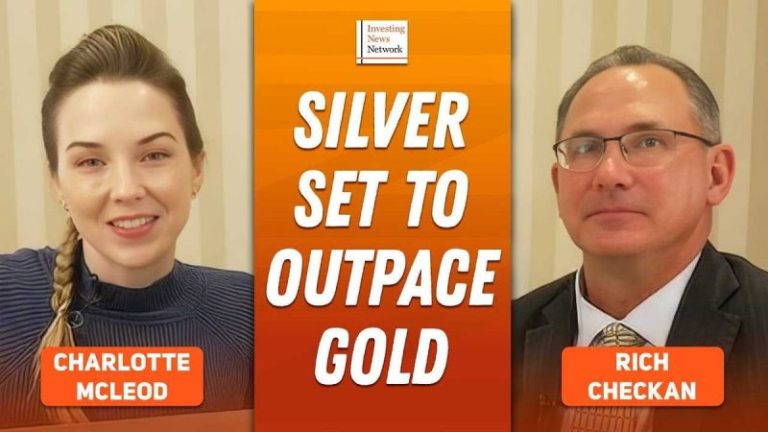
The price of silver is rallying close to its record high, up 62 percent since the start of the year as of October 8.

The silver all-time high was US$49.95 per ounce, which it achieved on January 17, 1980. Now less than a dollar shy of that target, trading at the US$49.50 per ounce level, the white metal is at prices not seen since 2011.

The current move in the silver price is being driven by persistent supply deficits in the face of increased demand for safe-haven investments, as well as industrial usage in solar panels and electric vehicles.

There’s been a lot of excitement around the surge in the gold price to nearly US$4,000 per ounce, leaving many silver bugs to wonder when their favored precious metal will post its own series of record highs. To do that, silver experts say the metal’s price will need to make a sustainable break over the psychologically important US$50 level.

Why is it psychologically important? Because silver has never surpassed that mark, and any past attempts have resulted in deep corrections as spooked traders took their profits and exited the sector.

There are musings in the market that this time might be different.

Is that true? And what happens if silver does break above US$50 this time?

Is today’s silver price run different?

The main differences between this latest push to US$50 silver and previous run-ups in 1980 and 2011 can be seen in the metal’s strong fundamentals and the entrenched devaluation of fiat currencies.

Rather than being fueled by frenzied speculation, today’s silver market is more industrialized, and the investment options have greatly expanded with the growth of silver exchange-traded funds (ETFs).

According to the Silver Institute, industrial demand grew by 4 percent year-on-year in 2024 to 680.5 million ounces. While growth is expected to be flat in 2025, industrial demand is projected to represent 59 percent of total silver demand for the year. The solar sector is projected to consume 195.7 million ounces of silver in 2025.

The Silver Institute reported in July that net inflows into silver exchange-traded products reached 95 million ounces in the first half of 2025, surpassing the total for the full 2024 year. As of October 7, the iShares Silver Trust (ARCA:SLV), the biggest silver ETF, is up more than 60 percent year-to-date as investors flock to safe-haven assets.

Mine production of silver has lagged behind demand for years now, and Metals Focus predicts the silver market is on track for one of the largest supply deficits on record, coming in at a projected 187.6 million ounces for 2025.

Such a weighty deficit has many silver analysts not at all shy of calling for US$50 silver.

But can the market maintain that price level?

What happens if silver breaks US$50?

“Psychologically, silver’s never gotten over US$50 and really stayed there, and it hasn’t in 50 years,” he said. He believes it’s an accomplishable feat that will not only have a profound effect on the psychology of silver investors, but also on the automated algorithm system in today’s silver futures trade. The result could be “blue sky” territory for the silver price.

In terms of investor psychology, Morgan sees two sides to the silver coin once US$50 arrives — bulls who will think silver’s next stop is the moon, and bears who will fret that silver is about to crash as it has done historically.

‘And no one can pick that ahead of time, but I do think that the psychology will be favorable to silver.’

Independent precious metals analyst Ted Butler would agree with Morgan’s market assessment.

“However, I do think that we will eventually break through US$50. I’m not sure if it’s going to be exactly in this cycle,” he said. “You know, in the near term, at the end of this year, there might be some sort of high-level consolidation, as (David) Morgan calls it, or some kind of healthy correction, but ultimately it will break through.”

In Butler’s view, US$50 is the point when mainstream media coverage will really kick in. That will bring about the public participation phase of the cycle for silver, with generalists buying in.

“And that’s going to all pile up on top of the institutional demand that’s already starting to build up,” he said.

On the technical side, Butler sees signs of a US$50 breakthrough on the horizon based on the fact that the silver market has entered backwardation, “which is a phenomenon where the futures price trades below the spot physical price.”

This could lead to major demand for physical silver, with investors perhaps even deciding to take delivery of their SLV holdings. A run on physical silver, already in a deficit, could trigger even more dramatic price spikes.

What could make US$50 silver more sustainable?

The price of the metal will need to pull back and consolidate around a strong base of support if silver is to buck the historical trend and make a more sustainable move above US$50.

Morgan said this will allow the silver price to move higher “with more authority.’

Structurally, the fundamentals are in place to support a higher silver price — especially given rising industrial demand in China, particularly for high-tech facilities and solar panels, and strong investment demand in India.

Notably, India is becoming a hotspot for silver ETFs ever since its Securities and Exchange Board approved the products in late 2021. In July, Reuters reported that returns from silver-backed ETFs in India had surpassed those of gold.

Butler believes India is a major source of new demand in the silver market and a big driver of prices this cycle. He reported that silver exchange-traded products made up 40 percent of India’s total retail investment demand in 2024. That’s a trend he says has continued into this year, with silver imports into India now at record highs.

One of the obvious downside risks to a higher silver price is of course higher costs for industrial end users and consumers. Take solar panels, for example. The silver price has basically doubled in the past 18 months, which makes this technology more expensive to make, and could result in changes from manufacturers.

“But that doesn’t change my long-term perspective on silver, that we’re still in a supply deficit,” said Butler, also noting that from a production standpoint it takes 10 to 15 years to bring a new silver mine online.

For Morgan, silver’s duality as both an industrial and precious metal is what makes it such an attractive investment. Now that both sides are taking a strong position in this market, the generalist investor is likely to have more confidence when it comes to getting in and staying in silver as it crosses over the formidable US$50 level.

“No market goes to the moon, but I still think we’re so undervalued relative to gold, relative to the stock market, and we have these dynamics,” he said. “If we get institutions and industrial users vying for the safe stockpile of silver, and the public comes back in, we have some price appreciation ahead of us.”

However, he doesn’t see US$70 silver or higher in the near term. Give it a few years.

When will silver hit US$50?

Both Morgan and Butler agree the market may not see US$50 this year, and that’s probably a good thing.

Before we get there, silver market guru Morgan thinks we’re likely to see a “big shake off” in the price, potentially this October. Butler sees silver crossing the US$50 level, or the Rubicon as Morgan put it, perhaps early next year.

Both analysts believe such a correction is necessary, especially at the US$46 to US$48 level, as opposed to surging straight up. “It would be a lot healthier for the silver price’s long-term sustainability to stay there,” said Butler.

Securities Disclosure: I, Melissa Pistilli, hold no direct investment interest in any company mentioned in this article.

This post appeared first on investingnews.com

Homerun Resources Inc. (TSXV: HMR,OTC:HMRFF) (OTCQB: HMRFF) (‘Homerun’ or the ‘Company’) is pleased to announce that our technical partners in the Belmonte (BA) Solar Glass Manufacturing project have confirmed that the exceptional purity of the silica sand from the Company’s resources in the Santa Maria Eterna District will allow the Company to offer customers a portfolio of solar glass that is 100% free of added antimony compounds.

In traditional solar glass manufacturing, antimony improves refining, prevents oxidation of iron ions, resulting in higher transmittance and fewer defects. However, the global solar industry is at an inflection point. Concerns are rising about the environmental toxicity and recyclability challenges posed by antimony, a heavy metal flagged by the USEPA as hazardous at even minuscule concentrations. Leading regulatory bodies in Europe and the U.S. are increasingly emphasizing antimony-free standards for solar glass, with Germany’s latest PV manufacturing guidelines and the EU’s Ecolabel directive setting new environmental boundaries for imported and locally produced panels.

Homerun’s technical partners advise that the Company will produce solar glass that is 100% free of added antimony from the initiation of production. Equipment and furnace design are already prepared, with the same or less CAPEX required. Operational adjustments are minor and within the existing specifications and should result in reduced OPEX since antimony substitutes are less costly. This is only possible because of the exceptionally low oxidizable iron ions levels, below 20ppm, of the Company’s HPQ silica sand in Santa Maria Eterna, Belmonte, Bahia, Brazil.

Bans and restrictions on antimony use in solar glass are increasing global demand for high-purity, low-iron silica sand as glassmakers shift to safer, more sustainable feedstocks that can deliver the required optical clarity and durability without chemical additives. As antimony-free manufacturing becomes the industry standard, only silica sand with extremely low iron content is suitable for premium solar glass. This should add demand and add increased value in the marketplace for these scarce low iron feedstocks.

This innovation comes at a crucial moment for the global solar sector. Demand for cleaner PV technologies is soaring, as industry analysts anticipate solar module and glass waste volumes reaching 1.5-1.7 million tons by 2030, with antimony residues presenting long-term risks for people and ecosystems. The ability to supply 100% antimony-free solar glass positions Homerun Resources as a market leader delivering both superior performance and uncompromising health and environmental standards and developing complete recycling toward a true circular solar economy.

‘Starting our operations without adding antimony represents a decisive economic and environmental milestone for Homerun. By leveraging the exceptional purity of our silica sand resources, we can combine cutting-edge technology with the highest standards of environmental responsibility, positioning the Company as a leader in the global solar glass industry,’ stated Odir Pedrazzi, Vice-President of Operations for Homerun.

Independent test results from institutions like Switzerland’s SPF confirm that antimony-free solar glass offers the highest efficiency and resilience against photo-degradation among all major glass formats. [1]

Sources: [1] https://borosilrenewables.com/product/nosbera-antimony-free-solar-glass

About Homerun (www.homerunresources.com)

Homerun (TSXV: HMR,OTC:HMRFF) is a vertically integrated materials leader revolutionizing green energy solutions through advanced silica technologies. As an emerging force outside of China for high-purity quartz (HPQ) silica innovation, the Company controls the full industrial vertical from raw material extraction to cutting-edge solar, battery and energy storage solutions. Our dual-engine vertical integration strategy combines:

Homerun Advanced Materials

  • Utilizing Homerun’s robust supply of high purity silica sand and quartz silica materials to facilitate domestic and international sales of processed silica through the development of a 120,000 tpy processing plant.

  • Pioneering zero-waste thermoelectric purification and advanced materials processing technologies with University of California – Davis.

Homerun Energy Solutions

  • Building Latin America’s first dedicated high-efficiency, 365,000 tpy solar glass manufacturing facility and pioneering new solar technologies based on years of experience as an industry leader in developing photovoltaic technologies with a specialization in perovskite photovoltaics.

  • European leader in the marketing, distribution and sales of alternative energy solutions into the commercial and industrial segments (B2B).

  • Commercializing Artificial Intelligence (AI) Energy Management and Control System Solutions (hardware and software) for energy capture, energy storage and efficient energy use.

  • Partnering with U.S. Dept. of Energy/NREL on the development of the Enduring long-duration energy storage system utilizing the Company’s high-purity silica sand for industrial heat and electricity arbitrage and complementary silica purification.

With multiple profit centers built within the vertical strategy and all gaining economic advantage utilizing the Company’s HPQ silica, across, solar, battery and energy storage solutions, Homerun is positioned to capitalize on high-growth global energy transition markets. The 3-phase development plan has achieved all key milestones in a timely manner, including government partnerships, scalable logistical market access, and breakthrough IP in advanced materials processing and energy solutions.

Homerun maintains an uncompromising commitment to ESG principles, deploying the cleanest and most sustainable production technologies across all operations while benefiting the people in the communities where the Company operates. As we advance revenue generation and vertical integration in 2025, the Company continues to deliver shareholder value through strategic execution within the unstoppable global energy transition.

On behalf of the Board of Directors of
Homerun Resources Inc.

‘Brian Leeners’

Brian Leeners, CEO & Director
brianleeners@gmail.com / +1 604-862-4184 (WhatsApp)

Tyler Muir, Investor Relations
info@homerunresources.com / +1 306-690-8886 (WhatsApp)

FOR THE ADEQUACY OR ACCURACY OF THIS RELEASE

The information contained herein contains ‘forward-looking statements’ within the meaning of applicable securities legislation. Forward-looking statements relate to information that is based on assumptions of management, forecasts of future results, and estimates of amounts not yet determinable. Any statements that express predictions, expectations, beliefs, plans, projections, objectives, assumptions or future events or performance are not statements of historical fact and may be ‘forward-looking statements’.

Neither the TSX Venture Exchange nor its Regulation Services Provider (as that term is defined in policies of the TSX Venture Exchange) accepts responsibility for the adequacy or accuracy of this release

To view the source version of this press release, please visit https://www.newsfilecorp.com/release/269592

News Provided by Newsfile via QuoteMedia

This post appeared first on investingnews.com

The newly formed media corporation Paramount Skydance has acquired The Free Press, an online news and commentary outlet co-founded by Bari Weiss, who will join CBS News as editor-in-chief.

Weiss launched The Free Press in 2021 with her wife, Nellie Bowles, and her sister, Suzy Weiss. They have presented the publication as a heterodox alternative to the legacy news media and a bulwark against “ideological narratives,” particularly on the political left.

Bari Weiss in New York in 2024.Noam Galai / Getty Images for The Free Press file

The acquisition is one of Skydance chief David Ellison’s most significant early moves to reshape the news unit at Paramount, which he acquired in a blockbuster $8 billion deal earlier this year.

In seeking federal approval of the merger, Skydance vowed to embrace “diverse viewpoints” and represent “the varied ideological perspectives of American viewers.” The company also pledged to install an ombudsman at the nearly 100-year-old CBS News operation.

“This partnership allows our ethos of fearless, independent journalism to reach an enormous, diverse, and influential audience,” Weiss said in a news release. “We honor the extraordinary legacy of CBS News by committing ourselves to a singular mission: building the most trusted news organization of the 21st Century.”

The Free Press has roughly 1.5 million subscribers on Substack, with more than 170,000 of them paid, according to Paramount Skydance. The Financial Times estimated that the publication generates more than $15 million in annual subscription revenue. NBC News has not independently verified that figure.

“Bari is a proven champion of independent, principled journalism, and I am confident her entrepreneurial drive and editorial vision will invigorate CBS News,” Ellison said in a statement. “This move is part of Paramount’s bigger vision to modernize content and the way it connects — directly and passionately — to audiences around the world.”

The acquisition talks between Ellison and Weiss were first reported in late June by Status, a media industry newsletter. Ellison is the son of billionaire tech mogul Larry Ellison, the co-founder of the software firm Oracle.

Weiss co-founded The Free Press after quitting the opinion section of The New York Times. In a resignation letter that was published online, Weiss decried what she characterized as the “illiberal environment” at the newspaper.

The Free Press earned wide attention in April 2024 after it published an essay from Uri Berliner, a senior business editor at National Public Radio who accused his employer of organizing around a “progressive worldview.” Berliner then resigned from NPR and joined The Free Press.

The publication’s regular stable of columnists includes Tyler Cowen, an economist and podcaster; Matthew Continetti, the author of a book about the evolution of American conservatism; and Niall Ferguson, a British-American historian.

CBS News has repeatedly found itself in the national spotlight in recent months. President Donald Trump filed a lawsuit last year against Paramount accusing “60 Minutes” of deceptively editing an interview with then-Vice President Kamala Harris.

CBS denied the claim. Paramount settled Trump’s lawsuit for $16 million.

The Federal Communications Commission is still investigating whether CBS engaged in “news distortion.” The commission is chaired by Brendan Carr, who was appointed by Trump at the start of his second term.

This post appeared first on NBC NEWS

Canada One Mining Corp. (TSXV: CONE) (OTC Pink: COMCF) (FSE: AU31) (‘Canada One’ or the ‘Company’) announces it has agreed to acquire a 4,836-hectare copper-gold property contiguous to the northwest of Hudbay Minerals’ Copper Mountain Mine, to be known as ‘Copper Dome North’ (the ‘Property’).

Under the property purchase agreement, dated October 6, 2025, (the ‘Agreement’), the Company will acquire a 100% interest in the Property, from an arm’s-length vendor (the ‘Acquisition’). The Acquisition increases the Company’s flagship Copper Dome Project (‘Copper Dome’) size by ~60%, to 12,833 ha (from 7,997 ha) (see Figure 1: Copper Dome Project Map with Newly Acquired Copper Dome North).

Peter Berdusco, President and CEO, commented: ‘Though outside the formal Copper Dome footprint, the Property’s proximity to Copper Mountain and its continuity within the district’s geologic setting warrant the designation ‘Copper Dome North.’ In addition, the Property is adjacent to our 100%-owned Goldrop, an under-explored, historical small-scale producer of high-grade gold and silver. Together, these factors make the Acquisition compelling and well suited to a systematic exploration program.’

Copper Dome North Acquisition Terms

The Agreement provides for the 100% acquisition of the Property with no net smelter return royalty (NSR) in consideration for 250,000 common shares of the Company (the ‘Consideration Shares’), valuing the transaction at $12,500 based on a deemed price of $0.05 per share. The Consideration Shares will be subject to a statutory hold period of four months and one day from the closing of the Acquisition.

Completion of the Acquisition is subject to customary closing conditions and acceptance by the TSX Venture Exchange. The Acquisition does not involve any Non-Arm’s Length Parties (as defined in Exchange policies). The Company will not devote the majority of its working capital or resources to the development of Copper Dome North. The primary focus of the Company remains the exploration and future drilling at Copper Dome. As a result, the Acquisition does not constitute a ‘fundamental acquisition’ for the Company within the policies of the Exchange. No finders’ fees or commissions are payable in connection with the Acquisition.

Figure 1: Copper Dome Project Map with Newly Acquired Copper Dome North

To view an enhanced version of this graphic, please visit:
https://images.newsfilecorp.com/files/10074/269454_8dfa2c44344ed82c_001full.jpg

About Copper Dome

Copper Dome is located in the lower Quesnel Trough porphyry belt, one of British Columbia’s most prolific mining districts. It directly adjoins Hudbay Minerals Inc.’s (TSX: HBM) producing Copper Mountain Mine to the north which hosts Proven and Probable Reserves of 702 million tonnes grading 0.24% Cu, 0.09 g/t Au, and 0.72 g/t Ag (hudbayminerals.com). Multiple mineralized zones have been identified across the Property, with historical drilling confirming high-grade copper associated with northeast-trending structures similar to those hosting mineralization at Copper Mountain.

The Project benefits from excellent infrastructure, enabling year-round access, cost-efficient exploration, and a stable, low-risk jurisdiction.

Historical Work Completed

  • Geophysics: 51 km of induced polarization (IP); airborne magnetic and electromagnetic (EM) coverage over ~50% of the Property
  • Sampling: 2,253 soils and 378 rocks collected
  • Drilling: 8,900+ m of diamond drilling
  • Trenching: Over 1 km excavated

With a five-year drill permit in place, the Company is focused on advancing the Project toward drill-ready target definition.

About Canada One

Canada One Mining Corp. is a Canadian junior exploration company focused on copper-the critical metal powering the global energy transition. The Company advances projects from discovery through resource definition with disciplined, data-driven exploration and responsible practices. Its flagship Copper Dome Project, located in the well-established Quesnel Trough Porphyry Belt, targets multiple porphyry copper-gold systems. Canada One aims to deliver sustainable growth and long-term value for shareholders and local communities.

Acknowledgement

Canada One acknowledges that Copper Dome is located within the traditional, ancestral and unceded territory of the Smelqmix People. We recognize and respect their cultural heritage and relationship to the land, honoring their past, present and future.

Qualified Person

The technical information contained in this news release has been reviewed and approved by David Mark, P.Geo., an independent Qualified Person for the purposes of National Instrument 43-101.

Contact Us

For further information, interested parties are encouraged to visit the Company’s website at www.canadaonemining.com, or contact the Company by email at info@canadaonemining.com, or by phone at 1.877.844.4661.

On behalf of the Board of Directors of
Canada One Mining Corp.

Peter Berdusco
President
Chief Executive Officer
Interim Chief Financial Officer

Forward-Looking Statements

This press release includes certain ‘forward-looking information’ and ‘forward-looking statements’ (collectively ‘forward-looking statements’) within the meaning of applicable Canadian securities legislation. All statements, other than statements of historical fact, included herein, without limitation, statements relating to the future operating or financial performance of the Company, are forward-looking statements. Forward-looking statements are frequently, but not always, identified by words such as ‘expects’, ‘anticipates’, ‘believes’, ‘intends’, ‘estimates’, ‘potential’, ‘possible’, and similar expressions, or statements that events, conditions, or results ‘will’, ‘may’, ‘could’, or ‘should’ occur or be achieved. Forward-looking statements in this press release relate to, among other things: statements relating to the anticipated timing thereof and the intended use of proceeds. Actual future results may differ materially. There can be no assurance that such statements will prove to be accurate, and actual results and future events could differ materially from those anticipated in such statements. Forward-looking statements reflect the beliefs, opinions and projections on the date the statements are made and are based upon a number of assumptions and estimates that, while considered reasonable by the respective parties, are inherently subject to significant business, technical, economic, and competitive uncertainties and contingencies. Many factors, both known and unknown, could cause actual results, performance or achievements to be materially different from the results, performance or achievements that are or may be expressed or implied by such forward-looking statements and the parties have made assumptions and estimates based on or related to many of these factors. Such factors include, without limitation: the timing, completion and delivery of the referenced assessments and analysis. Readers should not place undue reliance on the forward-looking statements and information contained in this news release concerning these times. Except as required by law, the Company does not assume any obligation to update the forward-looking statements of beliefs, opinions, projections, or other factors, should they change, except as required by law.

TSX Venture Exchange Disclaimer

Neither the TSX Venture Exchange nor its Regulation Services Provider (as that term is defined in the policies of the TSX Venture Exchange) accepts responsibility for the adequacy or accuracy of this release.

To view the source version of this press release, please visit https://www.newsfilecorp.com/release/269454

News Provided by Newsfile via QuoteMedia

This post appeared first on investingnews.com

Troy Minerals Inc. (‘Troy’ or the ‘Company’) (CSE:TROY)(OTCQB:TROYF)(FSE:VJ3) is pleased to report that its subsidiary Grand Samsara Consulting LLC (‘Grand Samsara’) has successfully completed a key regulatory milestone in Mongolia – the official registration of its Tsagaan Zalaa Silica Project (‘Tsagaan Zalaa’ or the ‘Project’) in Dornogovi Province with the Mineral Resources and Petroleum Authority of the Ministry of Industry and Natural Resources of Mongolia. This registration represents the most critical step in the multi-stage process leading to the issuance of an operational mining license.

The Tsagaan Zalaa project is located in Saikhandulaan soum, Dornogovi Province, in southeastern Mongolia (Figure 1). It is connected with a road to Sainshand, capital of the Dornogovi Province in the Eastern Gobi steppe, approximately 95 km to the east, located along the Trans-Mongolian Highway and Railway connecting Mongolia’s capital city of Ulaanbaatar with China. Sainshand is 200 kilometres from the Chinese border and serves as the local depot for silica and other mineral exports to China. Tsagaan Zalaa (Figure 2) is also situated only 18 km from the local community of Saikhandulaan soum(Figure 3) and covers an area of 1,670.28 hectares. The Project is strategically positioned to serve the growing regional demand for high-purity quartz silica (‘HPQ’). Massive high-purity quartz veins up to 5 metres in width (Figures 4 and 5) hosted by Upper-Middle Devonian sediments are exposed on surface across the Project. In February 2025, the Company announced the submission of the Mining License application, with today’s achievement marking the decisive regulatory confirmation needed to advance the Project toward the final operating approval.

‘To receive a Mine Operating License is a complex process, not only in Mongolia but all over the world, but the official approval of a Mining License application by the Mongolian ministerial authorities is the most important step in this. It represents a key milestone which underscores the Company’s commitment to advancing Tsagaan Zalaa towards production and transforming Troy into a cash-flowing entity,’ commented Yannis Tsitos, President of Troy Minerals. ‘We expect to complete the subsequent administrative steps, as outlined below, in the coming weeks and we target a full Mine Operating License by the end of Q4 2025 to Q1 2026.’

Figure 1. Location of the Tsagaan Zalaa Silica Project in Southern Mongolia

Figure 2. Tsagaan Zalaa Silica Project with Regional Geology on Satellite Photo

With its application referenced above, Grand Samsara provided to the authorities all historical and current technical, environmental, hydrogeological, community and archaeological data, studies and reports. Based on Mongolian authorities’ appointed independent experts opinion regarding the geological resources and the opinions of the established 15 council members, the meeting of the Mineral Resources Professional Council of the Ministry of Industry and Mineral Resources and the Ministry of Mineral Resources and Petroleum Authority decided to grant to Grand Samsara a Mining License in regard to HPQ mining activities.

Figure 3. The Community of Saikhandulaan soum, 18 km from the Project.

Next Steps

Grand Samsara is currently working in Mongolia on subsequent steps to conclude several administrative tasks and receive a Mine Operating License. Several steps already been completed, others to be concluded before December 2025. They include detailed technical and economic studies for the utilization and export of the mineral resources, a detailed Environmental Impact Assessment study, a local Government Agreement that includes an appropriate Corporate Social Responsibility (‘CSR’) plan, a Blasting Permit application, and land Quality Assurance plans. At the same time, Troy has commenced HPQ product offtake discussions that include metallurgical sampling by independent Chinese clients at their own laboratories. Following discussions with the relevant authorities, Troy is targeting a complete Mine Operating License before the end of 2025 or by early 2026 at the latest. *

Figure 4. Photo of a drill hole collar overlooking an outcropping massive quartz vein.

Figure 5. One of numerous outcropping massive quartz veins at Tsagaan Zalaa.

* Any production decision in advance of obtaining a NI 43-101 compliant feasibility study of mineral reserves demonstrating economic and technical viability of the project is associated with increased uncertainty and risk of failure.

Qualified Person

Technical information in this news release has been reviewed and approved by Case Lewis, P.Geo., a ‘Qualified Person’ as defined under NI 43-101 Standards of Disclosure for Mineral Projects and a director of the Table Mountain Project vendor.

About Troy Minerals

Troy Minerals is a Canadian based publicly listed mining company focused on building shareholder value through acquisition, exploration, and development of strategically located ‘critical’ mineral assets. Troy is aggressively advancing its projects within the silica (silicon), scandium, vanadium, and rare earths industries within regions that exhibit high and growing demand for such commodities, in both North America (through the Table Mountain, the Lake Owen and the St. Jaques projects) and Central-East Asia (through the Tsagaan Zalaa project). The Company’s primary objective is the near-term prospect of production with a vision of becoming a cash-flowing mining company to deliver tangible monetary value to shareholders, state, and local communities.

ON BEHALF OF THE BOARD,

Rana Vig | President and Director
Telephone: 604-218-4766
Email: rana@ranavig.com

Forward-Looking Statements

Statement Regarding Forward-Looking Information: This release includes certain statements that may be deemed ‘forward-looking statements’. All statements in this release, other than statements of historical facts, that address events or developments that Troy Resources Inc. (the ‘Company’) expects to occur, are forward-looking statements. Forward-looking statements are statements that are not historical facts and are generally, but not always, identified by the words ‘expects’, ‘plans’, ‘anticipates’, ‘believes’, ‘intends’, ‘estimates’, ‘projects’, ‘potential’ and similar expressions, or that events or conditions ‘will’, ‘would’, ‘may’, ‘could’ or ‘should’ occur. Although the Company believes the expectations expressed in such forward-looking statements are based on reasonable assumptions, such statements are not guarantees of future performance and actual results may differ materially from those in the forward-looking statements. Factors that could cause the actual results to differ materially from those in forward-looking statements include results of exploration activities may not show quality and quantity necessary for further exploration or future exploitation of minerals deposits, volatility of commodity prices, and continued availability of capital and financing, permitting and other approvals, and general economic, market or business conditions. Investors are cautioned that any such statements are not guarantees of future performance and actual results or developments may differ materially from those projected in the forward-looking statements. Forward-looking statements are based on the beliefs, estimates and opinions of the Company’s management on the date the statements are made. Except as required by applicable securities laws, the Company undertakes no obligation to update these forward-looking statements in the event that management’s beliefs, estimates or opinions, or other factors, should change.

Click here to connect with Troy Minerals (CSE:TROY;OTCQB:TROYF;FSE:VJ3) to receive an Investor Presentation

Source

This post appeared first on investingnews.com

Barrick Mining (TSX:ABX,NYSE:B) has agreed to sell its stake in the Tongon gold mine in Côte d’Ivoire to Atlantic Group for as much as US$305 million, marking another strategic divestment as gold prices barrel toward record highs.

In a statement released Monday (October 6), Barrick said the deal includes an upfront cash payment of US$192 million, which incorporates repayment of a US$23 million shareholder loan within six months of closing. The remainder of US$113 million will be paid in contingent installments tied to gold prices over 2.5 years and resource conversions over the next five.

Barrick said proceeds from the sale would “further strengthen [its] balance sheet and support [its] commitment to continue to deliver returns to shareholders.” The company did not disclose how it would specifically allocate the funds but has previously emphasized its focus on debt reduction and high-return projects.

Atlantic Group, the buyer, is a privately held conglomerate founded 48 years ago by an Ivorian entrepreneur. The company operates across 15 African countries with investments spanning agriculture, industry, and financial services.

Through the acquisition, it will take over Barrick’s interests in two Ivorian subsidiaries that own Tongon and nearby exploration permits.

Barrick described the deal as a transition to “local stewardship” that preserves Tongon’s record of community investment and operational excellence.

Located in northern Côte d’Ivoire, the Tongon gold mine began production in 2010 and has contributed more than US$2 billion to the national economy. Originally slated for closure in 2020, its life was extended after successful exploration campaigns.

The announcement comes at a time of extraordinary strength in gold markets. On the same day of the announcement, spot gold traded at around US$3,960 per troy ounce, up nearly 2 percent on the day and setting fresh all-time highs.

Prices have risen more than 50 percent since the start of the year, fueled by investor demand for safe havens amid persistent global uncertainty and growing expectations of additional US interest rate cuts.

According to futures data cited by market sources, traders now assign over a 90 percent probability that the Federal Reserve will cut rates again in its next meeting—a development that has historically supported gold by weakening the dollar and lowering bond yields.

Analysts also point to mounting concerns about sovereign debt sustainability worldwide as adding a “premium” to precious metals.

Gold’s rally has been swift. Less than seven months ago, prices crossed US$3,000 for the first time in history. Now, with US$4,000 in sight, some analysts suggest the momentum reflects both a weakening macroeconomic backdrop and a broader reallocation toward hard assets.

For Barrick, the timing of the Tongon sale may prove opportune. The company has spent recent years streamlining its portfolio, shedding non-core assets and focusing on larger, longer-life mines in its global pipeline.

Securities Disclosure: I, Giann Liguid, hold no direct investment interest in any company mentioned in this article.

This post appeared first on investingnews.com

The US government is making a rare direct investment in a Canadian mining company, taking a 10 percent stake in Vancouver-based Trilogy Metals (TSX:TMQ,ARCA:TMQ) as part of a US$35.6 million deal to accelerate the development of Alaska’s Upper Kobuk Mineral Projects (UKMP)

In an announcement Monday (October 6), Trilogy said it has entered into a binding letter of intent with the US Department of War, through the Office of the Undersecretary of Defense for Acquisition and Sustainment and the Office of Strategic Capital, alongside its joint venture partner South32 (ASX:S32,OTC Pink:SHTLF).

Under the terms of the deal, the US government will invest approximately US$17.8 million directly into Trilogy Metals in exchange for 8.2 million units priced at US$2.17 apiece. Each unit will consist of one common share and three-quarters of a 10-year warrant exercisable for a penny per share following completion of the Ambler Road.

Another US$17.8 million will go to South32 in exchange for 8.2 million shares of Trilogy currently held by the Australian miner, plus a call option on an additional 6.1 million shares at the same US$0.01 exercise price.

All proceeds, Trilogy said, will be reinvested into its joint venture company Ambler Metals which holds the UKMP in Alaska’s resource-rich Ambler Mining District.

The US government’s total stake in Trilogy will amount to about 10 percent, and it will have the right to appoint an independent director to the company’s board for three years.

“This proposed partnership with the US Government represents a significant milestone for Trilogy Metals and for the development of a secure, domestic supply of critical minerals for America in Alaska,” said Tony Giardini, Trilogy’s president and CEO.

“The Department of War’s interest underscores the strategic importance of the Upper Kobuk Mineral Projects in supporting US energy, technology, and national security priorities.”

The deal also includes provisions for debt limits and a framework for collaboration on advancing the Ambler Road—an industrial-use-only, 211-mile corridor that would connect the remote Ambler Mining District to Alaska’s Dalton Highway.

The road, overseen by the Alaska Industrial Development and Export Authority (AIDEA), has long been seen as critical to unlocking access to vast deposits of copper, cobalt, zinc, and lead.

The project also received a major political boost on Monday when President Trump invoked his authority under Section 1106 of the Alaska National Interest Lands Conservation Act (ANILCA) to overturn the Biden administration’s 2024 “No Action” decision that had halted the road’s progress.

The reversal reinstates federal right-of-way permits and directs agencies to finalize all authorizations needed for construction.

“This landmark decision is a turning point for Trilogy and for the future of domestic critical mineral development in the United States,” Giardini said. “The Ambler Road is not just a pathway to economic growth in Alaska – it’s a strategic asset for the United States.”

The Ambler Mining District is among North America’s richest undeveloped sources of copper and associated base metals. Trilogy’s Arctic and Bornite deposits are central to that potential, with the company and South32 envisioning a multi-decade mining hub capable of supplying key materials for power grids, defense systems, and clean energy technologies.

US Interior Secretary Doug Burgum said the investment underscores Washington’s intent to secure its mineral supply chains. Notably, the Trump administration has made a series of similar moves in recent months as part of a broader critical minerals strategy.

Last week, the US government took a minority stake in Lithium Americas (TSX:LAC,NYSE:LAC), providing US$435 million in federal funding to advance the Thacker Pass lithium project in Nevada.

Recently, Washington has also been reportedly exploring a potential equity position in Critical Metals (NASDAQ:CRML), which controls Greenland’s Tanbreez rare earths project.

Securities Disclosure: I, Giann Liguid, hold no direct investment interest in any company mentioned in this article.

This post appeared first on investingnews.com