Author

admin

Browsing

Empire Metals Limited, theAIM-quoted and OTCQB-tradedexploration and development company,is pleased to report outstanding assay results from its latest drilling campaign at the Pitfield Project in Western Australia (‘Pitfield’ or the ‘Project’). This programme, focused on the in-situ weathered cap at the Thomas Prospect, has delivered some of the highest titanium dioxide (‘TiO₂’) grades recorded to date and will underpin the Company’s maiden JORC-compliant Mineral Resource Estimate (‘MRE’).

Highlights

  • Selected exceptional intercepts (>6% TiO2), include:
    • 44m @ 7.87% TiO2 from surface (AC25TOM159)
    • 50m @ 7.84% TiO2 from 4m (AC25TOM130)
    • 54m @ 7.41% TiO2 from surface (AC25TOM118)
    • 98m @ 7.05% TiO2 from 2m (RC25TOM062)
    • 98m @ 7.05% TiO2 from 2m (RC25TOM068)
  • Large, high-grade central core identified averaging circa 6% TiO2 across a continuous 3.6km strike length
  • Nearly two thirds of all drillholes averaged > 4% TiO2, with over 90% exceeding a 2% cut-off.

Shaun Bunn, Managing Director, said:‘These results confirm the exceptional scale and grade of titanium mineralisation at Thomas. The continuity of high-grade mineralisation near surface is particularly exciting for future mine development. With assays received ahead of schedule, we can now accelerate resource modelling and move rapidly towards announcing our maiden MRE.’

MRE Drilling Programme – Key Results

Since commencing the maiden drilling campaign at Pitfield on 27 March 2023 Empire has completed 382 drill holes for a total 32,265 metres (refer Figure 1) comprising:

  • 17 Diamond drill holes for 2,704 m
  • 140 Reverse Circulation (RC) drill holes for 18,764 m
  • 225 Air Core (AC) drill holes for 10,797 m.

The latest May-June campaign comprised:

  • 140 AC drillholes (6,360m) on a 400 x 200m grid, average depth 45.4m
  • 40 RC drillholes (3,776m) within the AC grid, average depth 94.4m

During the campaign all drill holes were subsampled on a 2m interval, resulting in over 5,000 drill samples being collected, logged by our on-site team of geologists and then prepared for shipment to Intertek’s Perth based analytical laboratory. The analytical assay results have now been received, showing continuous TiO2-rich mineralisation across the overall drillhole grid, which extends 5.2km by 2.6km and totals an area of 1,352 hectares (refer Figure 2).

The drilling has confirmed the presence of a large, high-grade central core at the Thomas prospect, this target being selected as the basis for the maiden MRE due to the extensive, thick and high-grade titanium mineralisation known to be hosted within the broad, in-situ weathered zone. Whilst over 90% of all drillhole sample assays show mineralisation well above a 2% TiO2 cut-off grade this central high-grade core, extends over 3.6km north-south, averages around 6% TiO2 (refer Table 1).

Significant analytical assay results for each drillhole above 6% TiO2 are reported in Table 2 further below.

Strategic Significance

The May-June campaign marked a major milestone in the development of Pitfield, laying the foundation for a globally significant MRE and enabling the identification of near-surface, high grade zones to support the development of mine planning and ore scheduling as part of upcoming economic evaluation studies.

The Pitfield Titanium Project

Located within the Mid-West region of Western Australia, near the northern wheatbelt town of Three Springs, the Pitfield titanium project lies 313km north of Perth and 156km southeast of Geraldton, the Mid West region’s capital and major port. Western Australia is a Tier 1 mining jurisdiction, with mining-friendly policies, stable government, transparency, and advanced technology expertise. Pitfield has existing connections to port (both road & rail), HV power substations, and is nearby to natural gas pipelines as well as a green energy hydrogen fuel hub, which is under planning and development (refer Figure 3).

Competent Person Statement

The technical information in this report that relates to the Pitfield Project has been compiled by Mr Andrew Faragher, an employee of Empire Metals Australia Pty Ltd, a wholly owned subsidiary of Empire. Mr Faragher is a Member of the Australian Institute of Mining and Metallurgy. Mr Faragher has sufficient experience that is relevant to the style of mineralisation and type of deposit under consideration and to the activity being undertaken to qualify as a Competent Person as defined in the 2012 Edition of the ‘Australasian Code for Reporting of Exploration Results, Mineral Resources and Ore Reserves’. Mr Faragher consents to the inclusion in this release of the matters based on his information in the form and context in which it appears.

Market Abuse Regulation (MAR) Disclosure

Certain information contained in this announcement would have been deemed inside information for the purposes of Article 7 of Regulation (EU) No 596/2014, as incorporated into UK law by the European Union (Withdrawal) Act 2018, until the release of this announcement.

**ENDS**

For further information please visit www.empiremetals.co.uk or contact:

About Empire Metals Limited

Empire Metals is an AIM-listed and OTCQB-traded exploration and resource development company (LON: EEE) with a primary focus on developing Pitfield, an emerging giant titanium project in Western Australia.

The high-grade titanium discovery at Pitfield is of unprecedented scale, with airborne surveys identifying a massive, coincident gravity and magnetics anomaly extending over 40km by 8km by 5km deep. Drill results have indicated excellent continuity in grades and consistency of the mineralised beds and confirm that the sandstone beds hold the higher-grade titanium dioxide (TiO₂) values within the interbedded succession of sandstones, siltstones and conglomerates. The Company is focused on two key prospects (Cosgrove and Thomas), which have been identified as having thick, high-grade, near-surface, bedded TiO₂ mineralisation, each being over 7km in strike length.

An Exploration Target* for Pitfield was declared in 2024, covering the Thomas and Cosgrove mineral prospects, and was estimated to contain between 26.4 to 32.2 billion tonnes with a grade range of 4.5 to 5.5% TiO2. Included within the total Exploration Target* is a subset that covers the weathered sandstone zone, which extends from surface to an average vertical depth of 30m to 40m and is estimated to contain between 4.0 to 4.9 billion tonnes with a grade range of 4.8 to 5.9% TiO2.

The Exploration Target* covers an area less than 20% of the overall mineral system at Pitfield which demonstrates the potential for significant further upside.

Empire is now accelerating the economic development of Pitfield, with a vision to produce a high-value titanium metal or pigment quality product at Pitfield, to realise the full value potential of this exceptional deposit.

The Company also has two further exploration projects in Australia; the Eclipse Project and the Walton Project in Western Australia, in addition to three precious metals projects located in a historically high-grade gold producing region of Austria.

*The potential quantity and grade of the Exploration Target is conceptual in nature. There has been insufficient exploration to estimate a Mineral Resource and it is uncertain if further exploration will result in the estimation of a Mineral Resource.

This information is provided by RNS, the news service of the London Stock Exchange. RNS is approved by the Financial Conduct Authority to act as a Primary Information Provider in the United Kingdom. Terms and conditions relating to the use and distribution of this information may apply. For further information, please contact rns@lseg.com or visit www.rns.com.

Source

Click here to connect with Empire Metals (OTCQB:EPMLF, AIM:EEE) to receive an Investor Presentation

This post appeared first on investingnews.com

Here’s a quick recap of the crypto landscape for Monday (August 18) as of 9:00 a.m. UTC.

Get the latest insights on Bitcoin, Ethereum and altcoins, along with a round-up of key cryptocurrency market news.

Bitcoin and Ethereum price update

Bitcoin (BTC) was priced at US$115,446, a 2.5 percent decline in 24 hours. Its lowest valuation of the day was US$114,740, while its highest was US$118,514.

Bitcoin price performance, August 18, 2025.

Chart via TradingView

Bitcoin slipped around 2–3 percent over the past 24 hours amid widespread profit-taking following recent all-time highs and renewed US Producer Price Index data that dampened rate-cut expectations.

Ethereum (ETH) was priced at US$4,330.74, down by 4.6 percent over the past 24 hours. Its highest valuation of the day was $4,563.72 and its lowest valuation was US$4,239.27 at the start of trading.

Altcoin price update

  • Solana (SOL) was priced at US$182.12, down by 5.6 percent over 24 hours. Its lowest valuation of the day was US$180.47, while its highest valuation was US$195.10.
  • XRP was trading for US$2.99, down 4.3 percent in the past 24 hours. Its lowest valuation of the day was US$2.95, and its highest was US$3.14.
  • Sui (SUI) was trading at US$3.57, down by 7.3 percent over the past 24 hours. Its lowest valuation of the day was US$3.53, while its highest was US$3.89.
  • Cardano (ADA) was trading at US$0.9089, down 6.6 percent over 24 hours. Its lowest valuation of the day was US$0.8967, while its highest was US$0.9746.

Today’s crypto news to know

Bitcoin, Ether, and other crypto stocks cool down after rally week

Bitcoin fell back on Monday (August 18) as traders locked in gains following last week’s record-breaking rally above US$124,000.

The world’s largest cryptocurrency was down about 2 percent to US$115,179, while Ether slipped 3 percent to US$4,335 and XRP declined 4 percent.

The dip follows a sharp run-up fueled by optimism around crypto ETFs and new regulatory developments, including President Donald Trump’s executive order earlier this month permitting retirement accounts like 401(k)s to include digital assets.

Crypto-related equities mirrored the pullback, with shares of mining and crypto firms all down roughly 2 percent in premarket trading. Analysts suggest the selling is a typical retracement after a parabolic move and may signal rotation from spot crypto to other risk assets.

Gemini, Winklevoss twins files for Nasdaq listing

Gemini, the crypto exchange founded by Cameron and Tyler Winklevoss, has formally filed to go public with plans for a Nasdaq listing under the ticker “GEMI.”

The registration statement, however, did not specify how many shares will be offered or at what price range, leaving those details for later.

Founded in 2014, Gemini says it has processed US$285 billion in lifetime trading volume and custodies over $18 billion in digital assets as of June 30.

In their filing, the twins framed crypto as entering “a new Golden Age,” emphasizing their vision of financial markets moving increasingly on-chain. They described Gemini as a “Super App” for digital assets, offering trading, custody, and broader crypto financial services under one platform.

If successful, Gemini would join Coinbase as one of the few US exchanges to list publicly, offering investors direct equity exposure to crypto market infrastructure.

Amdax unveils Bitcoin treasury firm, plans Euronext Amsterdam Listing

Amsterdam-based Amdax announced plans to list a new Bitcoin treasury firm, Amsterdam Bitcoin Treasury Strategy (AMBTS), on the Euronext Amsterdam exchange.

The company says the goal is to create a vehicle that holds Bitcoin long-term on behalf of institutional and private investors, reflecting growing corporate adoption of digital reserves.

CEO Lucas Wensing noted that more than 10 percent of Bitcoin’s supply is already held by corporations, governments, and institutions, suggesting a structural shift in how the asset is used.

Bitcoin’s rally of 32 percent in 2025, alongside pro-crypto regulatory momentum following President Donald Trump’s election, has reinforced the case for such vehicles. AMBTS plans to raise capital in a private round before listing, with a long-term target of accumulating at least 1 percent of total Bitcoin supply.

The move could make Euronext Amsterdam a more prominent hub for European digital asset investment products, challenging London and Frankfurt.

Securities Disclosure: I, Giann Liguid, hold no direct investment interest in any company mentioned in this article.

Securities Disclosure: I, Meagen Seatter, hold no direct investment interest in any company mentioned in this article.

This post appeared first on investingnews.com

Rare earths are important for many of today’s technologies and tomorrow’s carbon-free economy.

Investors may not be very familiar with the metals individually, but the group of elements is found in technology all around us, commonly in the form of rare earth magnets, which are used in everything from electric vehicles (EVs) to smartphones to wind turbines. As technology continues to advance, they are expected to remain in high demand.

In 2025, the rare earths market is navigating a volatile yet strategically critical phase shaped by supply concerns, demand fluctuations and intensifying US-China trade tensions.

Rare earth metals demand continues to be driven by uses such as clean energy technologies — particularly permanent magnets used in EVs and wind turbines — as well as defense and electronics industries.

However, consumption forecasts for rare earth magnets have been revised down, with expected year-on-year growth in 2025 easing from 9 percent to around 5 percent as macro uncertainties weigh on manufacturing and industrial activity.

On the supply side, China’s influence remains significant, accounting for over 50 percent of the world’s refined rare earths output. Beijing’s latest round of export controls on the strategic minerals, made in response to high tariffs enacted by US President Donald Trump, has intensified concerns about global supply chain vulnerability.

These measures have especially impacted US and European manufacturers, prompting renewed efforts to diversify supply, invest in recycling technologies and accelerate domestic production projects.

In response to China’s rare earths export measures, the Trump administration initiated a Section 232 national security probe into the rare earths supply chain in April 2025, sparking renewed interest in miners, producers and refiners.

1. Mkango Resources (TSXV:MKA)

Yearly gain: 325 percent
Market cap: C$219.61 million
Share price: C$0.69

Mkango Resources is positioning itself to be a leader in recycled rare earth magnets, alloys and oxides.

The company holds a 79.4 percent stake in Maginito, which owns HyProMag, a firm focusing on rare earth magnet recycling in the UK. Maginito also owns Mkango Rare Earths UK, which focuses on long-loop rare earth magnet recycling. Additionally, Maginito and CoTec Holdings (TSXV:CTH,OTCQB:CTHCF) are expanding HyProMag’s recycling technology to the US through their joint venture, HyProMag USA.

Mkango’s mineral assets include the advanced Songwe Hill rare earths project and a diverse exploration portfolio in Malawi, covering rare earths, uranium, tantalum, niobium and more. Its subsidiary Lancaster Exploration signed a mining development agreement with the Government of Malawi for Songwe Hill in June 2024.

Mkango is also developing the Pulawy rare earths separation project in Poland via its subsidiary Mkango Polska.

In January, Mkango announced plans for HyProMag and Areera to partner with Inserma and Sweden’s RISE Research Institutes to develop automated sorting and pre-processing of speakers, creating a concentrated feed of NdFeB magnets for recycling. It also raised C$4.11 million to advance rare earth magnet recycling in the UK and Germany.

On March 25, the European Commission granted Mkango’s Pulawy rare earths separation project in Poland strategic project status under the Critical Raw Materials Act.

The designation highlights the project’s importance to EU supply chains and will streamline permitting while enhancing access to financing and support from EU institutions and potential offtakers.

The company’s share value nearly doubled from C$0.34 on July 2 to C$0.60 by July 7 following the announcement on July 3 that Mkango’s wholly owned subsidiaries, Lancaster Exploration and Mkango Polska, had entered into a definitive business combination agreement with special purpose acquisition company Crown PropTech Acquisitions to form a new company, to be renamed Mkango Rare Earths and listed on the NASDAQ. The deal would create a vertically integrated rare earths company that holds Songwe Hill in Malawi and the Pulawy plant in Poland.

Later in the month, news hit the wire that HyProMag had secured feedstock supply and pre-processing site share agreement between global electronics recycling company, Intelligent Lifecycle Solutions, LLC.

Shares of Mkango reached a year-to-date high of C$0.70 on July 31, 2025.

2. Ucore Rare Metals (TSXV:UCU)

Yearly gain: 192.47 percent
Market cap: C$166.65 million
Share price: C$2.18

Ucore Rare Metals is a rare earths processing and exploration company with operations in the US and Canada.

Following its 2020 acquisition of Innovation Metals, the company is commercializing its proprietary RapidSX separation technology. Ucore plans to implement this system at its first commercial heavy rare earth elements (HREE) refining facility, the Strategic Metals Complex, in Louisiana. It is also developing its Bokan HREE project in Alaska.

This past January, Ucore received C$500,000 from the Ontario government as part of the province’s Critical Minerals Innovation Fund. The rare earths processor said it planned to use the cash infusion to advance improvements at its RapidSX commercial demonstration facility in Ontario. A private placement of 3.6 million shares priced at C$0.60 each raised an additional C$2.16 million for Ucore when it closed in February.

In May, Ucore broke ground on its Strategic Metals Complex, where it plans to ‘produce high-purity rare earth oxides from mixed rare earth chemical concentrates obtained from multiple global feedstock sources.’

Shortly after, the company executed a definitive contract for an US$18.4 million follow-on first-stage production award from the US Department of Defense, and closed a private placement for aggregate gross proceeds of C$15.5 million.

Ucore is working to achieve early production readiness of salable individual HREE products from the processing facility by the second half of 2026.

Shares of Ucore rose to a year-to-date high of C$2.10 on August 5, 2025.

3. Leading Edge Materials (TSXV:LEM)

Yearly gain: 77.78 percent
Market cap: C$35.99 million
Share price: C$0.16

Vancouver-based Leading Edge Materials is focused on developing three critical raw material projects located in the European Union. The portfolio includes the wholly owned Norra Kärr HREE project and the Woxna graphite mine in Sweden, the company also has a 51 percent stake in the Bihor Sud Nickel Cobalt exploration alliance in Romania.

In January, Leading Edge released its 2024 results, noting that in early December, the company applied to the Mining Inspectorate of Sweden for an Exploitation Concession 25-year mining lease for Norra Kärr.

A February project update outlines plans to start up and down steam prefeasibility work at Norra Kärr in Q2.

“As part of the PFS, the company will evaluate the business case for a Rapid Development Plan (RDP), whereby Norra Kärr can be in production in the shortest possible timeframe to be supplying REE concentrates to the market in advance of the completion of the downstream processing facility and selling nepheline syenite,” the statement read.

Shares of Leading Edge hit a year-to-date high of C$0.30 on March 23, coinciding with news that the company was awaiting a decision on its application for Strategic Project status under the EU’s Critical Raw Materials Act.

A few days later, Leading Edge learned that Norra Kärr did not earn the designation; however, the company plans to reapply for Strategic Project status when a new round of submissions are requested.

In a June company update, Leading Edge discusses the steps its taking to address the deficiencies in its Strategic Project applicaiton. Work on the PFS is also advancing and the company anticipates its completion in Q1 2026.

FAQs for rare earth investing

What are rare earth minerals?

Rare earths are a category of elements that share many chemical properties. In fact, all but two — yttrium and scandium — are also called lanthanides. These elements are commonly found in the same deposits and are necessary for diverse technological applications such as rare earth magnets.

How many rare earth elements are there?

In total there are 17 elements that make up the rare earths category, and they are split into light and heavy rare earths. On the light side, there are cerium, lanthanum, praseodymium, neodymium, promethium, europium, gadolinium and samarium, and on the heavy side there are dysprosium, yttrium, terbium, holmium, erbium, thulium, ytterbium, yttrium and lutetium.

Where are rare earth metals found?

In terms of both reserves and production, China is the frontrunner for rare earth metals by a long shot, with 44 million metric tons of reserves and 270,000 metric tons of production in 2024. However, Brazil also has significant reserves above 21 million MT. With regards to rare earth production, the US is in second place at 45,000 metric tons due to the Mountain Pass mine in California.

Securities Disclosure: I, Melissa Pistilli, hold no direct investment interest in any company mentioned in this article.

This post appeared first on investingnews.com
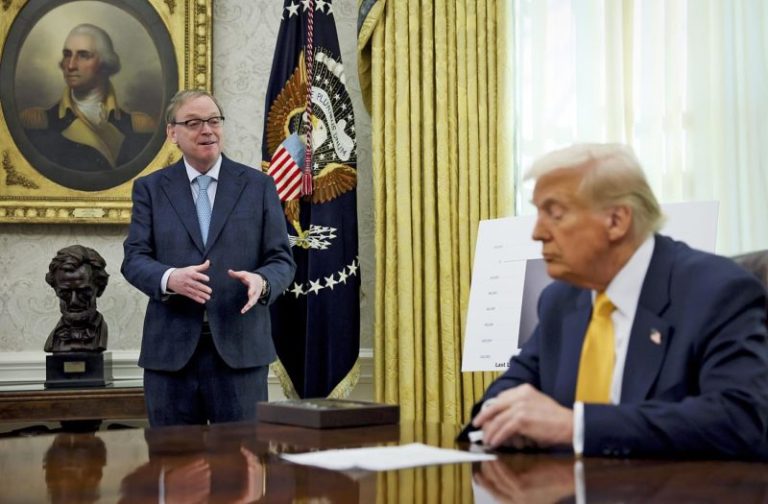
Tech stocks led Wall Street to a second consecutive week of gains as a series of data releases reignited optimism about a September interest rate cut from the US Federal Reserve.

A strong consumer price index report was the catalyst, renewing anticipation that the Fed will lower rates when it meets next month. While Thursday’s (August 14) less optimistic producer price index report caused a momentary pause, the tech sector’s resilience — or defiance — mitigated losses and kept momentum alive.

Here’s a look at the key moments that shaped the tech sector this week.

1. US government strikes controversial Big Tech deal

On Monday (August 11), the Washington Post reported on a deal between the US government and tech giants NVIDIA (NASDAQ:NVDA) and Advanced Micro Devices (AMD) (NASDAQ:AMD). It stipulates that the tech companies must surrender 15 percent of revenue from Chinese sales of NVIDIA’s H20 chips and AMD’s MI308 chips.

Anonymous sources told the news outlet that this condition was imposed as a prerequisite for granting the companies export licenses to sell their products in China. The move that has prompted legal concerns among trade experts who say the fee could be construed as an unconstitutional trade tax.

“To call this unusual or unprecedented would be a staggering understatement,” Stephen Olson, a former US trade negotiator, told Bloomberg. “What we are seeing is in effect the monetization of US trade policy in which US companies must pay the US government for permission to export.”

AMD, NVIDIA and Intel performance, August 12 to 15, 2025.

Chart via Google Finance.

Meanwhile, shares of Intel (NASDAQ:INTC) rose as much as 4.6 percent on Tuesday (August 12) following a ‘candid and constructive’ meeting between CEO Lip-Bu Tan and US President Donald Trump on Monday.

The meeting came after Trump called for Tan’s removal last week.

According to a separate Bloomberg article, the US government is considering taking a stake in the chipmaker to help it establish a planned factory hub in Ohio; the company once promised it would be the world’s largest chipmaking facility. Tan has not confirmed or denied the report, but discussions are said to be ongoing. Sources told Bloomberg the government is considering using funds from the Biden administration’s Chips Act to fund the stake.

2. Amazon to expand grocery delivery services

Amazon (NASDAQ:AMZN) shares rose as much as 1.3 percent on Wednesday (August 13) after the commerce company announced plans to significantly expand its grocery services.

On Wednesday, the company said its same-day delivery service will now include fresh groceries, including produce, meat and dairy, in over 1,000 cities, with plans to expand into more than 2,300 by the end of the year.

The service is included in Amazon Prime memberships for orders over US$25. Smaller orders and orders from non-members will require fees of US$2.99 and US$12.99, respectively.

3. CoreWeave shares drop after mixed earnings report

Artificial intelligence (AI) data center operator CoreWeave (NASDAQ:CRWV) reported mixed Q2 results on Tuesday, with revenue more than doubling year-on-year to US$1.2 billion, beating estimates of US$1.08 billion, and a revenue backlog of US$30.1 billion. However, the growth came at a high cost. The company reported a record US$2.9 billion in capital expenditures for the quarter, and operating expenses jumped by 276 percent to US$1.19 billion.

CoreWeave performance, August 12 to 15, 2025.

Chart via Google Finance.

The company also reported losses of US$291 million, larger than the US$190.6 million analysts had estimated.

Shares of CoreWeave opened more than 10 percent lower on Wednesday and declined throughout the week, closing at US$99.97 on Friday (August 15) compared to Monday’s opening price of US$134.80.

4. Perplexity bids on Chrome, prepares for fresh funding round

AI startup Perplexity made a US$34.5 billion bid for Google’s (NASDAQ:GOOGL) web browser, Chrome, in a move to secure its future in the AI search market. Perplexity told the Wall Street Journal that the unsolicited offer would be funded with the help of outside investors. The company’s advance comes as Google faces a potential divestiture following an antitrust trial that found it had illegally monopolized online search and search advertising.

OpenAI has also expressed interest in acquiring Chrome.

On Thursday, Business Insider reported that Perplexity is preparing for another round of funding, which would mark its sixth fundraiser in 18 months. The company is reportedly seeking a post-money valuation of US$20 billion. This comes barely one month after the startup achieved a US$18 billion valuation.

The rapid succession of these events underscores the intense, high-stakes competition among AI startups to secure foundational assets and challenge established tech giants.

Canadian AI startup Cohere secured US$500 million in fresh funding on Thursday from a group of investors that included NVIDIA and AMD, bringing its valuation to US$6.8 billion. The company also onboarded former executives from Uber Technologies (NYSE:UBER) and Meta Platforms (NASDAQ:META).

5. Apple plans product expansion

Apple (NASDAQ:AAPL) shares climbed as high as 1.7 percent on Wednesday after Bloomberg reported on the company’s planned expansion into robotics, home security and smart displays.

The new products are aimed at strengthening Apple’s product ecosystem, which has paled in comparison to offerings from tech rivals like Amazon and Meta.

Apple performance, August 12 to 15, 2025.

Chart via Google Finance.

Some of the new devices slated for future release include a tabletop virtual companion robot, a long-planned advanced Siri model with a visual personality, a smart speaker with display capabilities and home security cameras.

Apple finished the week at US$231.59, a 1.7 percent gain from Monday.

Securities Disclosure: I, Meagen Seatter, hold no direct investment interest in any company mentioned in this article.

This post appeared first on investingnews.com
Here’s a quick recap of the crypto landscape for Friday (August 15) as of 9:00 p.m. UTC.

Get the latest insights on Bitcoin, Ethereum and altcoins, along with a round-up of key cryptocurrency market news.

Bitcoin and Ethereum price update

Bitcoin (BTC) was priced at US$116,999, a 0.8 percent decline in 24 hours. Its lowest valuation of the day was US$116,956, while its highest was US$118,192.

Bitcoin price performance, August 15, 2025.

Chart via TradingView.

Bitcoin surged to a new all-time high of US$124,533 on Thursday (August 14), driven by increased institutional interest and expectations that the US Federal Reserve will cut interest rates.

However, the rally was short-lived, as the price fell as low as US$117,263 early on Friday.

The decline was attributed to hotter-than-expected US producer price index data for July, which dampened investor optimism about a rate reduction. Additionally, comments from US Secretary of the Treasury Scott Bessent revealed that the country holds less Bitcoin in reserve than previously thought, further unsettling the market.

Ethereum (ETH) experienced one of its most successful weeks of the year, with on-chain data further underscoring this bullish trend. Daily active addresses, stablecoin transfer volume and daily transactions all reached record highs this week. Additionally, decentralized exchange volume hit its highest point since 2022.

As of Friday’s close, ETH was priced at US$4,391.13, a 3.3 percent decline over 24 hours. Its lowest valuation on Friday was US$4,381.31, and its highest was US$4,614.81.

Altcoin price update

  • Solana (SOL) was priced at US$184.03, down by 4.8 percent over 24 hours. Its lowest valuation of the day was US$183.837, while its highest valuation was US$193.02.
  • XRP was trading for US$3.07, down 0.3 percent in the past 24 hours. Its lowest valuation of the day was US$3.01, and its highest was US$3.11.
  • Sui (SUI) was trading at US$3.66, down by 2.4 percent over the past 24 hours. Its lowest valuation of the day was US$3.63, while its highest was US$3.85.
  • Cardano (ADA) was trading at US$0.93, up 0.3 percent over 24 hours. Its lowest valuation of the day was US$0.9186, while its highest was US$0.9526.

Today’s crypto news to know

Ethereum ETF inflows hit nearly US$3 billion for the week

Ethereum-focused exchange-traded funds (ETFs) have seen an unprecedented surge in investor demand, attracting almost US$3 billion in net inflows over the past week. According to SoSoValue data, this amount is more than five times the US$562 million that flowed into Bitcoin ETFs during the same period.

The spike coincides with a rapid increase in Ethereum holdings by crypto treasury firms — their exposure has climbed from US$600 million to US$11 billion in just six weeks. It also follows the US Securities and Exchange Commission’s (SEC) approval of in-kind creations and redemptions for spot Bitcoin and Ethereum ETFs. The change makes the funds more cost efficient and attractive to institutional investors.

ETF Store President Nate Geraci said in a post on X that three of the four largest single-day inflows for Ethereum ETFs since their inception occurred this week alone. Prices for the cryptocurrency have rallied nearly 19 percent over the past seven days, coming within reach of their 2021 all-time high of US$4,878.

Galaxy Digital secures US$1.4 billion loan for AI data center

Galaxy Digital (NASDAQ:GLXY) has secured a US$1.4 billion term loan facility to accelerate the development of its Helios artificial intelligence (AI) data center campus in Texas.

The loan, announced on Friday, will cover approximately 80 percent of the construction costs for the project’s first phase, with Galaxy Digital contributing US$350 million in equity. According to an SEC filing, the loan is secured by all assets of Galaxy Helios I, a subsidiary of Galaxy Digital, and is set to mature on August 15, 2028.

The capital infusion will fund the expansion of the Helios AI datacenter, enabling it to deliver power for AI workloads under a long-term agreement with GPU cloud provider CoreWeave (NASDAQ:CRWV), commencing in early 2026.

Galaxy Digital also announced the expansion of a power capacity deal with CoreWeave to 800 megawatts for AI and high-performance computing operations at its Helios campus, projecting over US$1 billion in annual revenue from this deal, or US$15 billion over 15 years. The Helios data center is expected to reach a 3.5 gigawatt capacity when fully developed, with 2.7 gigawatts available for other clients after the CoreWeave agreement.

DOJ seizes over US$2.8 million in crypto from alleged ransomware operator

On Thursday, the US Department of Justice (DOJ) announced the seizure of over US$2.8 million in cryptocurrency, as well as cash and other assets, as part of a criminal case against an alleged ransomware operator.

Ianis Aleksandrovich Antropenko, the alleged operator, faces charges of conspiring to commit computer fraud and abuse, as well as conspiracy to commit money laundering.

On Thursday, the DOJ unsealed six warrants, authorizing the seizure of US$2.8 million in cryptocurrency from a wallet controlled by Antropenko, along with US$70,000 in cash and a luxury vehicle.

According to the notice, these assets are believed to be the proceeds of ransomware activity, or involved in laundering those proceeds. The laundered assets were disguised through various methods, including the use of ChipMixer, a cryptocurrency mixing service that was shut down in a coordinated international operation in 2023.

Antropenko also laundered cryptocurrency by converting it to cash and making structured cash deposits.

Saylor bets on US$100 billion ‘Bitcoin credit’

Michael Saylor, executive chairman of Strategy (NASDAQ:MSTR), is pursuing a high-risk plan to finance further Bitcoin purchases through perpetual preferred stock offerings.

The new securities — nicknamed “Stretch” — do not mature, lack voting rights and can skip dividends under certain conditions, giving the issuer flexibility while raising investor concerns about risk.

This marks a departure from the company’s earlier reliance on common stock sales and convertible bonds to fund what is now a US$75 billion Bitcoin treasury. Saylor aims to retire billions in outstanding debt and replace it with preferred equity, which he says could theoretically scale to US$100 billion or more in capital raised.

The model hinges on investor appetite for yield backed indirectly by Bitcoin’s performance, while avoiding the dilution impact of issuing more common stock.

Federal Reserve Board to sunset crypto supervision program

In a notice on Friday, the US Federal Reserve Board said it will sunset a program created in August 2023 to supervise certain activities related to crypto assets and distributed ledger technology.

The Fed said it will return to monitoring activity through the normal supervisory process.

“Since the Board started its program to supervise certain crypto and fintech activities in banks, the Board has strengthened its understanding of those activities, related risks, and bank risk management practices,” it said.

“As a result, the Board is integrating that knowledge and the supervision of those activities back into the standard supervisory process and is rescinding its 2023 supervisory letter creating the program.”

Hong Kong SFC rolls out stricter rules for licensed crypto platforms

Hong Kong’s Securities and Futures Commission (SFC) has introduced new custody rules for licensed virtual asset trading platforms, setting stricter benchmarks for how client assets must be stored and secured.

The updated framework includes specific requirements for cold wallet usage, senior management accountability and real-time cyber threat monitoring, alongside rules for using third-party wallet providers.

These measures follow an SFC review earlier this year that identified security and operational gaps among some licensed exchanges. The regulator says the changes are part of its ASPIRe strategy, a five point plan to address liquidity fragmentation, regulatory arbitrage and volatility, while expanding regulated product offerings.

The policy also aims to position Hong Kong as a safer, more structured alternative to other Asian crypto hubs, notably Singapore, which has imposed tighter limits on retail trading.

Securities Disclosure: I, Giann Liguid, hold no direct investment interest in any company mentioned in this article.

Securities Disclosure: I, Meagen Seatter, hold no direct investment interest in any company mentioned in this article.

This post appeared first on investingnews.com
MIAMI BEACH, Fla. — Playboy plans to relocate its global headquarters from Los Angeles to Miami Beach and open a Playboy club there.

The Miami Beach headquarters at the top of a luxury office building will include studios to support Playboy’s “growing creator network” and the club will have a restaurant as well as a members-only section inspired by the Playboy Mansion in Los Angeles, the company said Thursday in a statement.

“Miami Beach is among the most dynamic and culturally influential cities in the country, making it the ideal home for Playboy’s next chapter,” Ben Kohn, CEO of Playboy Inc., said in the statement.

The first Playboy Magazine was published in 1953, featuring Marilyn Monroe on the cover and in a “Sweetheart of the Month” color nude photo inside.

The first Playboy Club opened in 1960 in Chicago, which was the headquarters of the company at the time, and the company opened up clubs around the world.

In 2020, Playboy ceased publishing its monthly print magazine, sticking instead with online content.

This post appeared first on NBC NEWS

(TheNewswire)

Vancouver, BC August 15, 2025 TheNewswire – Element79 Gold Corp. (CSE: ELEM,OTC:ELMGF | FSE: 7YS0 | OTC: ELMGF) (the ‘Company’), is a Canadian mining company focused on developing its portfolio of gold and silver projects in Nevada and Peru, announces strategic leadership changes which will be effective August 31, 2025, alongside an update on its advancing growth strategy.

Key Highlights Discussed:

Advancing Lucero, Peru – Continued incubation of the high-grade Lucero Project in southern Peru, with a mid-long-term objective of restarting exploration and production.

  • Leadership Transition – Effective August 31, 2025, including strategic changes to both Management and the Company’s Board of Directors, with the goal of accelerating asset development in Nevada.

Corporate Strategy Update

Nevada

Over the past year, Element79 Gold has sharpened its focus on building a long-term exploration and development portfolio in Nevada , anchored by the recent acquisition of the drill-ready Gold Mountain project and plans to explore the Elephant project, both located in the prolific Battle Mountain trend.  The Company has had success in developing projects in this Tier 1 mining region in the past, and this refocused strategy forms the foundation for the Company’s next phase of resource growth, positioning Element79 in one of the world’s most established gold districts. The Company currently has two projects in Battle Mountain, Nevada:

  • Gold Mountain , a Drill-ready asset with near-term exploration plans aimed at expanding known mineralization and advancing toward resource definition. The Company has engaged Rangefront Mining Services to prepare a NI 43-101 technical report as disseminated on August 6, 2025, in previous news.

  • Elephant Located in the heart of the Battle Mountain trend, targeted for systematic exploration to evaluate and advance its Gold, Silver, Lead and Copper potential.

The Company is currently pursuing additional high grade mineral concessions in the region to add to its evolving portfolio.

Peru

At the same time, the Company continues to incubate its high-grade Lucero Project in Arequipa, Peru , preparing for the eventual restart of exploration and production. Work in Peru is currently focused on community engagement, legal and regulatory readiness, and aligning future project development for win-win outcomes with key stakeholders with an eye to the access issues being resolved in the coming months.

Key project points for Lucero into 2026:

  • Maintain regular communication and presence in the Chachas community, anticipating a more favorable local administration beginning in 2026–2028 (local meetings starting at the end of August 2025 will focus on the local mayoral race).

  • Monitor federal updates to the ‘systemic push’ towards formalization under the former-REINFO-to-new-Ley MAPE transition, with a key catalyst deadline of December 31, 2025, approaching.

  • Upon the implementation of the new formalization regime, working with legal counsel and the community to forge surface rights and operating agreements.

  • Target mobilization for on-site work in mid-2026, contingent on formalization progress and community agreements.

  • Work with contractual counterparties to restructure terms, linking payments to mutually beneficial project advancement and production goals.

Leadership and Board Changes

Effective August 31, 2025:

  • James C. Tworek , Chief Executive Officer since inception, has elected to step down from the role and continue to support the Company as a Director.

  • Michael Smith , currently Vice President, Corporate Development, will be appointed Chief Executive Officer.

  • Neil Pettigrew will resign as Director and Qualified Person (‘QP’).  The Company is grateful for Mr. Pettigrew’s investment of expertise and help applied through the Company’s history from inception.

  • Kim Kirkland , currently Chief Operating Officer, will formally take on the Company’s QP role and join the Board of Directors, while stepping down from his role as COO.

  • Warren Levy will remain as Director and will assume the role of Chairman of the Board.

  • Zara Kanji will continue as Director.

Outgoing CEO James C. Tworek commented:

‘It has been a privilege to build, grow and lead the talented team professionals at Element79 Gold from its private company roots through multiple transformative milestones and successes since our IPO in August 2021.  These changes to the Element79 Gold Corp team make the Company nimbler while retaining expertise, intimate project knowledge and relationships.

We are grateful for our Director, Neil Pettigrew’s leadership and expertise with the Company’s multitude of projects, and guidance through many challenges that we have faced, both before and since our IPO.  I wish him success in his current and future professional endeavors and look forward to the possibility to work with him again.

With the Company’s recent refocus on exploration and resource development in Nevada while continuing a mid-to-long term strategy of restarting production at Lucero in Peru, I am confident that Michael is the right leader to guide the current phase of growth.  I remain committed to supporting the Company, helping to manage strategy, relationships and projects as a board member.’

Incoming CEO Michael Smith added:

‘I am honored and excited to take on the role of CEO during this exciting time of refocus and development opportunity underway at Element79 Gold Corp. Our immediate priorities lead a raise focused on drilling Gold Mountain, developing Elephant and maintaining momentum at Lucero in Peru.  I look forward to building upon the strong foundation laid by James and the team.’

Warren Levy, Chairman added:

‘I would like to thank James and Neil for their efforts over the years to keep Element79 moving forward, and am looking forward to Michael taking the lead going forward. The refocused company has an attractive portfolio and has maintained access to the upside in Peru. We feel that the hard work of positioning the company has been well done by James and Kim, and their continued involvement on the board will be important to assist the new management team in taking the company forward successfully.’

Qualified Person

The technical information in this release has been reviewed and approved by Kim Kirkland, Fellow of AusIMM #309585, Chief Operating Officer of Element79 Gold Corp, and a ‘qualified person’ as defined by National Instrument 43-101.

About Element79 Gold Corp

Element79 Gold Corp is a mining company focused on gold and silver exploration, with assets in Nevada and Peru. The Company is actively advancing its drill-ready Gold Mountain Project in Nevada’s Battle Mountain trend and holds an option to purchase the high-grade Lucero Mine in southern Peru. Element79 has transferred its Dale Property in Ontario to its wholly owned subsidiary, Synergy Metals Corp., and is progressing through the spin-out process. Element79 Gold is listed on the CSE (CSE: ELEM,OTC:ELMGF), the Frankfurt Stock Exchange (FSE: 7YS0), and the OTC Markets (OTC: ELMGF).

On Behalf of the Board of Directors,

James C. Tworek, CEO, Director

Investor Relations Department

Email : investors@element79.gold

Phone : +1.604.319.6953

Corporate Contact

James Tworek, CEO, Director

Email: jt@element79.gold

Cautionary Note Regarding Forward Looking Statements

This press release contains forward-looking statements within the meaning of applicable securities laws. The use of any of the words ‘anticipate,’ ‘plan,’ ‘continue,’ ‘expect,’ ‘estimate,’ ‘objective,’ ‘may,’ ‘will,’ ‘project,’ ‘should,’ ‘predict,’ ‘potential’ and similar expressions are intended to identify forward-looking statements. This press release contains forward-looking statements concerning the Company’s exploration plans, development plans and the Force Majeure Event. Although the Company believes that the expectations and assumptions on which the forward-looking statements are based are reasonable, undue reliance should not be placed on these statements because the Company cannot provide assurance that they will prove correct. Forward-looking statements involve inherent risks and uncertainties, and actual results may differ materially from those anticipated. Factors that could cause actual results to differ include conditions in the duration of the Force Majeure Event, and receipt of regulatory and shareholder approvals. These forward-looking statements are made as of the date of this press release, and, except as required by law, the Company disclaims any intent or obligation to update publicly any forward-looking statements.

Neither the Canadian Securities Exchange nor the Market Regulator (as that term is defined in the policies of the Canadian Securities Exchange) accepts responsibility for the adequacy or accuracy of this release.

Copyright (c) 2025 TheNewswire – All rights reserved.

News Provided by TheNewsWire via QuoteMedia

This post appeared first on investingnews.com

By Darren Brady Nelson

US President Donald Trump’s “Liberation Day” tariffs certainly caused quite the stir in the markets on April 2.

Gold dropped about 6 percent, and silver 12 percent. A week later, a pause was announced, which ended on August 1. Gold and silver have since risen approximately 11 percent and 24 percent, respectively.

Six month gold and silver price performance.

Source: Trading Economics (gold) and (silver).

Unless you are a professional, or even amateur, trader, it is best to look at gold and silver investment with a perspective of years or decades, rather than just days, weeks or even months. Since the start of the COVID-19 panic in March 2020, gold and silver have exploded 123 percent and 192 percent.

10 year gold and silver price performance.

Source: Trading Economics (gold) and (silver).

In the shorter term, the gold price is driven by what economist John Maynard Keynes called “animal spirits.” In the longer term, it is driven by “monetary spirits.” And not just as protection, but also for performance. The Presidential Gold Guide highlights both in chapters four and five.

Source: Fisher Liberty Gold.

Gold unsurprisingly protects

Economist and investor Mark Skousen has wisely noted that: “Since we left the gold standard in 1971, both gold and silver have become superior inflation hedges.” Gold has more than countered the results of inflation, as measured by CPI, and the drivers of inflation, as measured by M3.

And the numbers back that up. The Gold Protects chart below compares the gold price, CPI and M3 in terms of cumulative growth of each from 1971 to 2025. That is throughout the whole era of gold as an investment, which officially started in 1974 once private ownership was restored.

During this era, gold grew by 541 percent, CPI by 214 percent and M3 by 384 percent. Annual average growth for gold was 10 percent, CPI at 4 percent and M3 at 7 percent. Maximums were 92 percent, 14 percent and 29 percent, respectively. CPI only failed to grow twice, ie. 0 percent in 2009 and 2015. M3 decreased twice, by -4 percent in 2023 and -6 percent in 2024.

Sources: FRED (CPI) (M3); World Bank (gold).

Gold surprisingly performs

The highly respected In Gold We Trust (IGWT) report states: “When dealing with the specific level of gold allocation, it is advisable to differentiate between safe-haven gold and performance gold. The Big Long strategy emphasizes the potential of performance gold in the coming years.”

IGWT thus recommends an investment portfolio ‘rule of thumb’ that includes 15 percent in “safe-haven gold” and 10 percent in “performance gold.” The Gold Performs chart below compares gold price, S&P 500 and nominal GDP in terms of cumulative growth of each from 1971 to 2025.

Gold grew by 541 percent, the S&P 500 by 484 percent and GDP by 339 percent. Annual average growth for gold was 10 percent, with the S&P 500 at 9 percent and GDP at 6 percent. Maximums were 92 percent, 45 percent and 14 percent, respectively. Gold did have a higher standard deviation of 27 percent, compared to 17 percent for the S&P 500 and 3 percent for GDP.

Sources: FRED (GDP); Shiller Data (S&P); World Bank (gold).

Animal and monetary spirits

Gold protects as a hedge or safe haven, not just from inflation, but from the flip side of that same coin of the boom-bust cycle. Both are driven, in the longer term, not by “animal spirits,” but by “monetary spirits.”

Inflation is when money inflation has a widespread impact as price inflation. A bubble is when money increases have a more concentrated impact such as in certain asset values. The bubble eventually bursts when “monetary spirits” are finally reined in by monetary realities.

I say “monetary spirits” because of the role of fiat money, as indicated by, say, M3. When money supply outstrips money demand in a localized way, then that is a bubble, and when in a general way, that is inflation.

The former shows up in certain asset, wholesale and/or producer prices, whilst the latter shows up in CPI. Asset prices include the S&P 500. But nominal GDP is also ‘ginned up’ as it is ultimately a price times quantity measure as well. Price is expressed in money terms.

Conclusion

Gold can have ups and downs, as standard deviation indicates, due to the “animal spirits” of fear and uncertainty, that tend to be daily, weekly or monthly. Yet gold both protects and performs due to the “monetary spirits” of inflation and boom-bust, which tend to be decennially.

In particular, gold performs when the S&P 500 does not, like in the aftermaths of the 2001/2002 dot-com collapse, the 2008/2009 global financial crisis and 2020/2021 COVID-19 lockdowns.

Therefore, when it comes to gold, “follow the money” of central bank “money printing” and fractional reserve bank “fountain pen money,” for both superior inflation protection and boom-bust performance.

And besides, Skousen rightly ‘begged the question’ as follows: “Gold and Silver have always had value, never gone to zero. Can you say the same for stocks and bonds?”

About Darren Brady Nelson

Darren Brady Nelson is chief economist with Fisher Liberty Gold and policy advisor to The Heartland Institute. He previously was economic advisor to Australian Senator Malcolm Roberts. He authored the Ten Principles of Regulation and Reform, and the CPI-X approach to budget cuts.

Click here to read Goldenomics 101: Follow the Money, and here to read Goldenomics 102: The Shadow Price of Gold.

This post appeared first on investingnews.com

Investor Insight

Asra Minerals is an emerging gold explorer with a compelling investment case as it focuses on strategic expansion and development of high-grade resources across its Leonora gold project in Western Australia.

Overview

Asra Minerals (ASX:ASR) is unlocking the potential of its portfolio of existing resources and underexplored prospects within Western Australia’s renowned Leonora Goldfields. The company controls one of the largest and most prospective land positions in the district, strategically surrounded by high-profile gold producers such as Genesis Minerals’ (ASX:GMD) with its 8.9 million oz (Moz) Leonora Operations; Vault Minerals (ASX:VAU), which operates the 1.9 Moz Darlot mine and 4.1 Moz King of the Hills mine; and Northern Star (ASX:NST), which operates the 4.2 Moz Thunderbox mine.

With existing JORC 2012 resources of 200,000 oz gold and a clear strategy to reach 500,000 oz in the near-term, Asra Minerals is leveraging its 936 sq km Leonora landholding in one of Australia’s most prolific gold belts. Asra’s tenements span 75 km of strike length, including two primary zones – Leonora North and Leonora South – each with resource-stage projects, brownfields upside and newly identified high-priority drill targets.

A strategic reset in late 2024 led to a new CEO, technical team and drilling strategy aimed squarely at resource growth and project consolidation. With global unrest supporting sustained high gold prices and WA’s regulatory stability, Asra’s ground – historically underexplored and fragmented – is now primed for discovery, growth and value creation.

Company Highlights

  • District-Scale Gold Project in Tier-One Jurisdiction: 936 sq km landholding in WA’s Leonora region, proximal to more than 15 Moz of gold resources across neighboring major mines.
  • JORC Resource of 200 koz at 1.8 g/t gold: Existing resource includes high-grade shallow mineralization at Orion, Sapphire, Mt Stirling and Stirling Well.
  • Aggressive Growth Strategy: Targeting >500 koz resource base in 2025 through near-resource and greenfield drilling.
  • Ongoing Exploration: Systematic exploration underway across the portfolio with multiple high-priority targets identified for further follow-up.
  • New High-impact Leadership: Rebuilt management and technical team in late 2024, including renowned gold discoverers behind Gruyere (6.2 Moz) and Raleigh (1 Moz).
  • Undervalued Opportunity: With a ~$10 million market cap, Asra offers substantial re-rating potential amid rising gold prices and renewed institutional interest.

Key Project

Leonora Gold Project

Asra Minerals’ flagship Leonora gold project spans more than 936 sq km in Western Australia’s prolific Eastern Goldfields. The asset is subdivided into the Leonora North and Leonora South project areas. The region hosts multiple world-class gold operations, including Genesis Minerals’ Leonora operations, Vault Minerals’ King of the Hills, and Northern Star’s Thunderbox mine, all within trucking distance. Asra’s tenements lie along the highly prospective granite-greenstone contacts and major fault systems such as the Ursus Fault, known for controlling high-grade orogenic gold mineralization.

Leonora South

The Leonora South project is 549 sq km with eight granted mining leases, located within the historic Kookynie goldfields. This area is host to numerous high-grade deposits, including Genesis Minerals’ Ulysses Hub (~2 Moz gold). Asra is focused on the Sapphire and Orion open pit deposits, which together comprise a JORC 2012 inferred resource of 48,014 oz grading at 2.2 grams per ton (g/t) gold. High-grade intercepts include standout results such as 166 g/t gold over 6 m from 135 m, including 248.8 g/t gold over 4 m (Sapphire), and 46.4 g/t gold over 4 m from 3 m (Orion), demonstrating a potential for bonanza-grade extensions at depth.

Diamond drilling completed in Q4/2024 confirmed down-dip continuity of high-grade gold zones approximately 30 to 50 m below historical intercepts, with assays such as 47.95 g/t gold over 1 m from 115.2 m, 23.12 g/t gold over 1 m from 148.7 m, and 23.97 g/t gold over 0.8 m from 161.2 m. A new 1,300 m RC and diamond-tail drilling program commenced in Q2/2025 to test these high-priority targets, aiming to significantly increase the resource base. The mineralized quartz veins at Sapphire and Orion trend east-northeast and dip steeply – 50 to 80 degrees – southwards and remain open at depth and along strike.

Exploration across Leonora South has identified 21 high-priority targets, of which 15 have never been drill tested. These were derived from detailed 2025 airborne magnetics, structural reinterpretation and geochemical mapping. Planned work includes follow-up aircore and RC drilling to expand the mineralized footprint, including at Gladstone and Jessop Creek, with approvals already received from the Department of Energy, Mines, Industry Regulation and Safety.

Leonora North

Situated 40 km northeast of Leonora and just 5 km from Vault’s King of the Hills mine, Leonora North is a brownfields gold asset with significant exploration and expansion potential. The area lies within the Eastern Goldfields Superterrane of the Yilgarn Craton and is hosted along the structurally controlled Ursus Fault Zone, a major gold-bearing shear corridor. The project contains multiple zones with a total JORC 2012 resource of 152,000 oz grading at 1.7 g/t gold, including:

  • Mt Stirling–Viserion Deposit: 2.16 Mt @ 1.6 g/t gold for 111,000 oz (inferred), plus 391,000 t @ 2.1 g/t for 26,000 oz (indicated).
  • Stirling Well: 198,000 t @ 2.3 g/t gold for 15,000 oz (inferred).

The Mt Stirling resource remains open along strike and at depth, with high-grade shoots identified to the north. The flat-lying Stirling Well orebody has potential for parallel lodes and deeper extensions into mafic host rocks. A major aeromagnetic and litho-structural reinterpretation, completed in December 2024, identified +20 high-priority gold targets across the northern strike extensions. Several of these are situated adjacent to the historically mined Diorite King Mine, which reportedly produced at high grades. The untested 12 km Ursus Fault corridor remains a key focus, with ~9 km still unexplored.

Importantly, Asra secured 100 percent ownership of the Mt Cutmore prospect in May 2025, consolidating a highly strategic zone within the Mt Stirling region. This acquisition covers multiple live and pending tenements, and enhances Asra’s ability to deploy a focused drilling campaign across the Leonora North project area. Drill permits have been secured, and both AC and RC programs are planned for H2/2025 to evaluate new geophysical anomalies, follow up on known mineralization, and grow the current resource base.

Management Team

Paul Stephen – Managing Director

A seasoned mining executive, Paul Stephen has held various executive and directorship roles across ASX and LSE-listed companies prior to joining Asra. He was a co-founder and executive director of Crusader Resources, where he was instrumental in the discovery, development and operation of the Posse Iron Ore mine in Brazil. During his tenure, he oversaw the delineation of over 2.6 million ounces of gold, significantly contributing to Crusader’s market capitalization exceeding AU$160 million.

Paul Summers – Non-executive Chair

Paul Summers has been a legal practitioner since 1985, and founded his own firm, Summers Legal in 1989. He has been Asra’s counsel for more than 10 years and has provided extensive advice and service during the recent takeover of Cascade Resources. Summers is currently lead counsel – commercial, corporate and property of Summers Legal and is familiar with the company’s affairs, projects and strategy.

Mathew Longworth – Non-executive Director

Mathew Longworth is a geologist with over 35 years’ experience in large projects, exploration and discoveries in Australia, Greenland, Africa, South America and the Pacific. He is currently chairman of Ardea Resources and Greenfields Exploration, and non-executive chairman of Northam Resources. As a director and chairman, he has guided companies through challenging corporate times including IPO listings, takeovers, major capital raisings, 249D notices and joint venture negotiations while maximizing value for shareholders.

Leonard Math – Non-executive Director, Chief Financial Officer and Company Secretary

Leonard Math is a chartered accountant with more than 15 years of resource industry experience. He was an auditor at Deloitte and is experienced with public company responsibilities including ASX and ASIC compliance, control and implementation of corporate governance, statutory financial reporting and shareholder relations. He previously held company secretary and directorship roles for a number of ASX listed companies.

Ziggy Lubieniecki – Technical Consultant

Ziggy Lubieniecki is a highly experienced geologist with over three decades of expertise spanning exploration, mining, management, property acquisition and company listings. His previous senior roles include chief mine geologist at Plutonic, exploration manager at Australian Platinum Mines, and executive director at Gold Road Resources. Along with a successful exploration track record, Lubieniecki is credited for the discovery of the 6.2 Moz Gruyere gold deposit.

This post appeared first on investingnews.com

The gold price cooled off this week as tariff-related uncertainty reached a resolution.

The yellow metal was thrust into headlines late last week when US Customs and Border Protection told a Swiss refiner that 1 kilogram and 100 ounce gold bars would be subject to Trump administration tariffs that went into effect on August 7.

Gold is one of Switzerland’s top exports to the US, and with the country facing a 39 percent levy, questions were rife about what the impact could be. Clarification came on Monday (August 11), when US President Donald Trump said on Truth Social that gold ‘will not be tariffed.’

While the news calmed market participants, Keith Weiner of Monetary Metals believes the incident could have long-term impacts. He said the tariff confusion caused the spread between spot gold and gold futures to blow out, creating difficulties for entities using the market to hedge.

Here’s how Weiner explained it:

‘Once you’ve put the scare into everybody, you can’t just say, ‘Oh, sorry, just kidding.’ You can’t really do that. And so now we’ve done damage, and we’ll see what happens to that spread over time. We’ll see how users of the futures market adapt.

‘There are other markets in the world that would be competing for this hedging business — maybe it moves to Singapore, maybe it moves to Dubai, maybe it moves to London, and the US loses not only a little more trust, but also a little bit of volume on what had been the biggest, or what is currently the biggest, futures market.’

This week also brought the release of US consumer price index (CPI) and producer price index (PPI) data. On a seasonally adjusted basis, CPI for July was up 0.2 percent from the previous month and 2.7 percent from the year-ago period. Meanwhile, core CPI, which excludes the food and energy categories, was up 0.3 percent month-on-month and 3.1 percent from the same time last year.

While those numbers were largely in line with expectations, seasonally adjusted July PPI figures came in hotter than expected, rising 0.9 percent month-on-month compared to Dow Jones’ forecast of 0.2 percent. Core PPI increased 0.9 percent from June compared to an estimated rise of just 0.3 percent.

Speaking about the implications of the data, Danielle DiMartino Booth of QI Research said it shows companies aren’t yet passing tariff-related price increases on to consumers.

This is what she said about how these circumstances could develop:

‘I do think that we will see where companies feel they can push through price increases — I think we’ll see that. We saw quite a bit of food inflation in the PPI, and when you’re talking about things like essentials, and especially with very, very low-margin types of sales, we could see what we call the substitution effect begin, where households end up buying other things. The classic is always that they trade down from steak to ground beef, or trade down from beef to chicken.

‘We’re going to see whether or not that plays out again.’

While the PPI data has slightly dampened expectations that the US Federal Reserve will cut interest rates when it meets in September, CME Group’s (NASDAQ:CME) FedWatch tool still shows a strong probability of a reduction at that time.

Bullet briefing — CATL closes mine, Mitsubishi invests in copper

CATL temporarily closes lithium mine

Contemporary Amperex Technology (HKEX:3750,SZSE:300750), better known as CATL, said on Sunday (August 10) that it will halt production at a lithium mine in China for at least three months.

Sources familiar with the matter told Bloomberg that CATL, which is the world’s largest electric vehicle battery maker, failed to extend a key mining permit. The company is reportedly in talks about a renewal, but is prepared for a months-long shutdown.

Share prices of lithium miners rose on the news, buoyed by expectations that the CATL mine closure will help reduce oversupply. Excess output has caused Chinese lithium prices to drop 80 percent since the end of 2022, and investors are keen to see a turnaround for the beleaguered battery metal.

Hudbay, Mitsubishi team up on copper

Mitsubishi (TSE:8058) is set to acquire a 30 percent stake in Hudbay Minerals’ (TSX:HBM,NYSE:HBM) Arizona-based Copper World subsidiary for US$600 million.

Hudbay called Mitsubishi its ‘strategic partner of choice,’ while Mitsubishi said the investment will help advance its copper growth plans. A feasibility study is in the works for Copper World, and a definitive feasibility study is expected in mid-2026.

Hudbay shareholders reacted positively to the news, which comes on the back of a strong focus on copper supply after last month’s announcement of a 50 percent tariff on US imports of semi-finished copper products and intensive copper derivative products. The company projects that Copper World will result in a direct $1.5 billion investment into the US critical minerals supply chain.

Securities Disclosure: I, Charlotte McLeod, hold no direct investment interest in any company mentioned in this article.

This post appeared first on investingnews.com